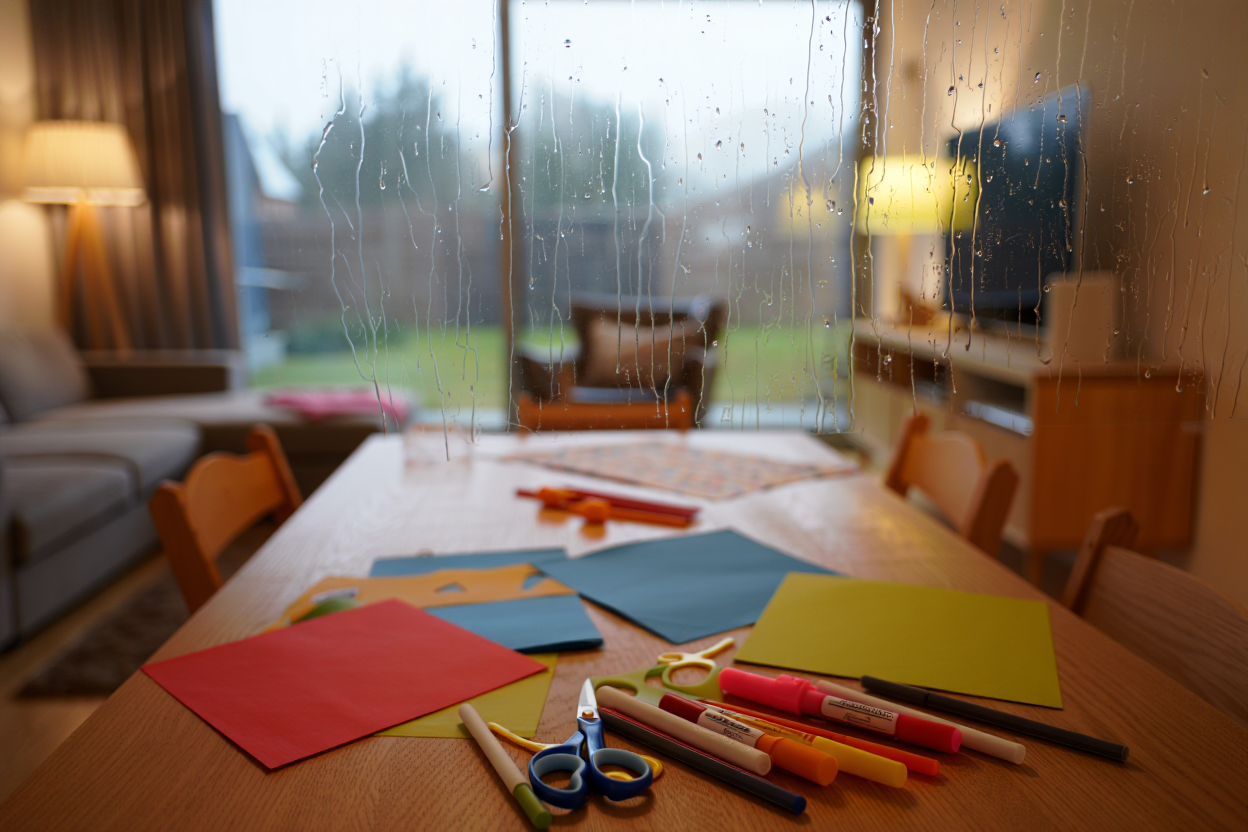
Here are 30 indoor activities for a rainy day. A mix of classics and Catbears originals. Each one is easy to set up with things you already have, and each one tends to generate the kind of moments that actually teach kids something — sharing, negotiating, waiting, recovering from frustration.
Jump to any activity using the list below, or scroll through and let something catch your eye.
Jump to an Activity
- The Blanket Fort Collaboration
- The Rainy Window Art
- The One-Pot Cooking Project
- The Indoor Obstacle Course
- The Cardboard Box World
- The Story Round Robin
- Friendship Coloring Page
- The Puppet Show Planning
- Watercolor Painting Together
- Play Dough Sculpting
- Rainy Day Baking
- Board Games & Card Games
- LEGO & Block Building
- Indoor Picnic & Tea Party
- Paper Airplanes
- Puzzle Challenge
- Origami & Paper Folding
- Leaf Rubbings & Nature Printing
- Write & Illustrate a Mini Book
- Kitchen Science Experiments
- DIY Ping Pong Table
- Sunny Day Room Decorations
- Make & Mail a Greeting Card
- The Mattress Slide
- The Clown Nose Box Game
- The Dance Moves Chain Game
- Indoor Bowling
- Homemade Instruments & Band
- Sensory Bin
- The Family Newspaper
30 Rainy Day Activities for Kids
1. The Blanket Fort Collaboration
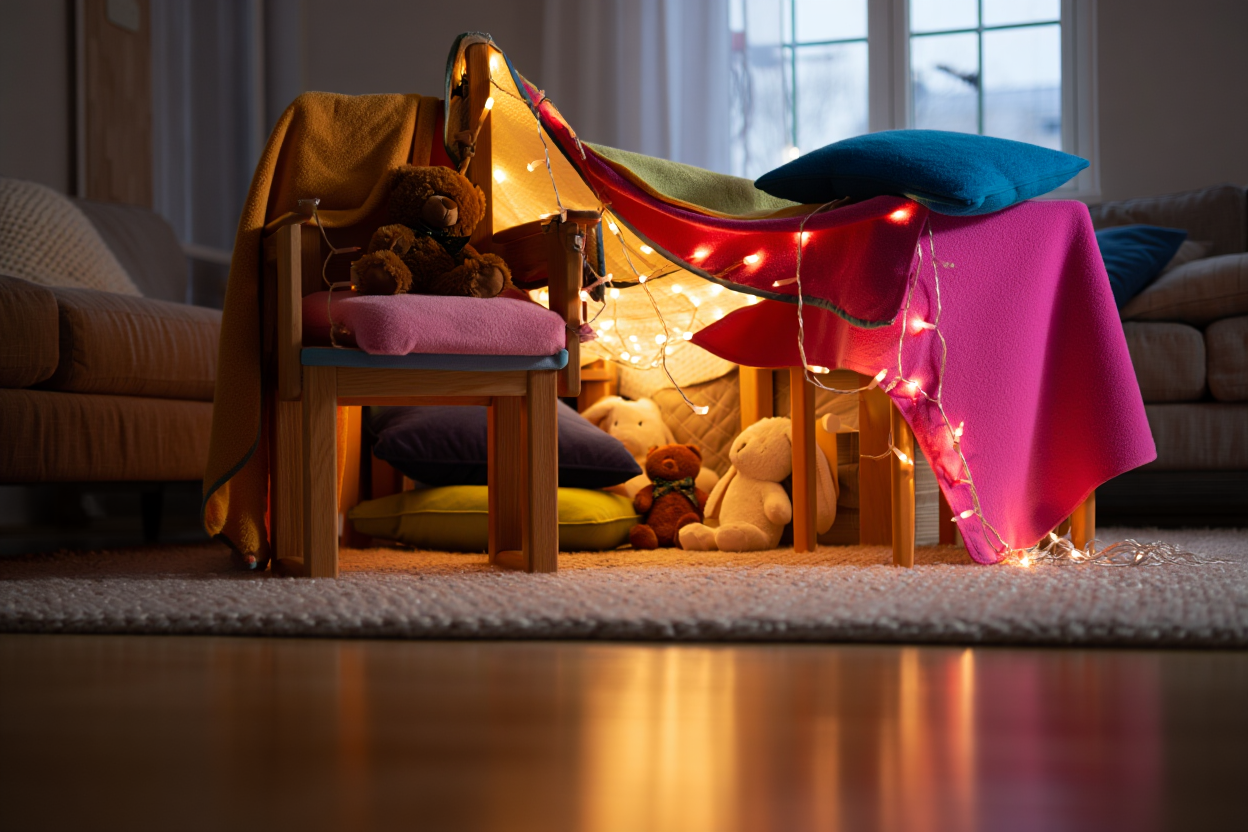
Building a fort requires negotiation at every step. Where does it go? How big? Who decides? We don't pre-plan it for them. The messiness of figuring it out together is the activity.
Materials: Blankets, pillows, chairs, clothespins or clips
Social-emotional challenges:
- Two children want different locations. "You both have ideas. How could we decide?"
- Someone wants to be in charge. "Everyone gets to help build. What part could she do?"
- The fort falls down. Someone blames someone else. "It fell. That's frustrating. What could we try differently?"
- Not everyone fits inside comfortably. "The space is small. How can everyone feel included?"
- Someone wants to add something that might collapse the structure. "What do you think might happen if we add that?"
2. The Rainy Window Art
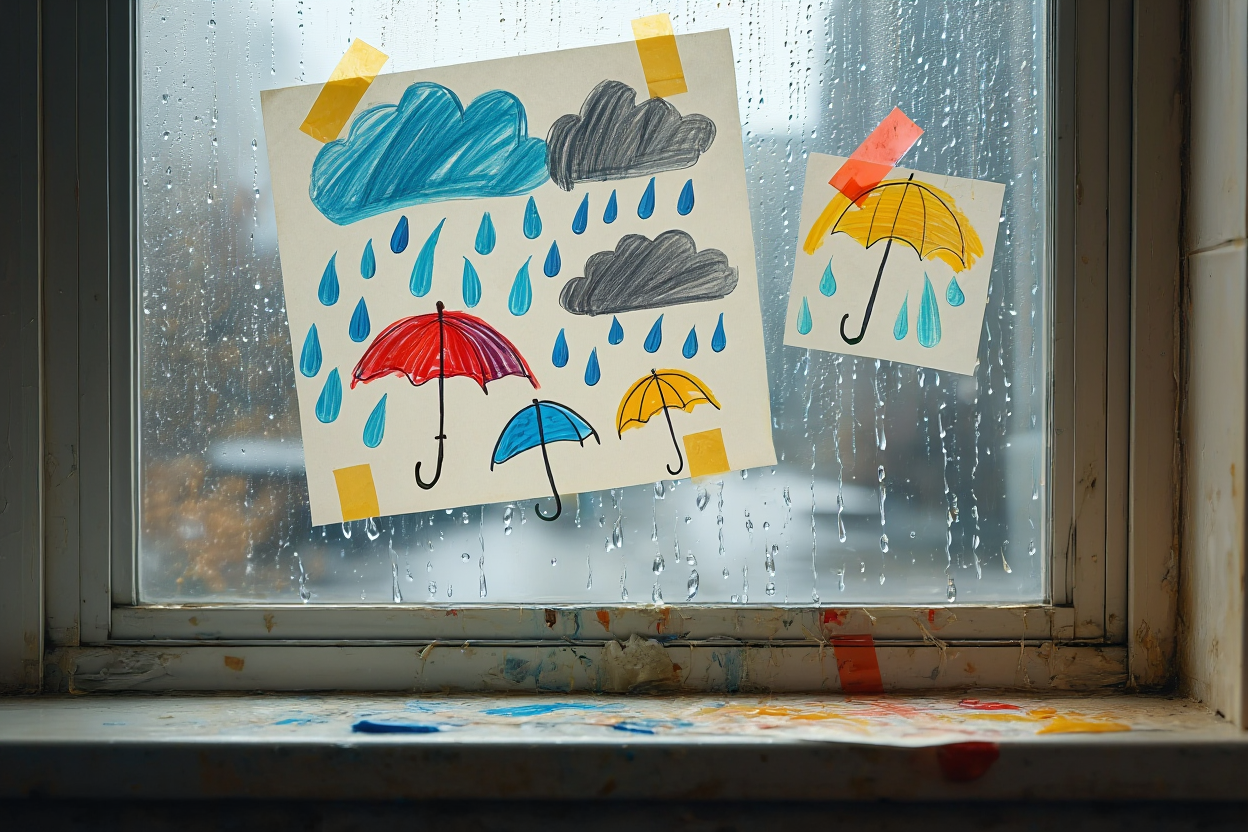
We tape paper to the window where the rain is hitting. Children draw what they see, what they imagine, how the rain makes them feel. Their pictures end up next to each other on the glass. That's the whole point.
Materials: Paper, tape, markers or crayons
Social-emotional challenges:
- Someone draws "into" another's space on the window. "Your pictures are neighbors now. What do you think about that?"
- Someone says another's drawing is wrong. "That's not what rain looks like!" Ask: "Have you seen rain look the same every time?"
- A child draws something sad or angry. Don't redirect. Wonder: "Tell me about your picture. What's happening in it?"
- Someone wants the "best" spot on the window. "Everyone wants to see. How could we share the window?"
3. The One-Pot Cooking Project
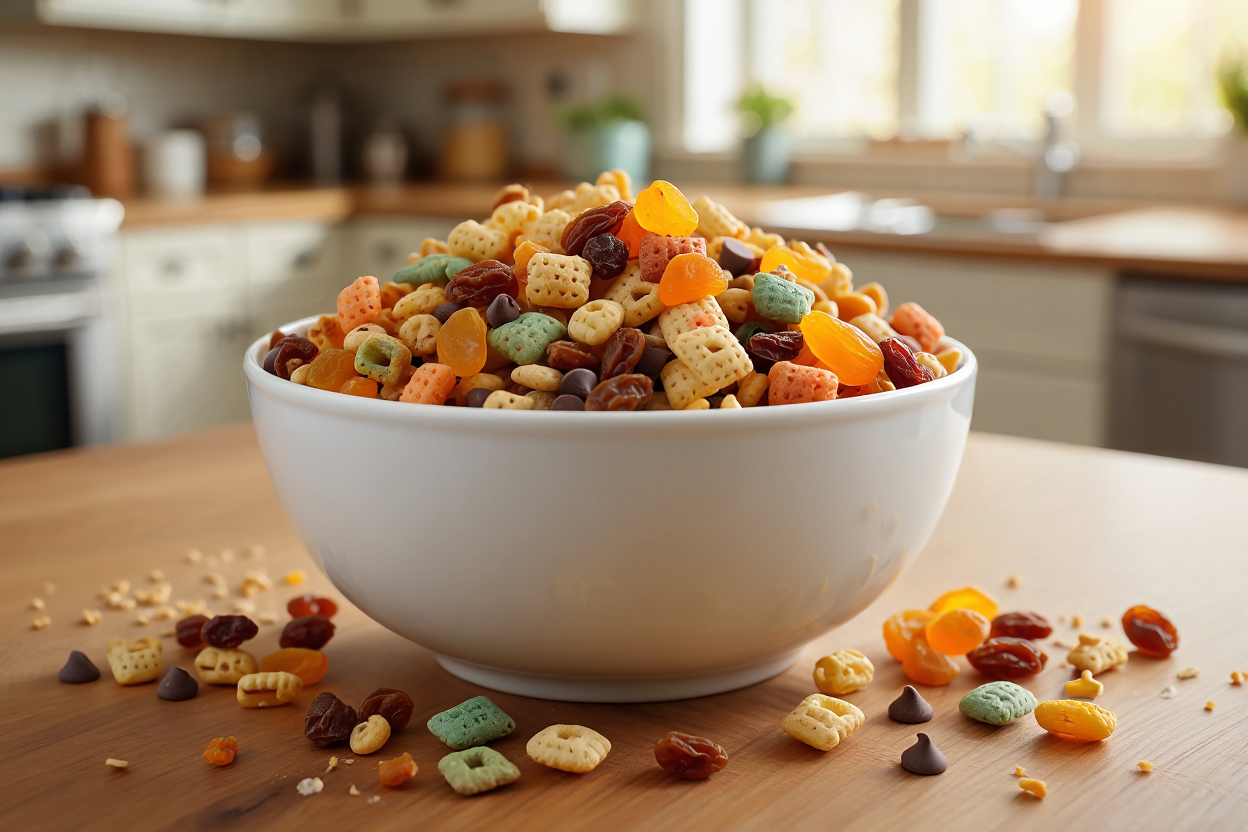
Simple no-bake recipes work best: trail mix, sandwiches, decorated crackers. We use one bowl in the middle on purpose. Everyone adds their ingredient to the same container. The final product belongs to everyone, so every decision is shared.
Materials: Simple ingredients (cereal, dried fruit, crackers, spreads), one bowl, spoons
Social-emotional challenges:
- Someone adds too much of one ingredient. "Now there's a lot of raisins. How do the others feel about that?"
- Someone doesn't want their ingredient touching another's. In a shared bowl, things touch. "What could we do?"
- Someone wants to stir but it's not their turn. "Waiting is hard. Your turn is coming."
- The final result doesn't look how someone imagined. "It's different than you planned. What do you like about it?"
- Someone doesn't want to share the final product equally. "Everyone contributed. How should we divide it?"
4. The Indoor Obstacle Course
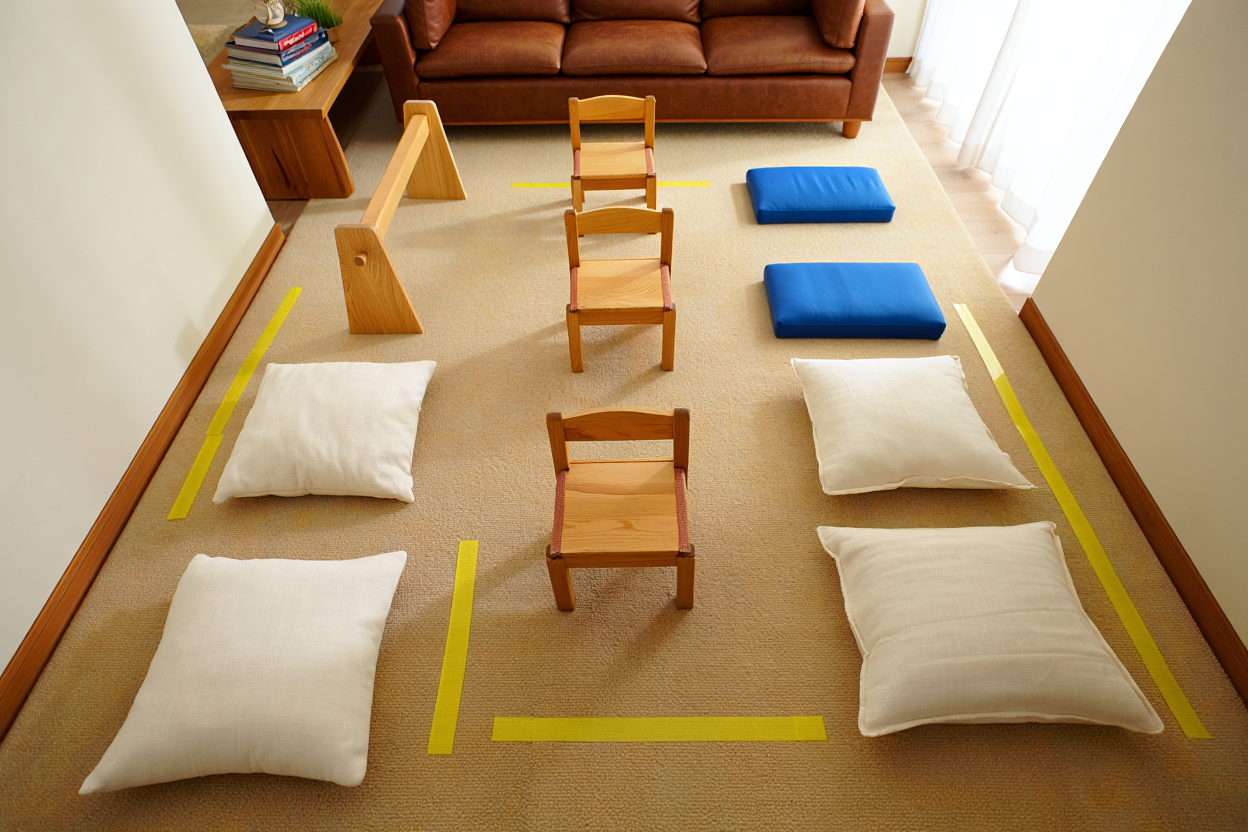
Children design and build a course together, then take turns going through it. The building part requires agreement. The turns require patience. And someone always wants to go first.
Materials: Pillows, chairs, tape on the floor, whatever's available
Social-emotional challenges:
- Everyone wants to go first. "How should we decide the order?" Let them figure it out.
- Someone changes the course while another is using it. "She was in the middle. How do you think she feels?"
- Someone says another person did it "wrong." "There are different ways to go through. His way counted too."
- Someone gets frustrated and wants to quit. Let the feeling be there. "It's harder than you expected. What part can you try?"
- Someone finishes much faster and gets impatient waiting. "Waiting is part of the game. What could you do while you wait?"
5. The Cardboard Box World
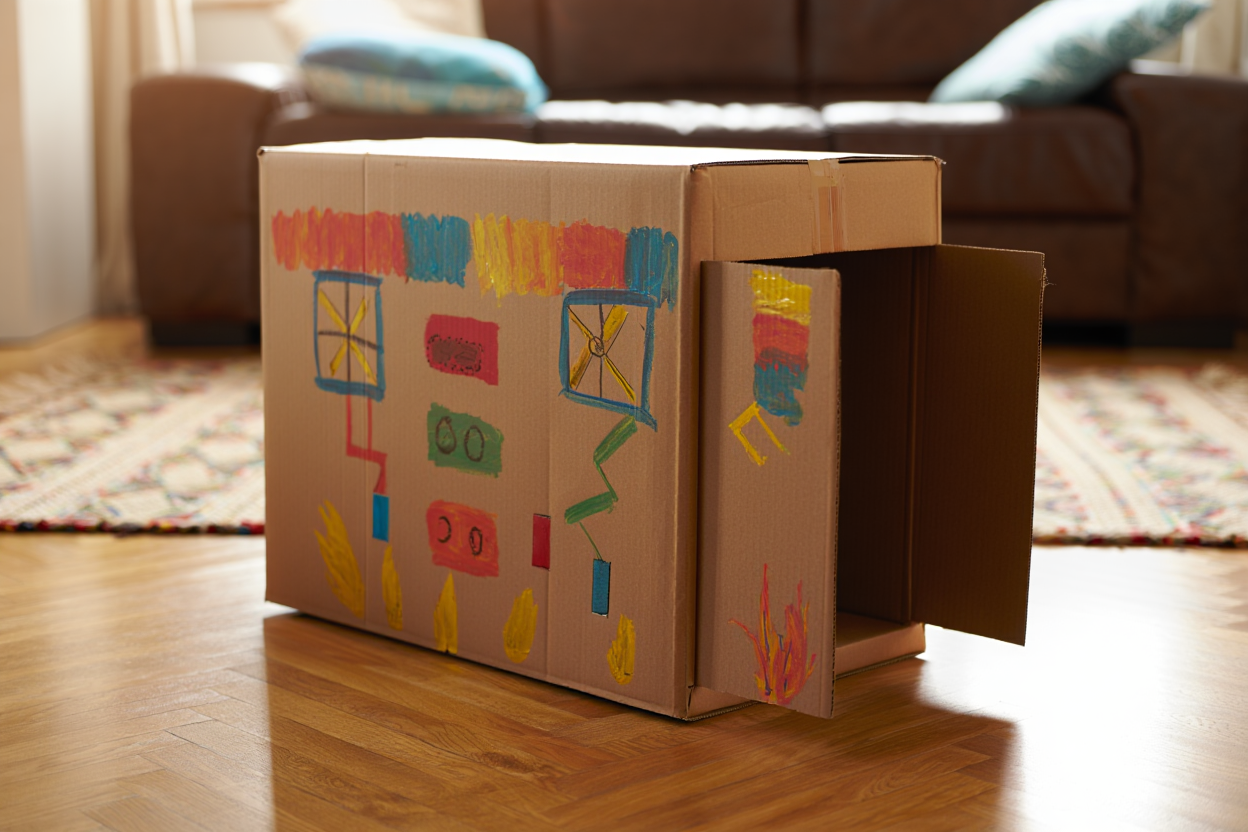
One large box, or several small ones. Children transform them into whatever they imagine: a car, a house, a rocket. When multiple children share one box, every decision turns into a negotiation. Give them space to figure it out.
Materials: Cardboard boxes, markers, tape, scissors (with help)
Social-emotional challenges:
- Two children want the box to be different things. "It can't be a car and a house at the same time. What could you do?"
- Someone draws on a part another child wanted. "That was where she was going to put her window. What now?"
- Someone wants to cut the box but others aren't sure. "This is a big decision. Once we cut, it stays cut. What does everyone think?"
- The finished creation doesn't match what someone imagined. "It became something different. What do you like about what it is?"
- Someone doesn't want to share the box at all. "This box is for everyone. How can we all be part of it?"
6. The Story Round Robin
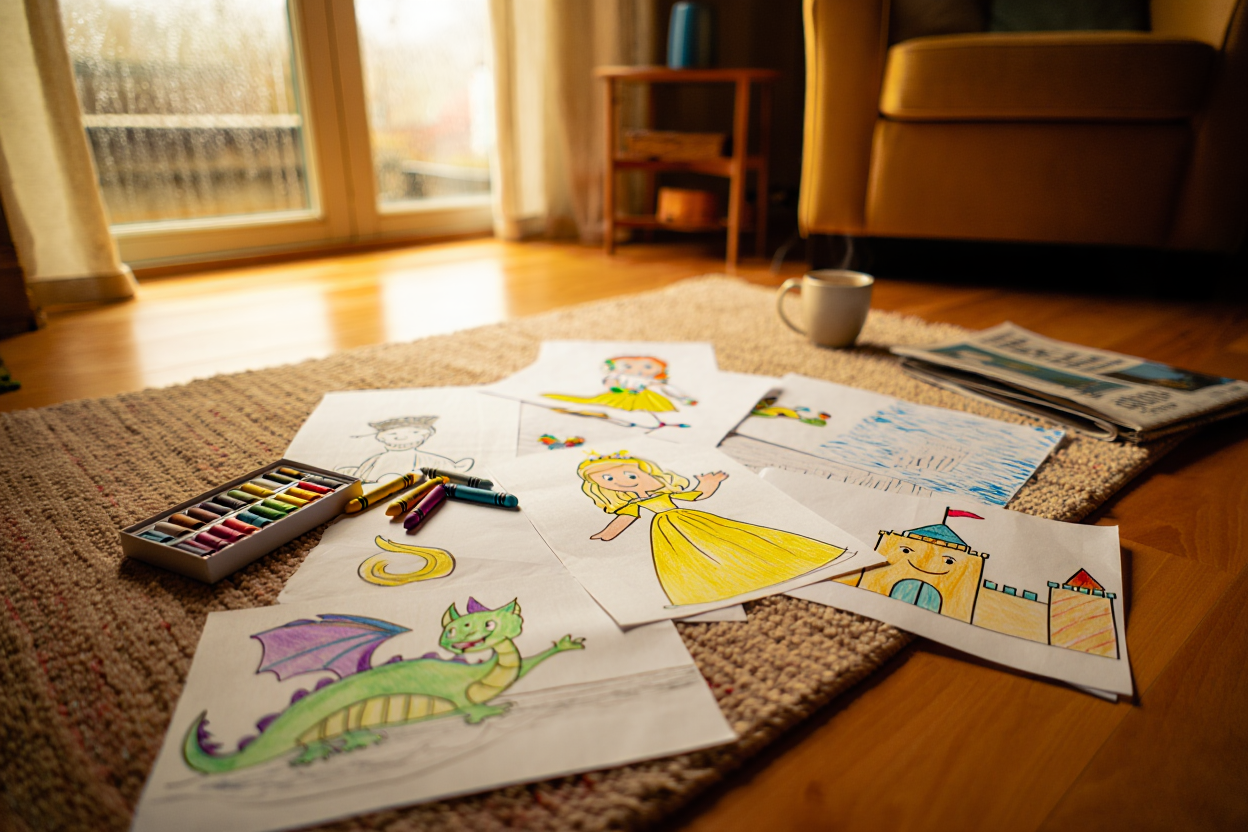
One person starts a story, then passes it to the next. Each person adds a piece. The story goes places no one expected. That's usually when the kids start laughing, and also when someone gets annoyed. Both are useful.
Materials: Just imagination (or paper to draw scenes)
Social-emotional challenges:
- Someone takes the story in a direction another doesn't like. "The story changed. How does that feel?"
- Someone tries to "undo" what the previous person added. "That part is already in the story. What happens next?"
- Someone makes the story scary or violent. Let it play out, then wonder: "What do the characters need now?"
- Someone speaks too long and others get impatient. "Everyone gets a turn to add. Keep your part short so others can play."
- Someone doesn't want to participate. "You can listen and join when you're ready."
7. Friendship Coloring Page
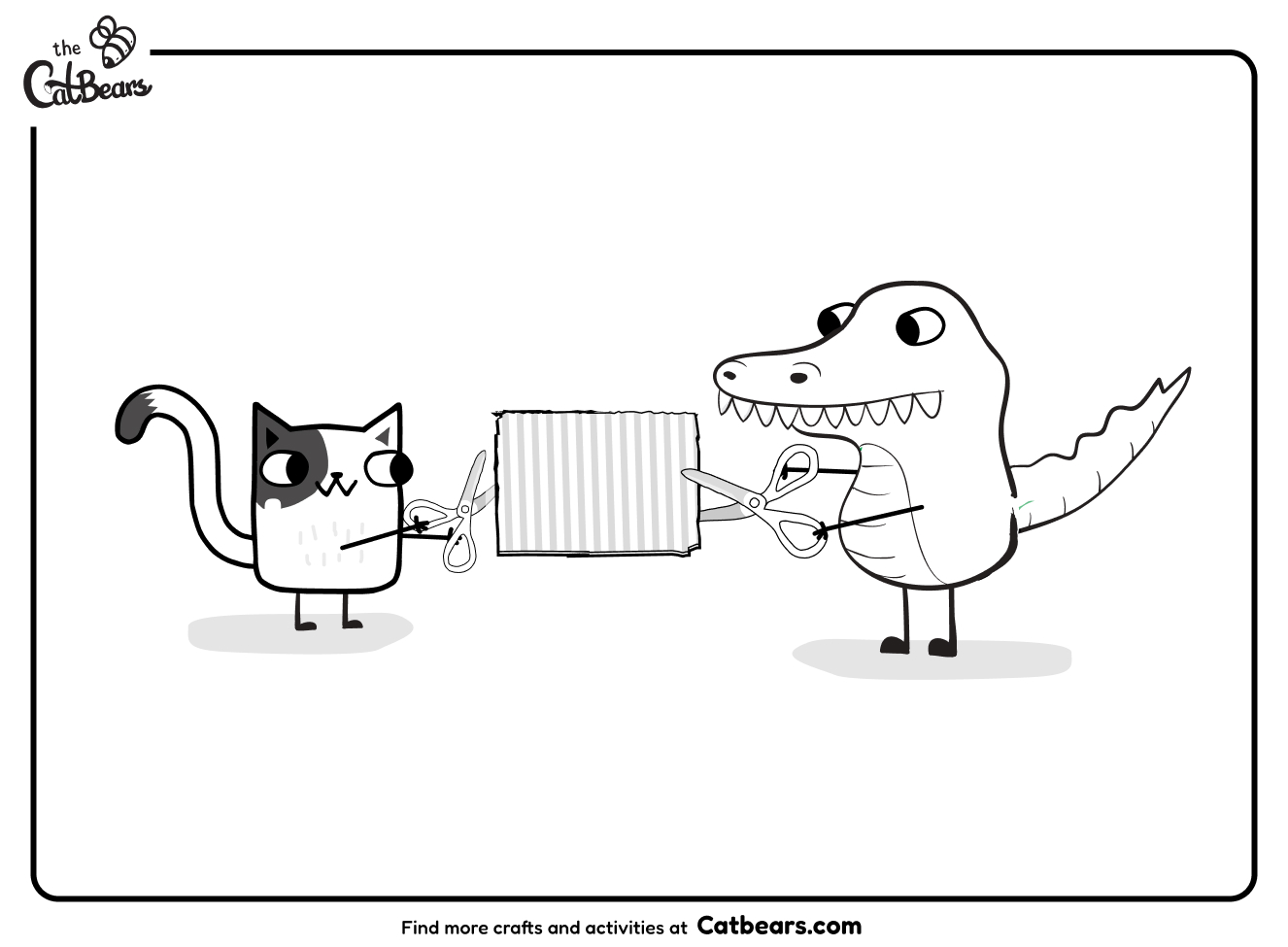
Find the activity here: Cat & Crocodile Friendship Coloring Page →
Sometimes rainy days call for something quiet. Coloring together is a calm way to be near each other without the pressure of building or deciding. Print a friendship coloring page and let children color side by side — or work on the same page together, each choosing different parts.
Materials: Printed coloring page, crayons or markers
Social-emotional challenges:
- Two children want to color the same character. "You both want to color the cat. What could you do?"
- Someone colors "outside the lines" or in an unexpected way. "She colored the crocodile purple!" Let it be. "There are lots of ways to color."
- Someone finishes faster and gets restless. "You're done. What could you do while she finishes?"
- The finished coloring page looks different than expected. "Who should we give this to? You made it together."
8. The Puppet Show Planning
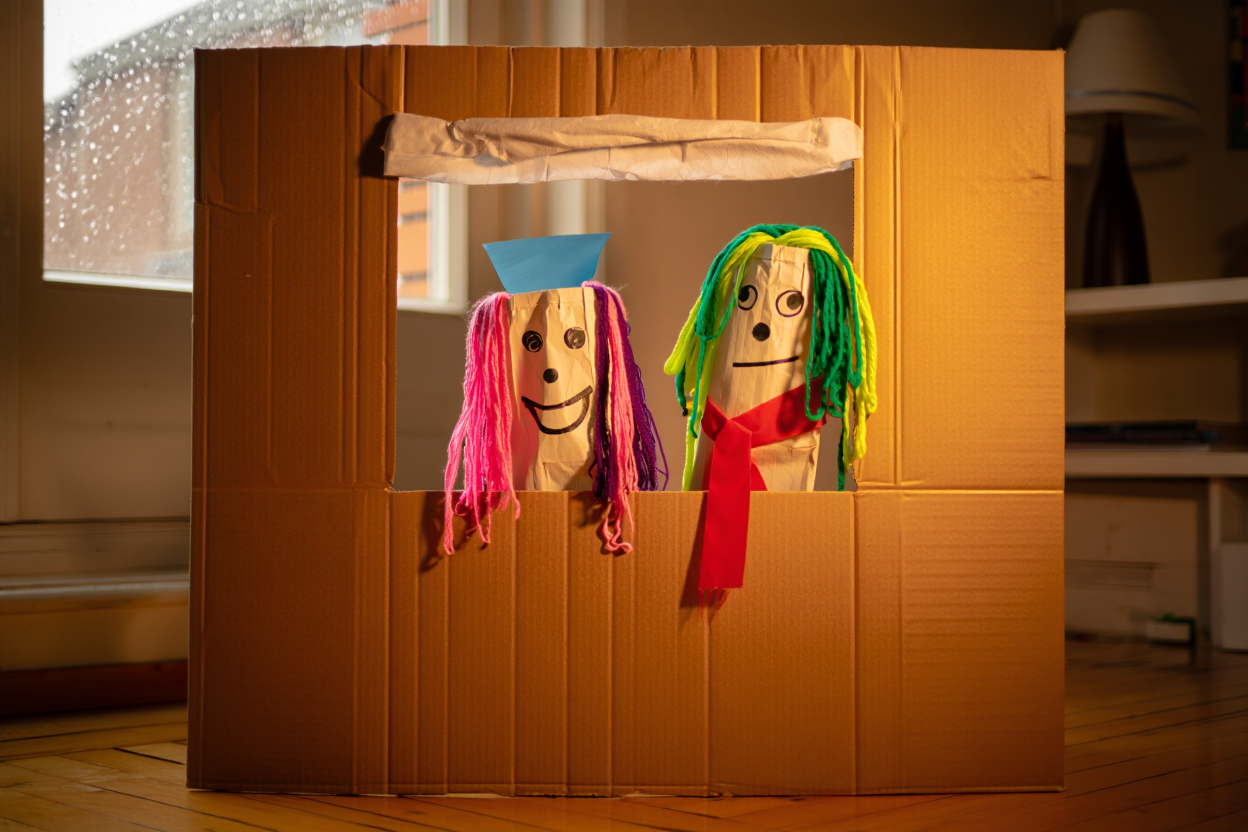
Making puppets is just the beginning. The real work is planning a show together: who plays which character, what the story is, when each person speaks. Every decision requires buy-in from everyone. Give it a whole afternoon.
Materials: Paper bags or socks, markers, yarn, a "stage" (table, box, blanket over chairs)
Social-emotional challenges:
- Everyone wants the same character. "Only one person can be the princess. What could we do?"
- Someone wants their puppet to "win" or be the hero. "Every puppet has a part. How can they all be important?"
- The show goes differently than planned. Someone forgets their line. "What happens now? Can we keep going?"
- Someone doesn't like how another performed their part. "She did it her way. Your way can be different when it's your turn."
- The audience (parents, siblings) doesn't pay enough attention. "How did it feel when they weren't watching? What could you say?"
This puppet project is at the heart of what we do. The first lesson of our course is free if you'd like step-by-step guidance for building a full puppet show together.
9. Watercolor Painting Together
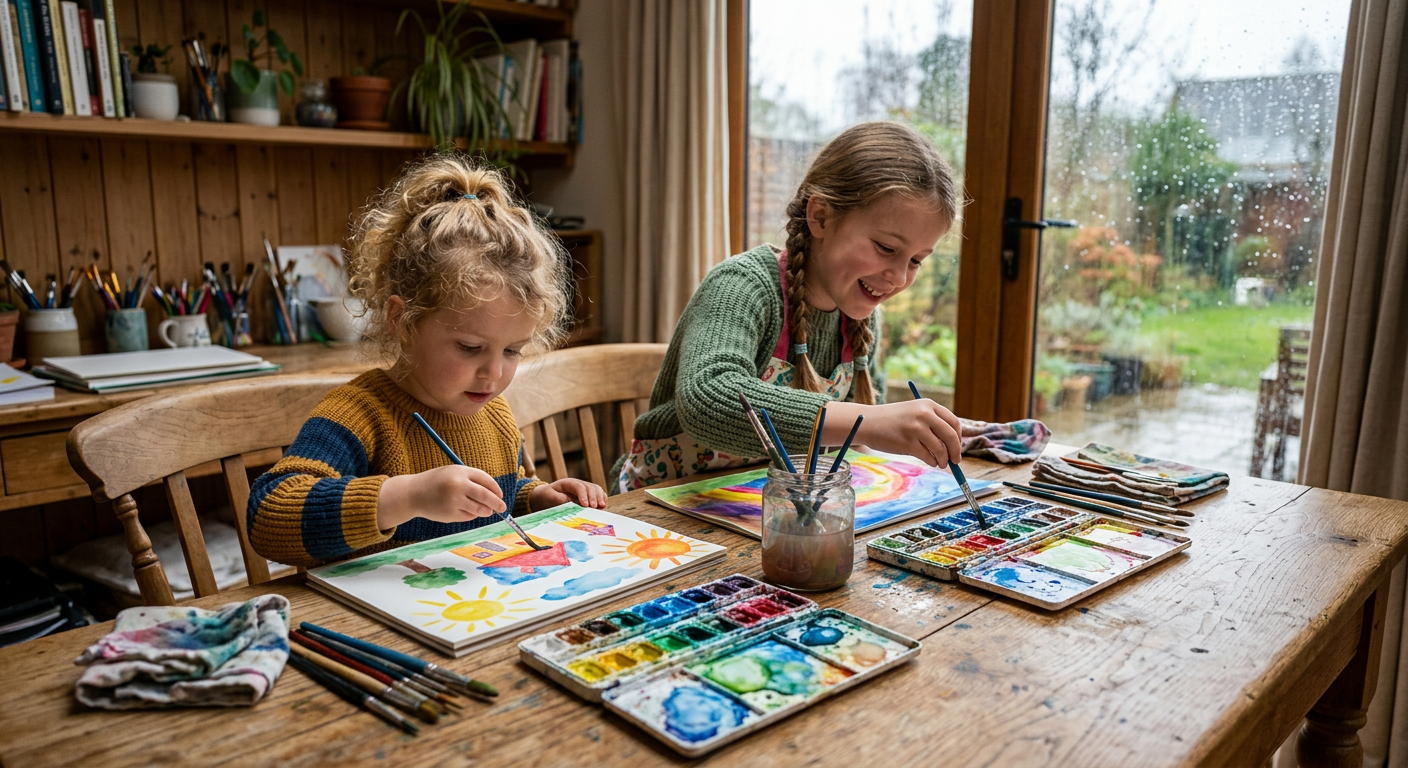
Watercolor is beautifully unpredictable. Colors bleed, shapes surprise, the outcome is never quite what you planned. Set up two stations or share one palette. The shared water jar gets murky fast, and that's usually when the first argument starts.
Materials: Watercolor paints, brushes, paper, water jars
Social-emotional challenges:
- Two children both want the same color at the same time. "What could you do while she finishes with it?"
- One child's colors bleed into the other's paper if they're sharing a surface. "What happened? Does it ruin it, or just make it different?"
- Someone is frustrated because their painting doesn't look how they imagined. "It's different than you planned. What could you call what it became?"
- One child finishes much faster and wants to start another painting immediately. "She's still working on hers. How can you keep busy without rushing her?"
10. Play Dough Sculpting
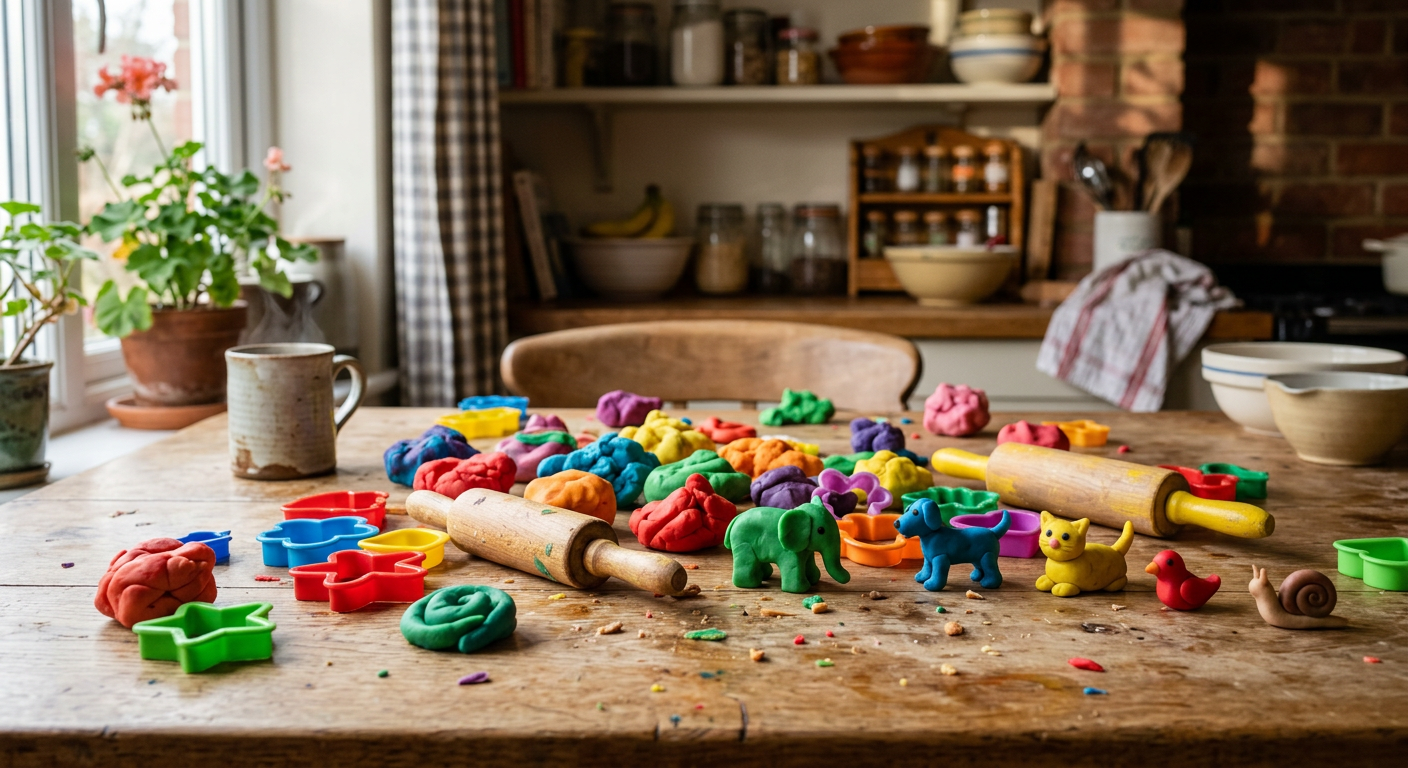
Play dough is very forgiving. Mistakes get squished and become something new. Give each child their own color to start, then watch what happens when trading begins, when colors get mixed by accident, and when one child ends up with more than the other.
Materials: Play dough in multiple colors (store-bought or homemade), rolling pins, cutters optional
Social-emotional challenges:
- Two colors get mixed together. "You mixed them. How do you feel about that? What color did it make?"
- One child has noticeably more dough than the other. "She has more. What could we do to make it feel fair?"
- Someone is upset that their creation doesn't look right. "You can always squish it and start over. Or what if this is a new kind of creature?"
- One child wants to tell the other exactly what to make. "She wants to make her own thing. Can you make yours and let her make hers?"
11. Rainy Day Baking
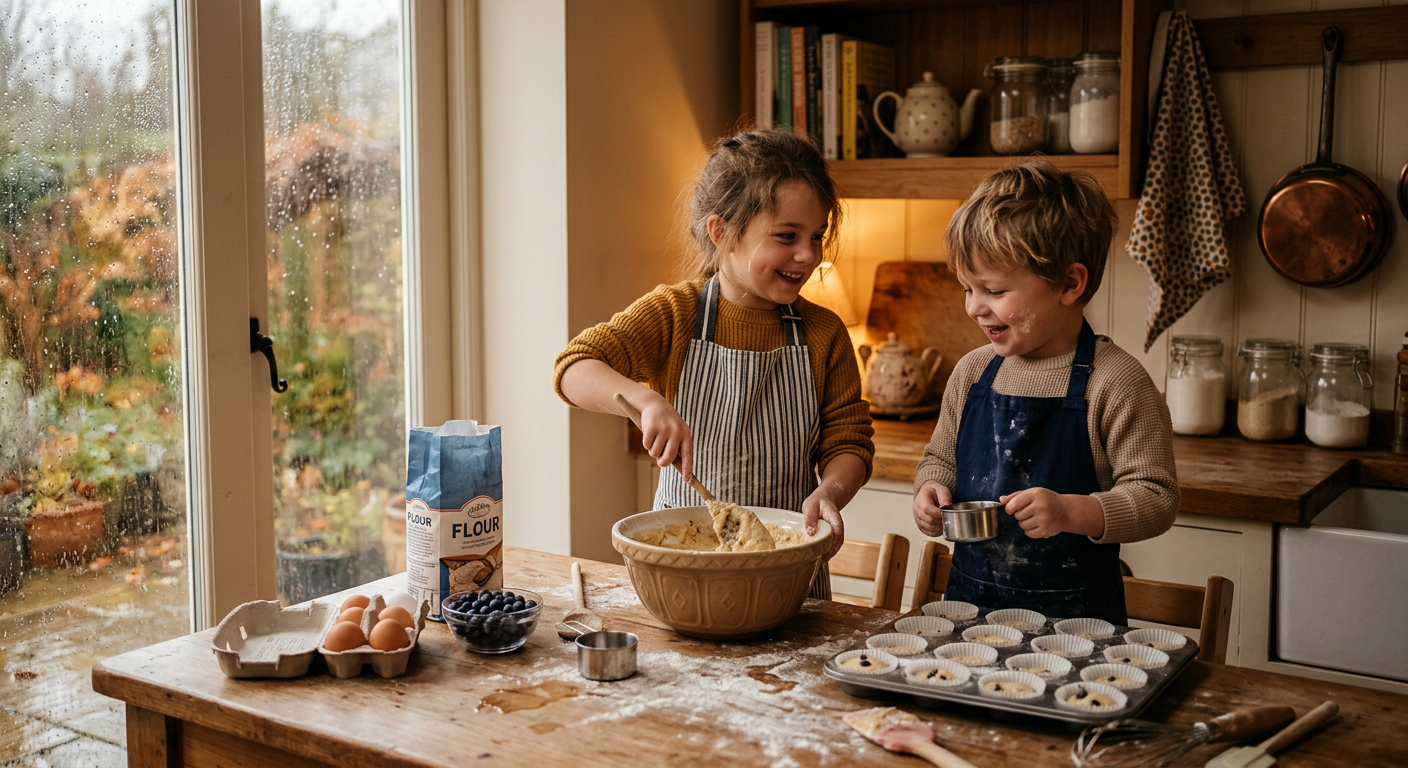
Baking together means turn-taking, following instructions in order, and sharing what comes out of the oven. Keep the recipe simple: muffins, cookies, or decorated crackers. And brace yourself for the wait. Fifteen minutes in the oven is a long time when you're seven.
Materials: Simple recipe ingredients, measuring cups, mixing bowl, baking pan
Social-emotional challenges:
- Two children both want to pour the same ingredient. "Only one person can pour at a time. How should we decide who goes first?"
- Someone adds too much of something. "The recipe says one cup but we added two. What could we do?"
- The finished result doesn't look like the picture on the recipe. "It's different than the photo. Does it still count as ours?"
- Waiting for it to bake is hard. "It needs fifteen minutes. What could you do while we wait?"
12. Board Games & Card Games
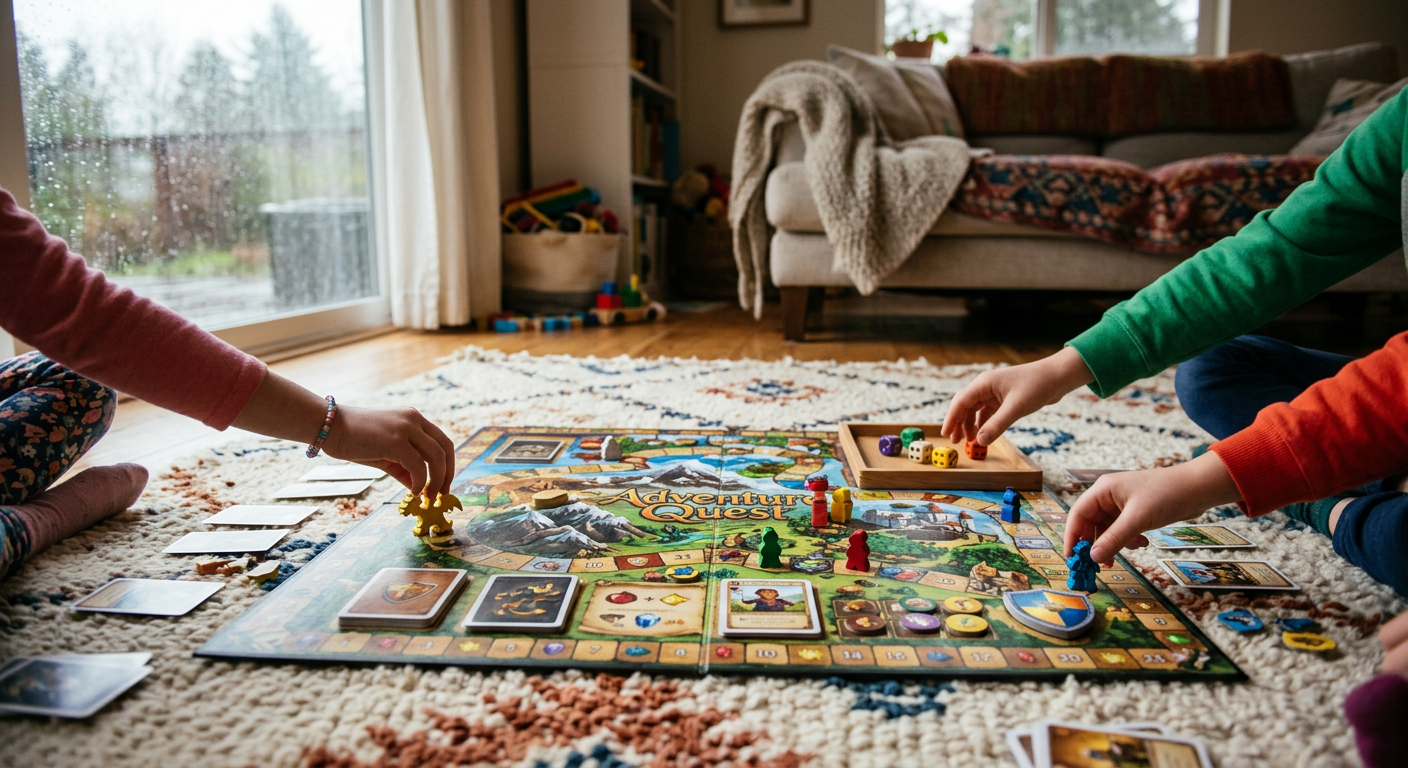
Board games are good for losing gracefully, following rules everyone agreed to, and waiting your turn. All of which are genuinely hard. The key is picking a game that's actually fun for every player, not just the oldest or most competitive one.
Materials: Any board game or card game at the right level for everyone playing
Social-emotional challenges:
- Someone loses and gets upset. Let the feeling be there. "Losing feels bad. That's real. What do you want to do — play again or take a break?"
- Someone bends a rule in their favor. "The rules say everyone does the same thing. What happens if we each make our own rules?"
- One child is much better at the game and keeps winning. "Some people know this game better. Does that seem fair? What could we change?"
- Someone accuses another of cheating. "Why do you think she did that? What would make the game feel fair for everyone?"
13. LEGO & Block Building
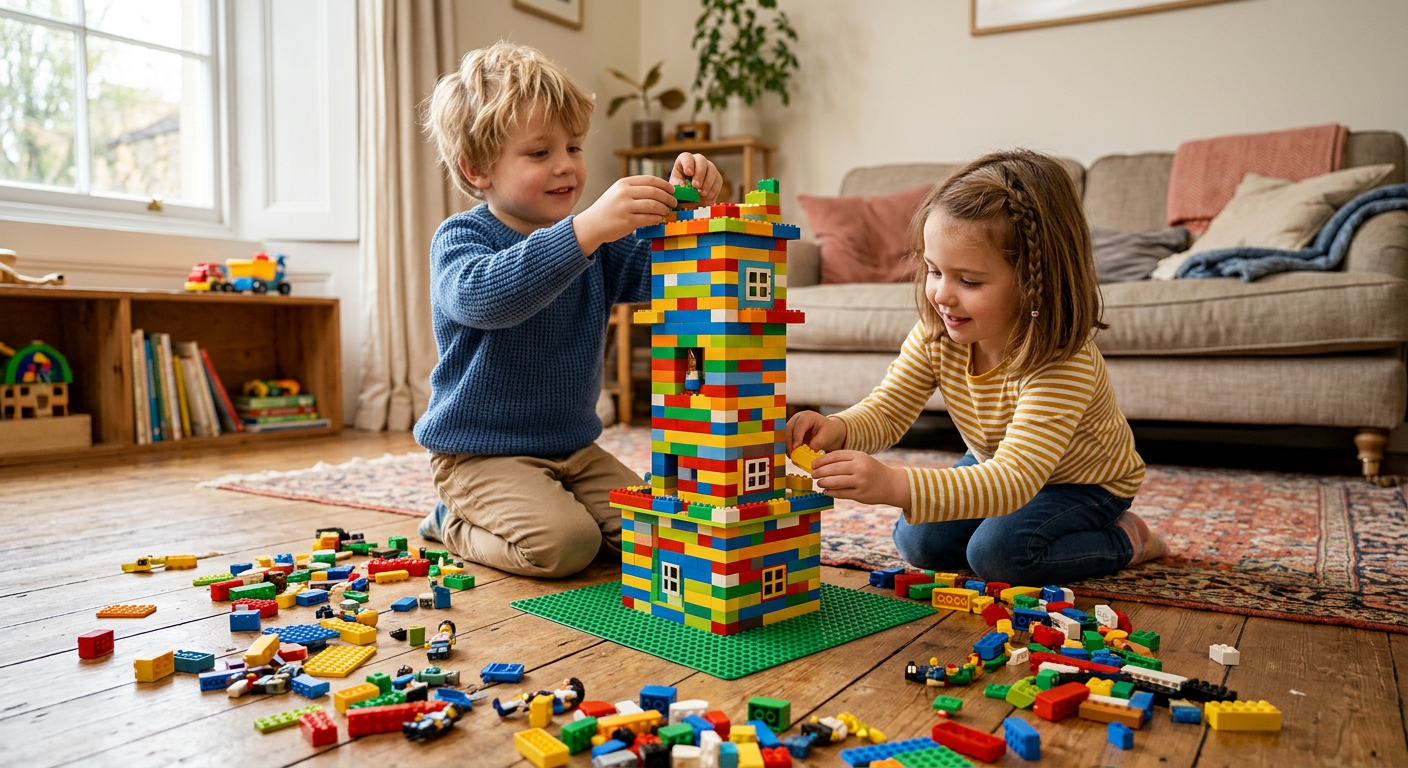
Building side by side with shared bricks is a cooperation challenge. Who gets the blue pieces? What happens when someone knocks something over by accident? Do they build one thing together or two things separately? Let them figure it out.
Materials: LEGO, Duplo, or any building blocks
Social-emotional challenges:
- Both children want the same piece. "There's only one of that piece. How could you decide who gets it?"
- Someone knocks over another's tower by accident. "She didn't mean to. It's still frustrating. What happens now?"
- One child wants to build together; the other wants to build separately. "You both have different ideas. Can both work at the same time?"
- Someone's creation gets criticized. "That's his idea for a building. It doesn't have to look like yours."
14. Indoor Picnic & Tea Party
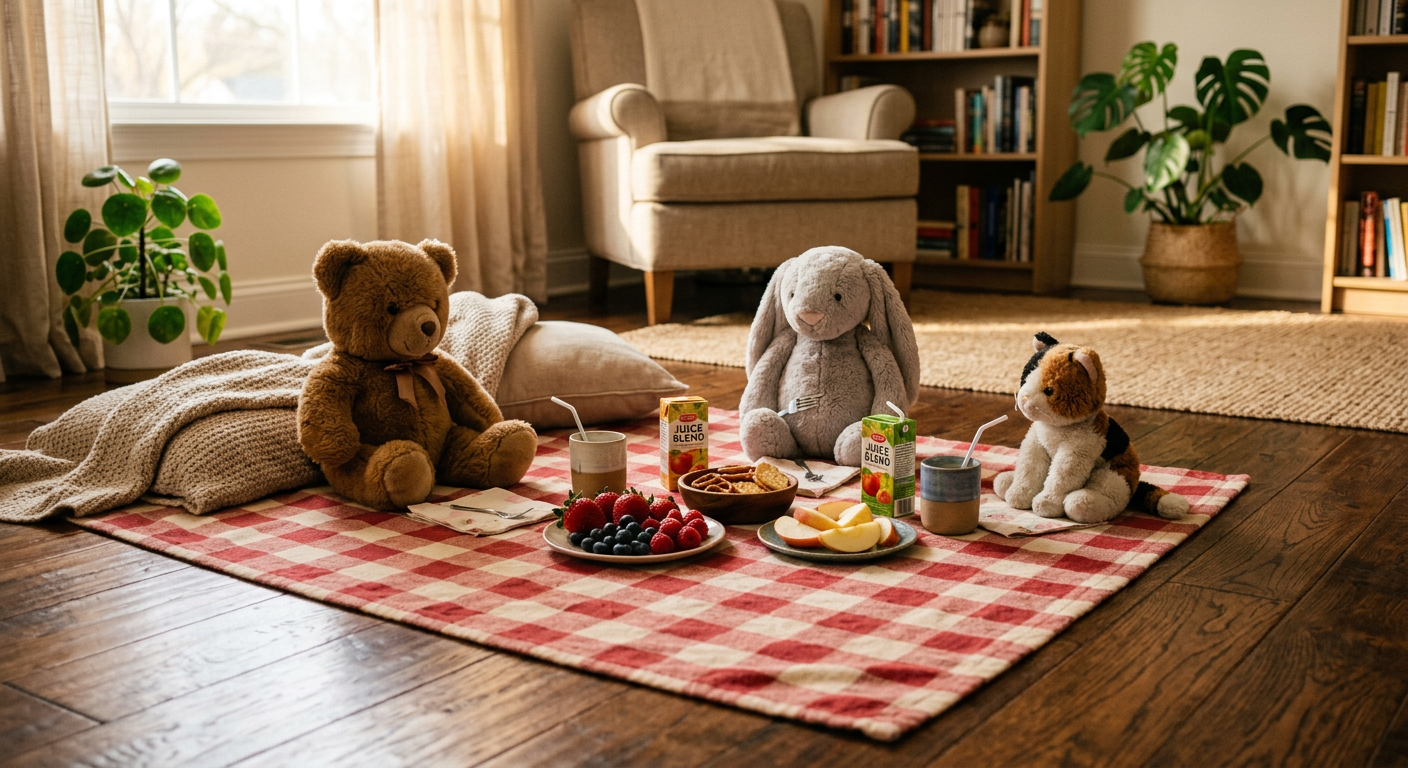
Lay a blanket on the floor, set out snacks, invite the stuffed animals. The prep is as much fun as the eating: who sits where, what goes on which plate, who does the pouring. My kids spend more time arranging the guests than actually eating.
Materials: Blanket, plates and cups, simple snacks, stuffed animal guests optional
Social-emotional challenges:
- Two children disagree about where to put the blanket. "You both have ideas. Is there a spot that could work for both?"
- One child wants to invite a stuffed animal the other doesn't like. "She doesn't want that one. How do you feel about that?"
- Someone takes a noticeably bigger portion of snacks. "We're sharing the same food. Does everyone have enough?"
- The picnic needs to end but someone isn't ready. "It's time to clean up but she's not done. What could help?"
15. Paper Airplanes
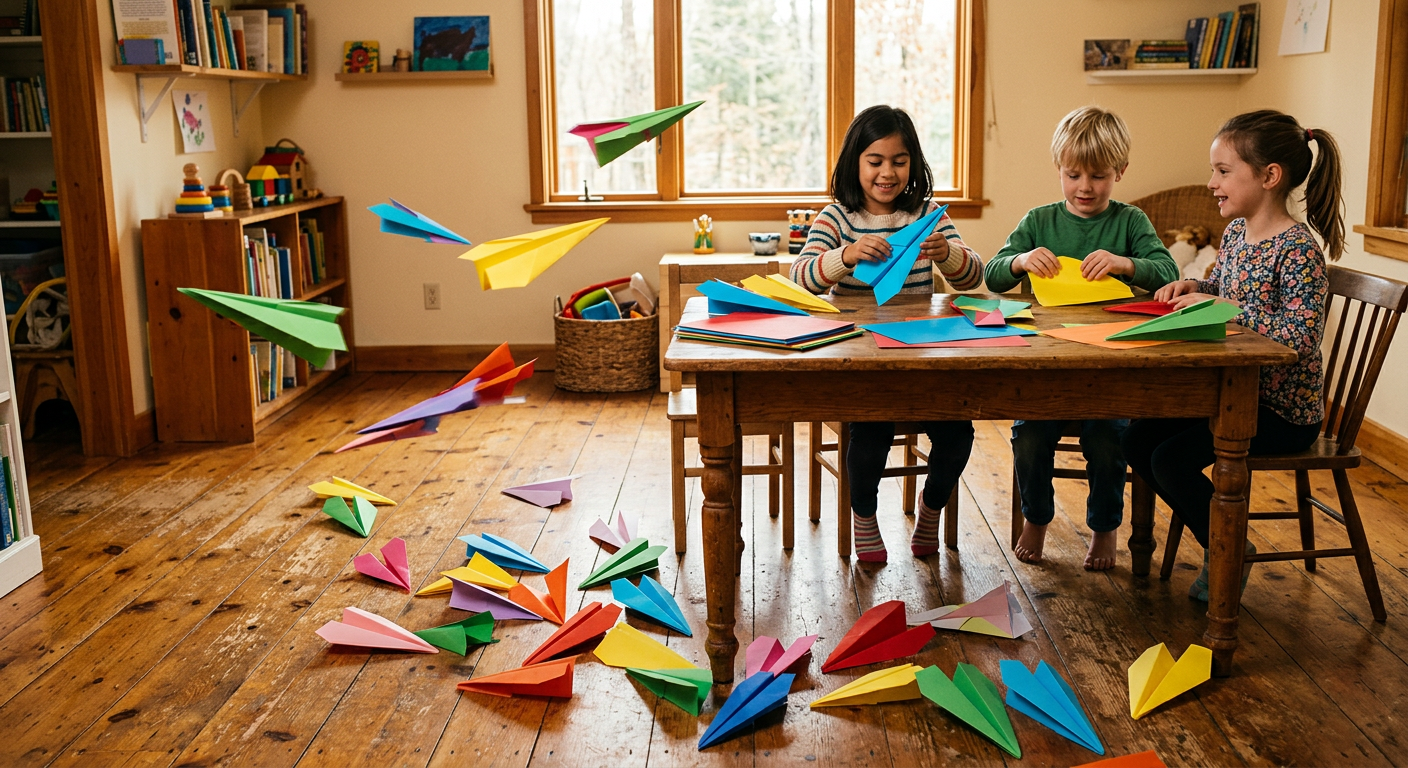
Fold, throw, watch it nose-dive, try again. Nothing flies perfectly on the first try, and that's kind of the point. Set up a distance contest with a tape line on the floor. Let them test different designs and see what actually changes.
Materials: Paper (different weights fly differently), a clear hallway or room, tape for a launch line
Social-emotional challenges:
- Someone's plane flies much farther and they won't stop celebrating. "You're excited. She's disappointed. Both feelings are real. What now?"
- One child's plane won't fly at all. "This design didn't work. What could you change about it?"
- Two children measure the distance differently and get into an argument about who won. "You measured it differently and got different results. How should we decide?"
- Someone crumples their plane in frustration. "The frustration is real. Would you like a new piece of paper to start fresh?"
16. Puzzle Challenge
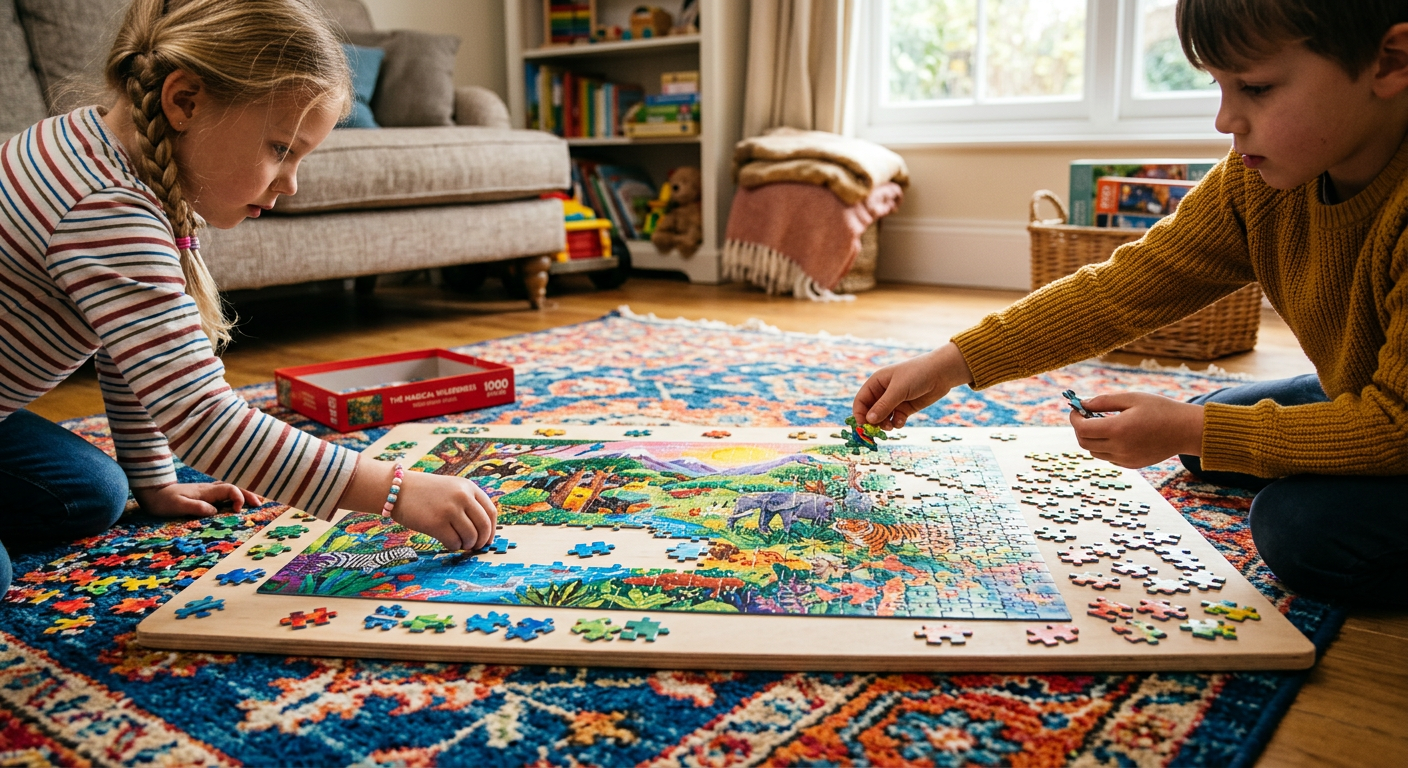
Puzzles are satisfying and slow. Good combination for a long rainy afternoon. One puzzle, shared between two or more kids. Doing it alone isn't the goal here.
Materials: A puzzle at the right difficulty (neither too easy nor impossible for the ages involved)
Social-emotional challenges:
- Someone grabs a piece the other was already reaching for. "She was going to try that piece. What happens now?"
- One child figures out most of it and the other feels left out. "You're faster at finding the pieces. How can she feel part of it too?"
- They've been working for a while and it's not coming together. "This is hard. Do you want to keep going or take a break and come back?"
- A piece seems to be missing. "We can't find this piece. What should we do?"
17. Origami & Paper Folding
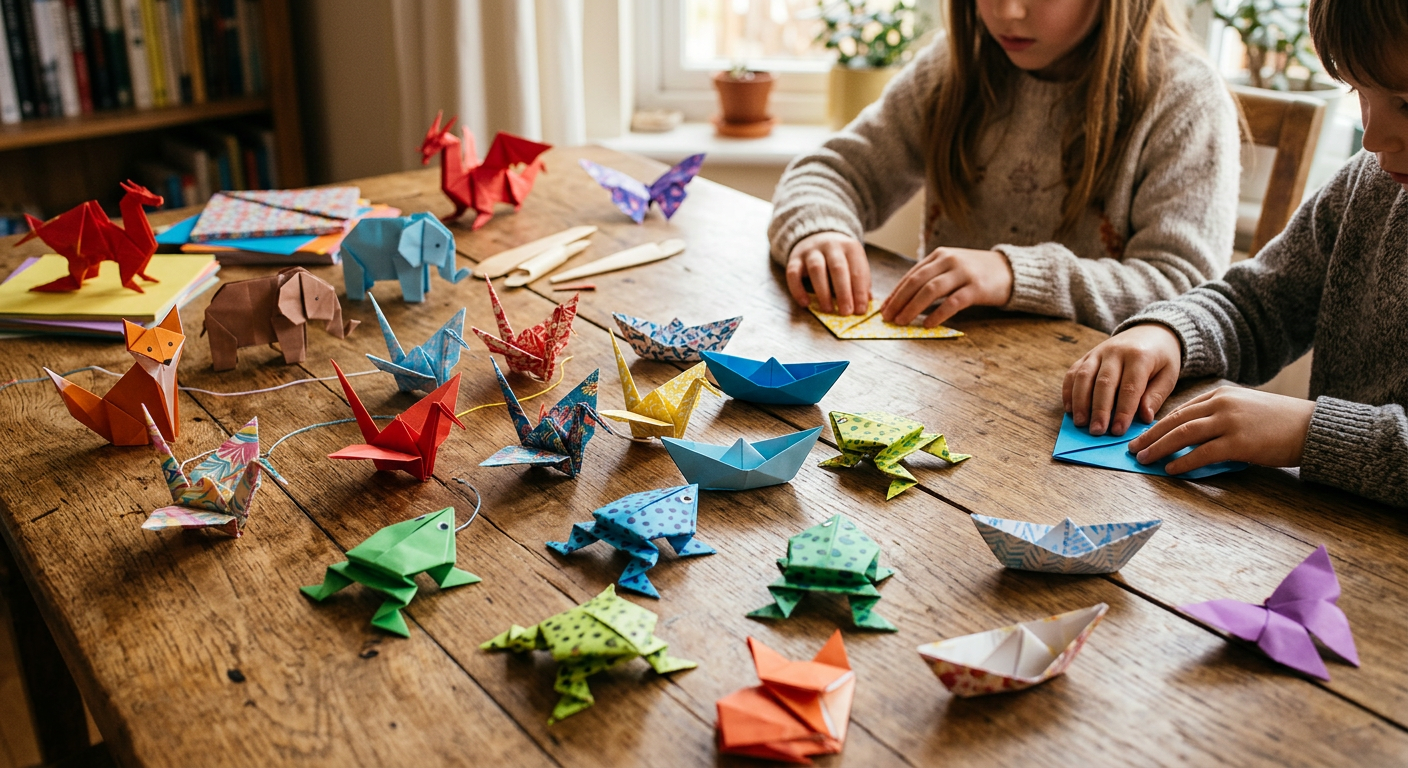
Following steps in order, asking for help when stuck, not tearing the paper in frustration. Origami is patience practice disguised as craft. Start with something easy (a simple box, a boat) and build from there. A short video is much easier to follow than written instructions, for most kids.
Materials: Square paper (thinner paper folds more cleanly), a beginner origami guide or short video
Social-emotional challenges:
- Someone's crane doesn't look like the example. "It's different from the picture. Does it still count as a crane?"
- One child gets frustrated and wants to quit. "This step is hard. Would it help to watch the video again, or have someone show you slowly?"
- One child finishes much faster and starts making fun of the other's pace. "Everyone folds at their own speed. What could you do while you wait?"
- Someone's paper tears. "The paper tore. That's frustrating. Do you want to start fresh or keep going with this one?"
18. Leaf Rubbings & Nature Printing
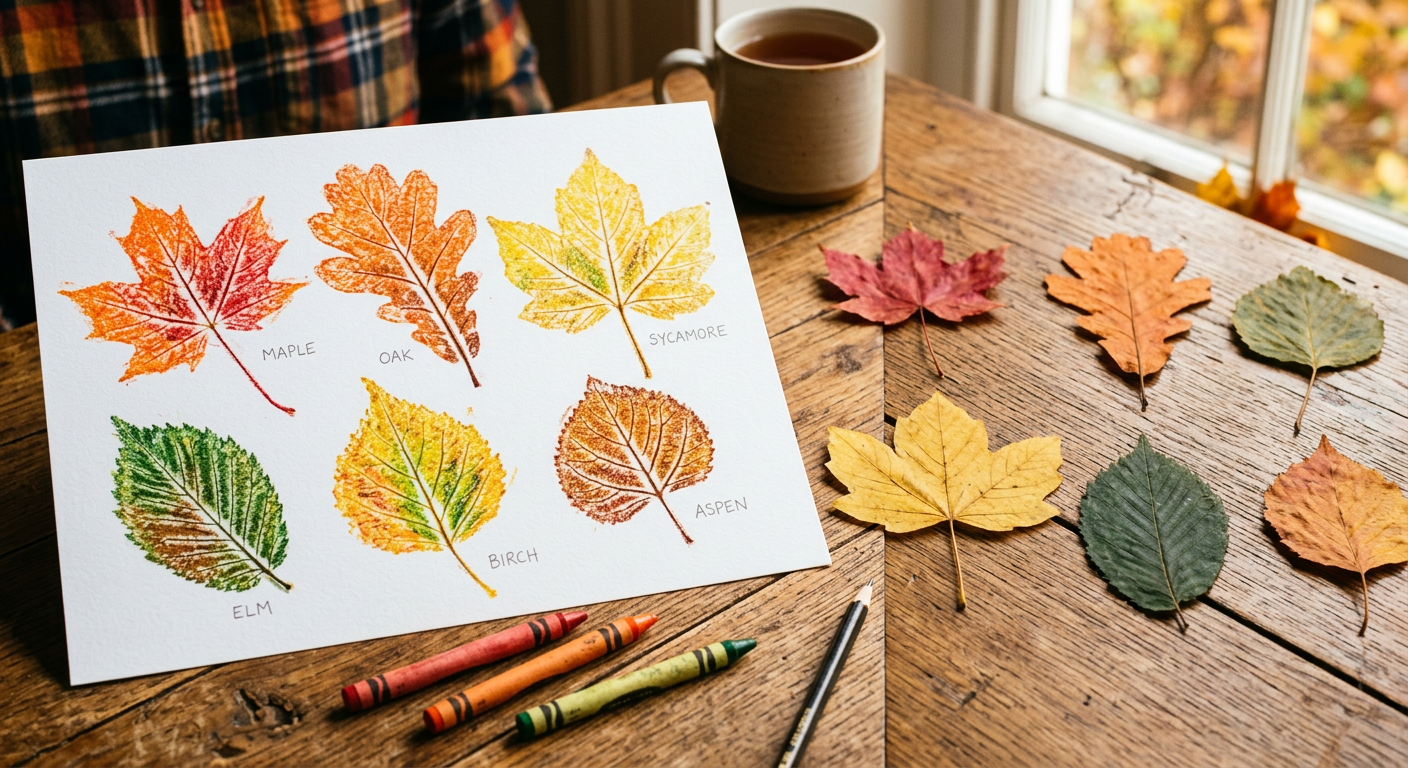
Place a leaf under paper, rub a peeled crayon across the top, and the texture comes through. Kids can collect leaves right before the rain starts or between showers, or just use whatever plants are already in the house. Every leaf makes a different pattern, and kids always want to compare.
Materials: Leaves, white paper, peeled crayons (side rubbing works best), tape to hold the leaf still
Social-emotional challenges:
- Two children both want the same leaf. "There's only one of this one. What could you do?"
- Someone's rubbing isn't coming out clearly. "Try pressing harder, or use a different angle. What changes?"
- One child finishes and gets bored watching the other work. "She's still working. What could you do while you wait?"
- The results all look different even though they used the same leaf. "They're from the same leaf and they all look different. Why do you think that is?"
19. Write & Illustrate a Mini Book
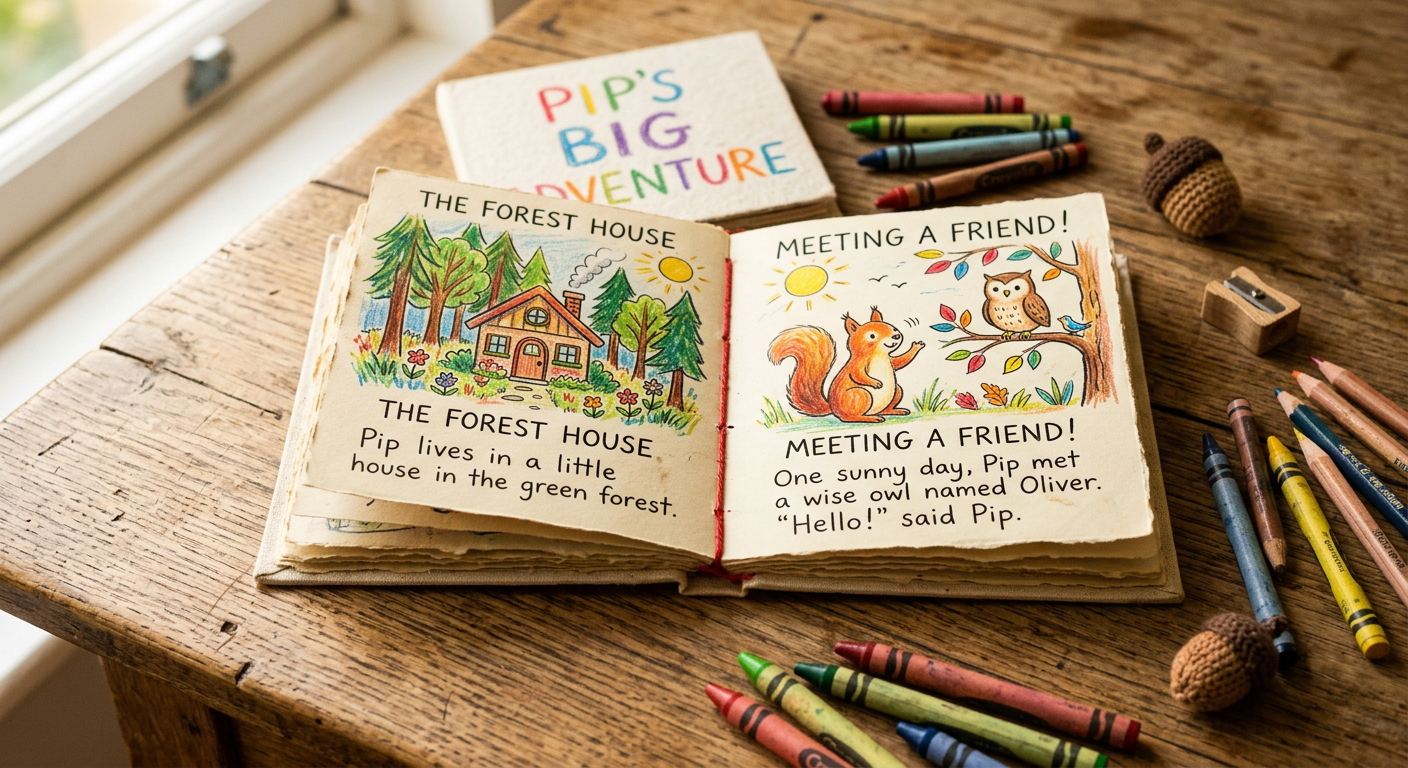
Fold a few sheets of paper in half and staple the spine. You have a book. Decide on a story together: characters, plot, ending. One person writes, the other illustrates, or you alternate pages. Most of the time is spent arguing about what should happen next, which is fine. That's the activity.
Materials: Paper folded into a booklet, pens, crayons or markers
Social-emotional challenges:
- Two children want the story to go in different directions. "Two ideas. Could they both happen, one after the other?"
- One child wants to do all the writing and none of the illustrating (or vice versa). "She wants to draw too. How could you split the work?"
- The story gets very long and the booklet runs out of pages. "You've run out of pages. How do you want to end it?"
- One child doesn't like how their co-author illustrated their part. "It's different than you imagined. It's still part of your story together."
20. Kitchen Science Experiments
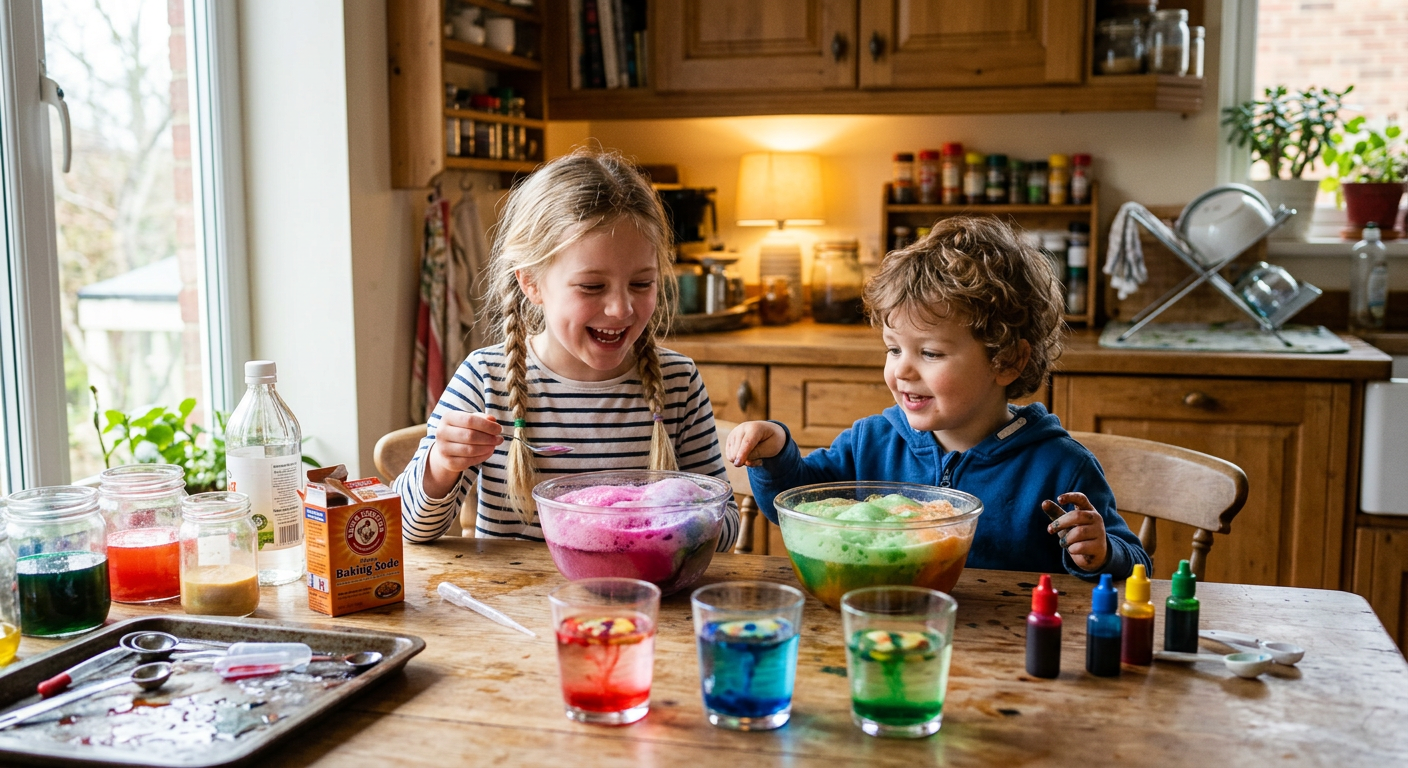
Baking soda and vinegar, food dye in water, a homemade lava lamp from oil and water. Simple kitchen experiments that feel like magic and cost almost nothing. Give each child a job: one measures, one pours, one writes down what happens. They will disagree about everything, which is good.
Materials: Baking soda, vinegar, food dye, water, small bowls or glasses, spoons, paper to record results
Social-emotional challenges:
- Two children both want to do the same step. "Only one person can pour at a time. How should we take turns?"
- An experiment doesn't work as expected. "It didn't do what we thought. What happened? What could we change?"
- One child takes over and the other feels left out. "She hasn't had a turn to try yet. What could she do next?"
- Someone wants to keep going but the other is done. "You still want to experiment. She's finished. What could work for both of you?"
21. DIY Ping Pong Table
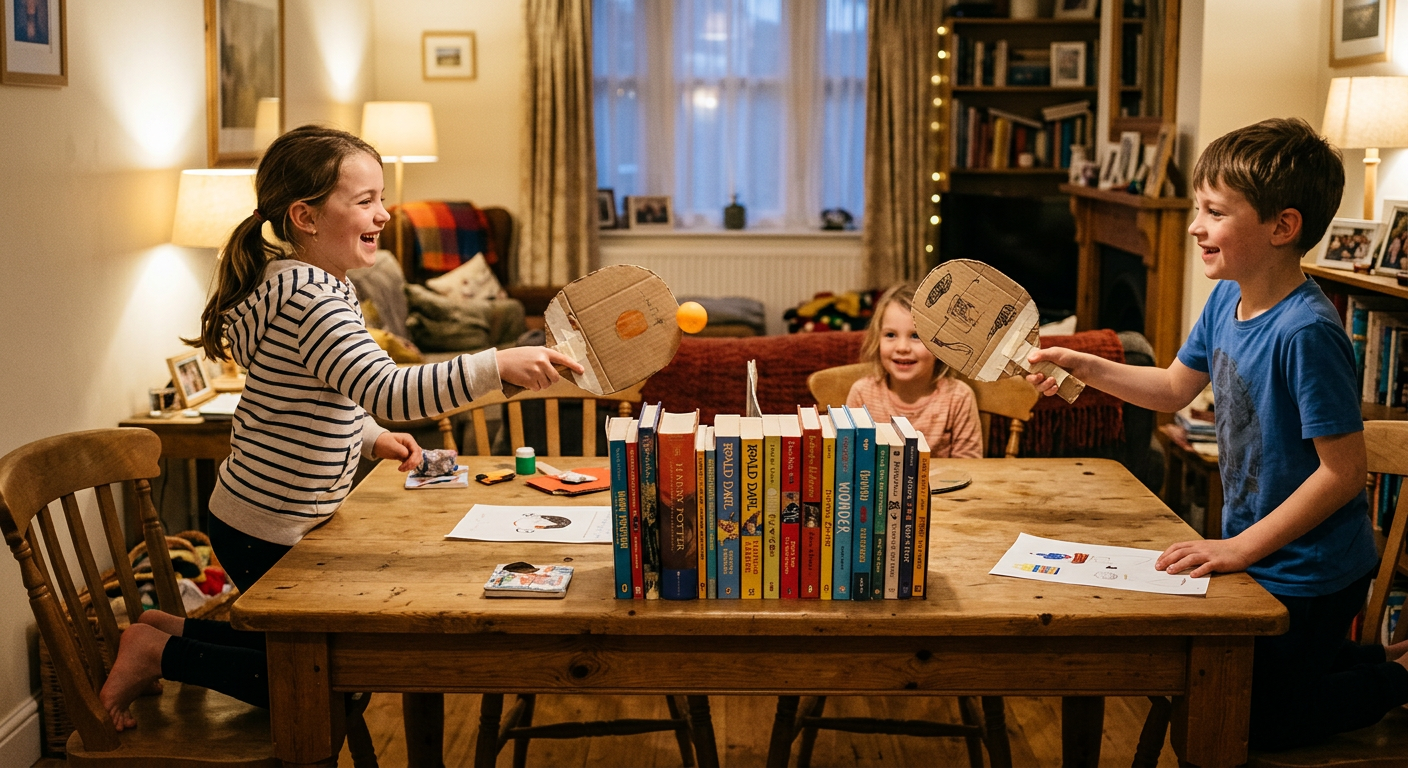
You don't need actual equipment. Push a row of books across the middle of the table as a net. Cut paddle shapes from cardboard. Use a small rubber ball or a rolled-up sock. Making the equipment takes about twenty minutes and everyone starts equal, which helps.
Materials: Cardboard (for paddles), tape or scissors, books or a folded towel for the net, a small soft ball or rolled sock
Social-emotional challenges:
- Someone argues about whether a shot was in or out. "You saw it differently. How do you decide when there's no referee?"
- One child is much better at it. "She's winning a lot. How does that feel? What could make it more fun for everyone?"
- Someone wants to keep changing the rules. "We agreed on the rules at the start. What happens if everyone changes rules whenever they want?"
- The net keeps falling down. "The net keeps breaking. That's frustrating. What could we fix it with?"
22. Sunny Day Room Decorations
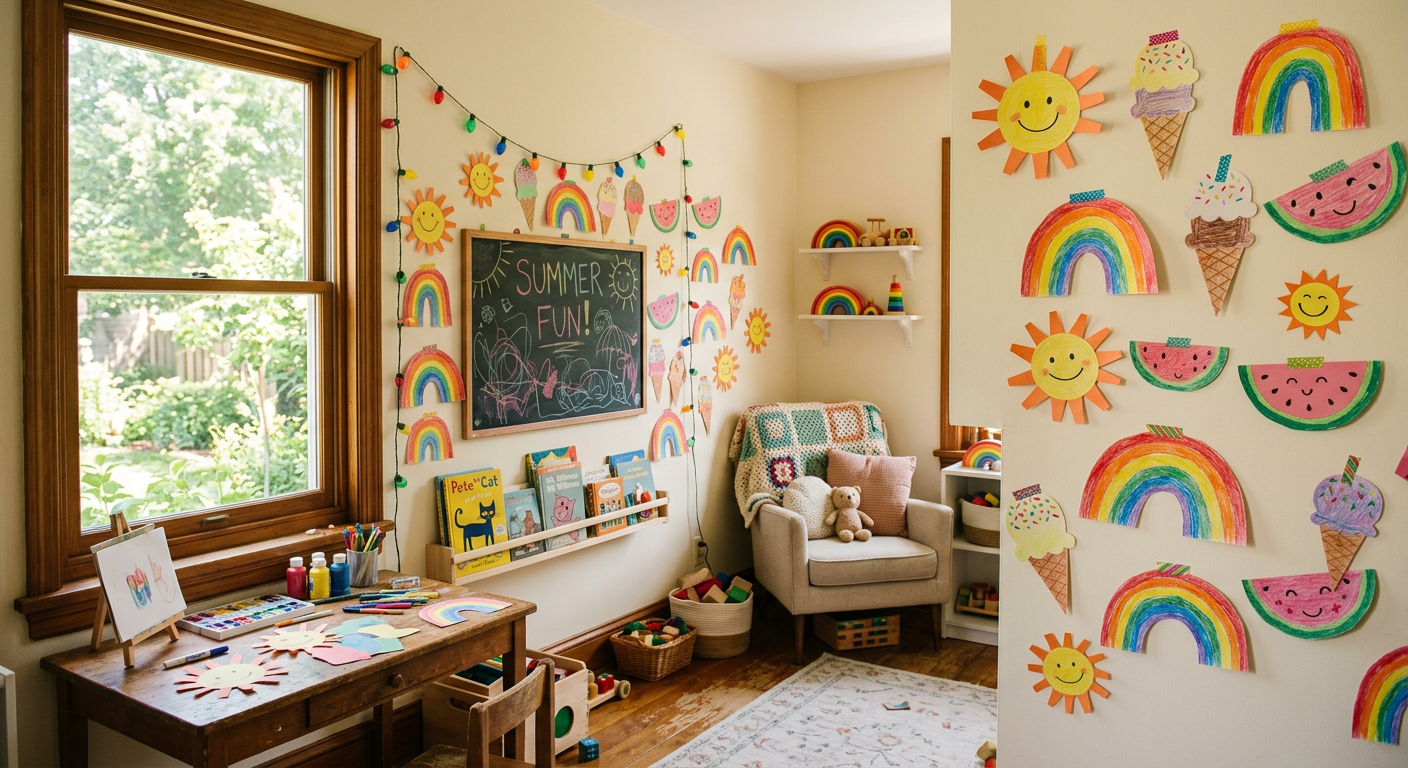
If it's grey outside, make it sunny inside. Draw and cut out suns, rainbows, ice cream cones, watermelons, anything that feels like summer. Roll the tape so it doesn't show on the front, and cover the walls, windows, doorways. It takes a while and the effect is genuinely cheerful.
Materials: Paper, crayons or markers, scissors, tape
Social-emotional challenges:
- Two children disagree on which decorations go where. "You both have opinions about the wall. How could you divide the space?"
- Someone's cut-out gets accidentally torn. "It tore. That's disappointing. Can it be fixed, or should we make a new one?"
- One child wants to take down another's decoration. "She made that one. How do you think she'd feel if it came down?"
- Someone wants to draw something that doesn't fit the sunny theme. "The theme is summer. Does it have to match, or is there room for your idea too?"
23. Make & Mail a Greeting Card
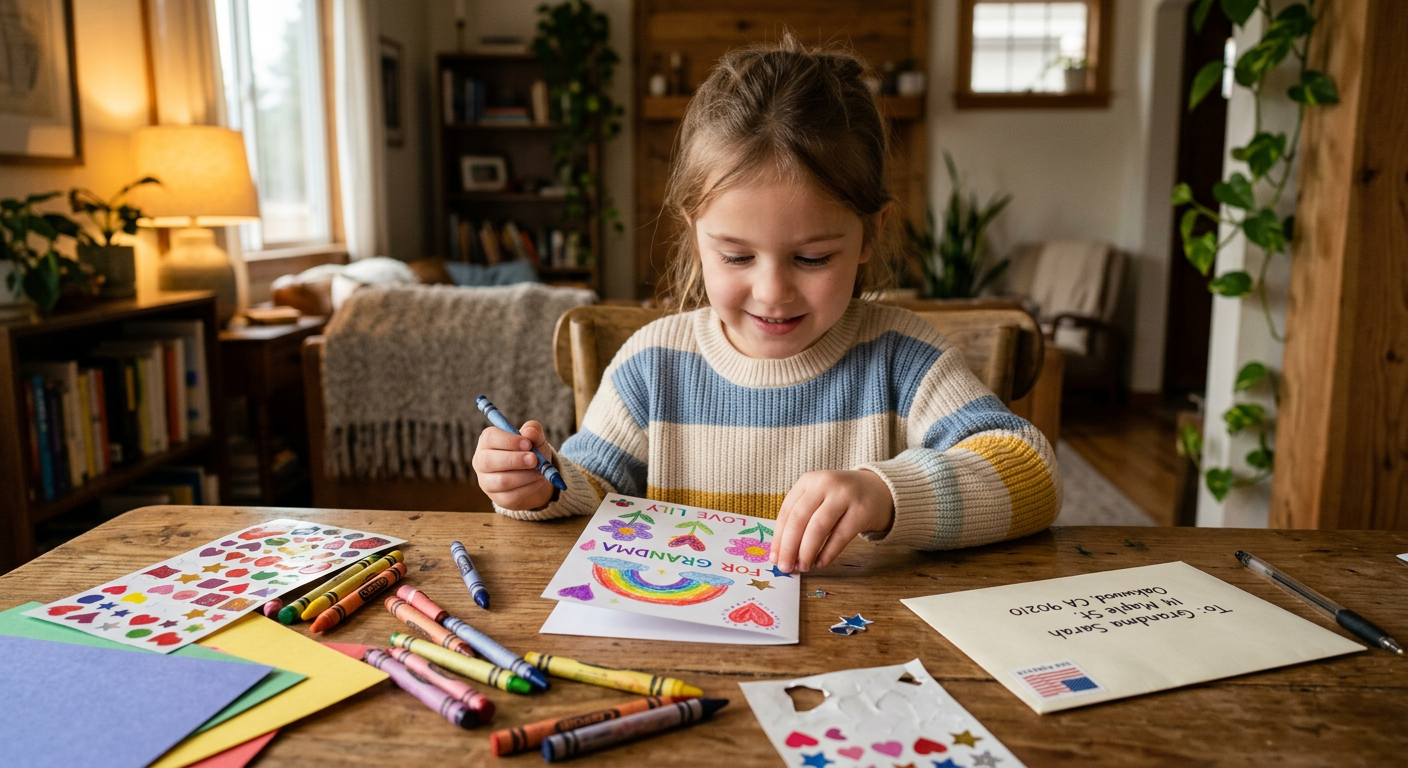
Choose someone to send it to: a grandparent, a friend, a neighbor. Fold the paper, decorate the outside, write something on the inside. Address the envelope together. Then actually go mail it. Most crafts stay in the house. This one goes somewhere.
Materials: Paper, crayons or markers, stickers (optional), envelope, stamp
Social-emotional challenges:
- Two children both want to send it to different people. "You each have someone in mind. Could you make two cards, or decide together?"
- Someone wants to write something silly; the other wants it to be heartfelt. "Both ideas are real. Is there a way to include both?"
- A child writes a card but is shy about sending it. "It feels a little vulnerable to send something you made. That's normal. What do you think the person will feel when they get it?"
- The card doesn't look how someone hoped. "It's different than you pictured. What's something you like about it?"
24. The Mattress Slide
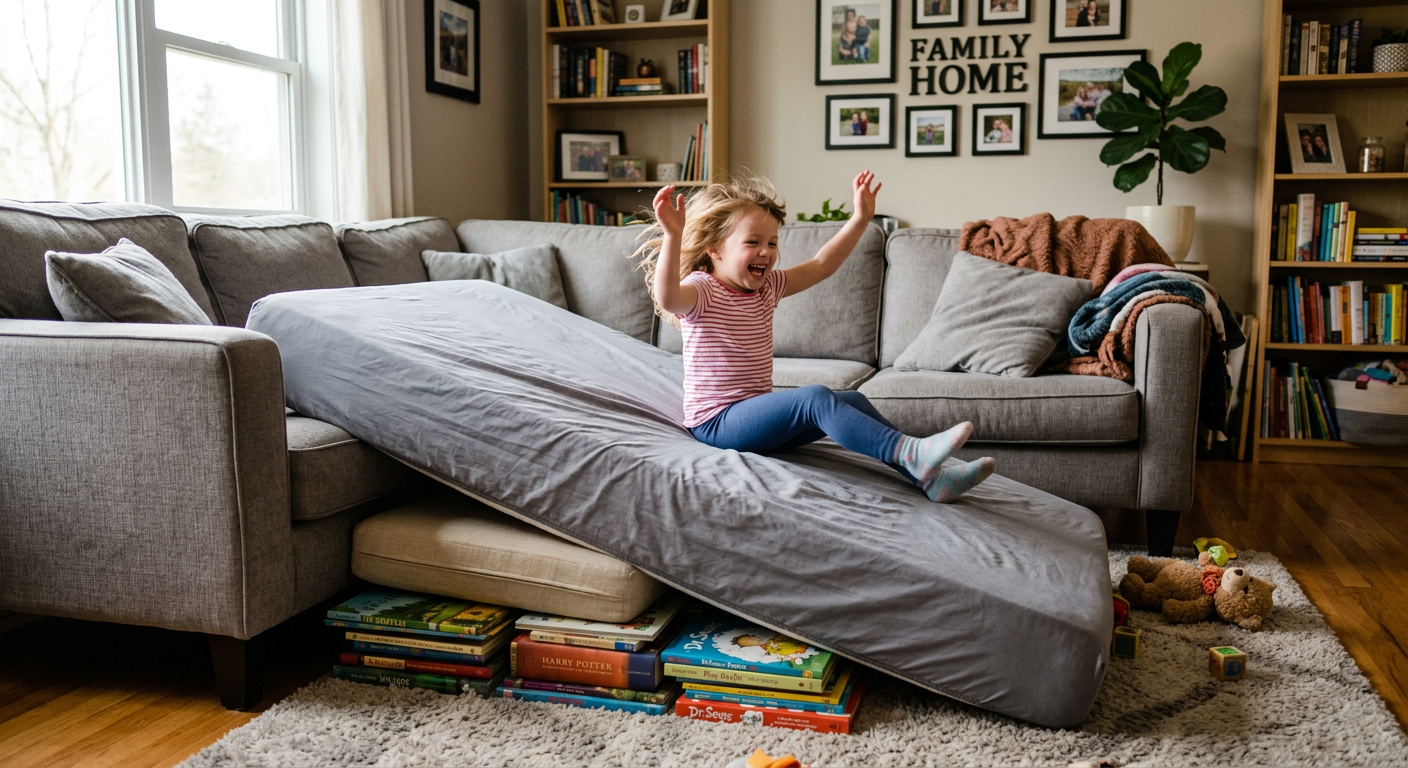
Take a mattress off a bed, prop it at a gentle angle against the sofa, and use pillows and a couple of books to hold the angle steady. Now you have a slide. It takes a few minutes to set up and will occupy children for a very long time. Agree on the rules before the first slide.
Materials: A mattress (single size works best), sofa or wall to lean it against, pillows and books for support
Social-emotional challenges:
- Everyone wants to go first. "We have a slide and everyone wants to go at once. How do we take turns without it turning into a fight?"
- Someone goes too fast and bumps into another. "That was an accident. She got hurt a little. What could we say?"
- One child wants to change the angle but others are happy with it. "You want it steeper. What does everyone else think? Let's decide together."
- The slide feels too scary for one child. "You don't have to go. You can watch. Let her know when you're ready."
25. The Clown Nose Box Game
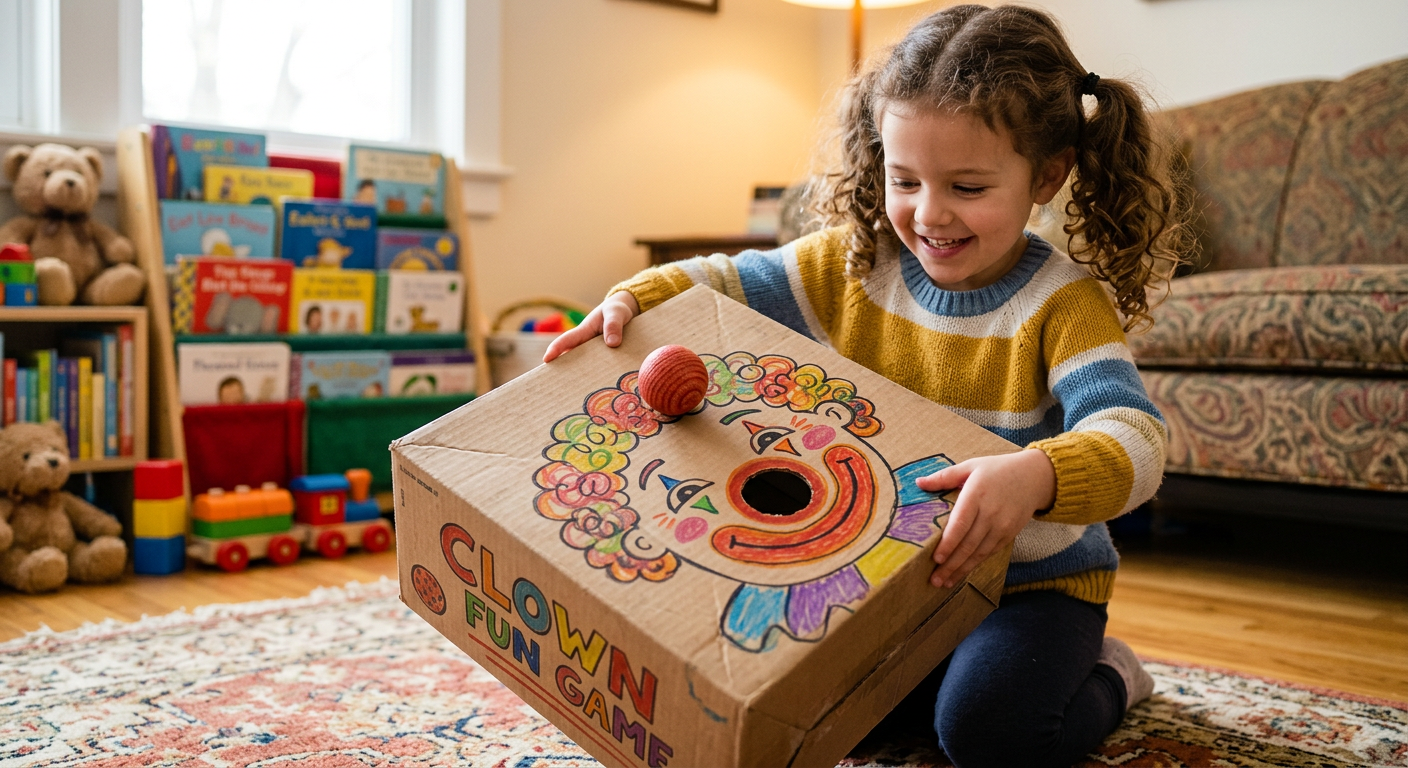
Take a box, draw a clown face on the front, cut a hole where the nose goes. Drop a ball inside. The game is to tilt and tip the box until the ball falls out through the nose. It's harder than it sounds. Take turns, time each other, make it a competition, or try to beat your own record.
Materials: A cardboard box with a lid or closed top, markers, scissors (to cut the hole), a small ball
Social-emotional challenges:
- One child figures it out quickly and the other is still struggling. "She got it faster. How does that feel? What tip could you share with her?"
- Someone wants to add more holes to make it easier. "Good idea, but would everyone agree to change the game in the middle?"
- Two children argue over whose turn it is. "You've both gone twice. How are you keeping track?"
- Someone drops the box in frustration. "The frustration is real. Do you want to take a break or try again?"
26. The Dance Moves Chain Game
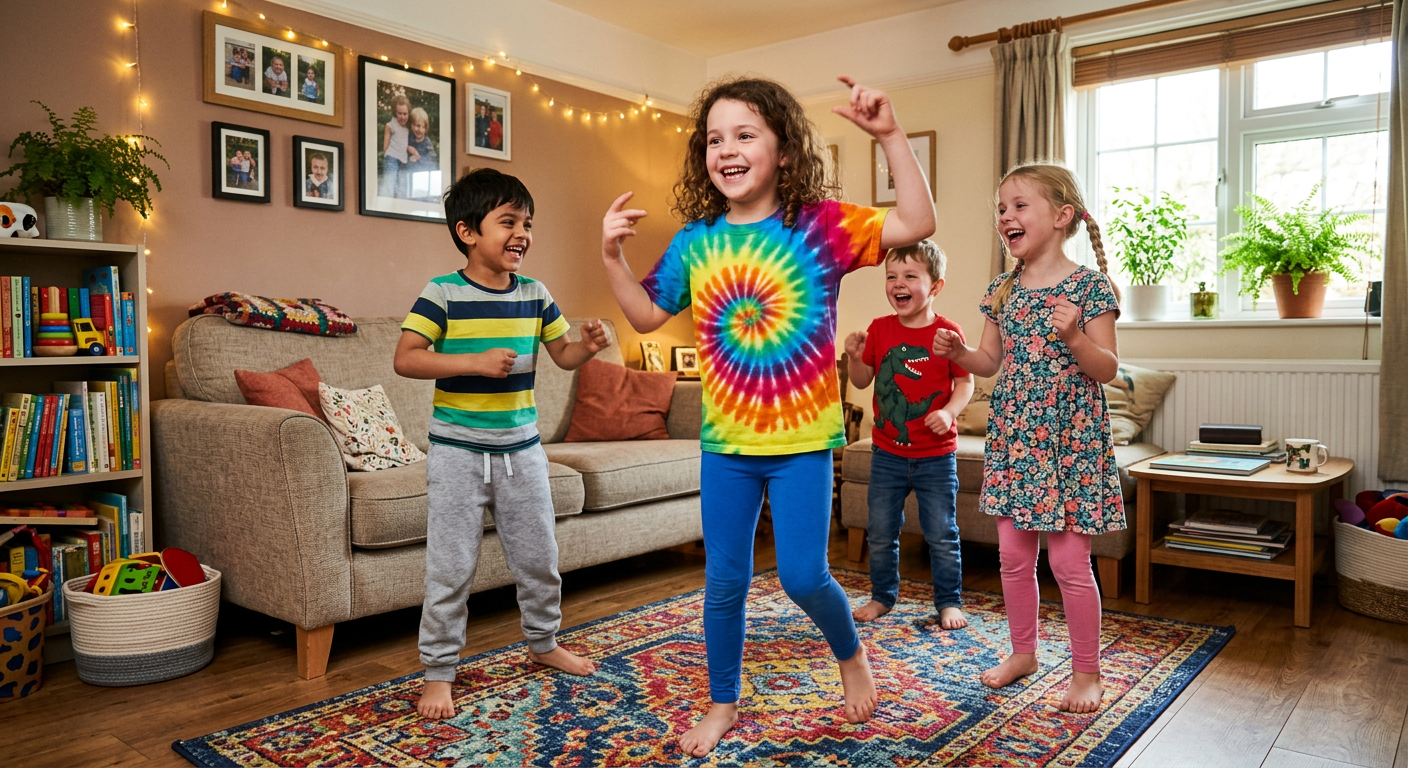
Put on music with good energy. The first person does one dance move. Everyone copies it. The second person does that move plus adds their own. Everyone copies both. Keep going. It becomes a chain that gets longer and funnier as it grows, and eventually someone forgets and chaos happens. No dance experience required.
Materials: Music (any device), enough floor space to move
Social-emotional challenges:
- Someone's move gets laughed at. "She laughed when you did your move. How did that feel? Was it laughing-with or laughing-at?"
- A child is too shy to add a move. "You don't have to do something big. Even a tiny move counts. What could it be?"
- The chain gets too long and someone forgets. "The chain broke. That's okay, it was very long. Do we start over or make a shorter version?"
- Someone wants to skip someone else's move. "Every move counts. Even if it's hard, try. That's the game."
27. Indoor Bowling
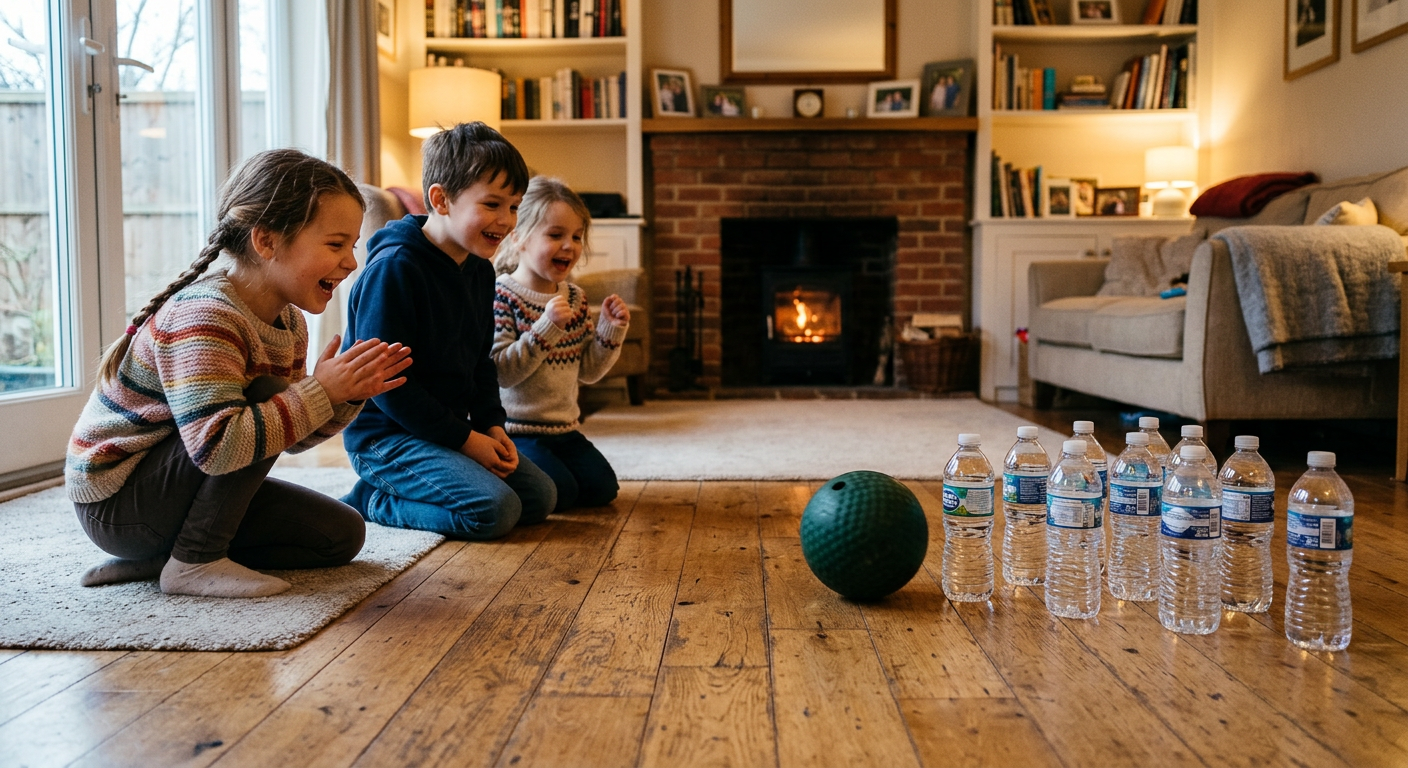
Line up water bottles (a little water in each helps them stay put), mark a throwing line with tape, roll a ball toward the pins. Someone has to reset after each turn. That job is never popular, but figuring out who does it is part of the game.
Materials: Plastic water bottles (6–10), a soft ball, tape for the throw line
Social-emotional challenges:
- Someone doesn't want to reset the pins (that job). "Someone has to reset them. How do you decide who?"
- A child keeps moving closer to throw. "The line is the same for everyone. Moving it would change the game for everyone."
- Someone knocks down very few pins and feels embarrassed. "That was a hard throw. What would you do differently next time?"
- Two children disagree on how many pins fell. "You counted differently. What could settle it?"
28. Homemade Instruments & Band
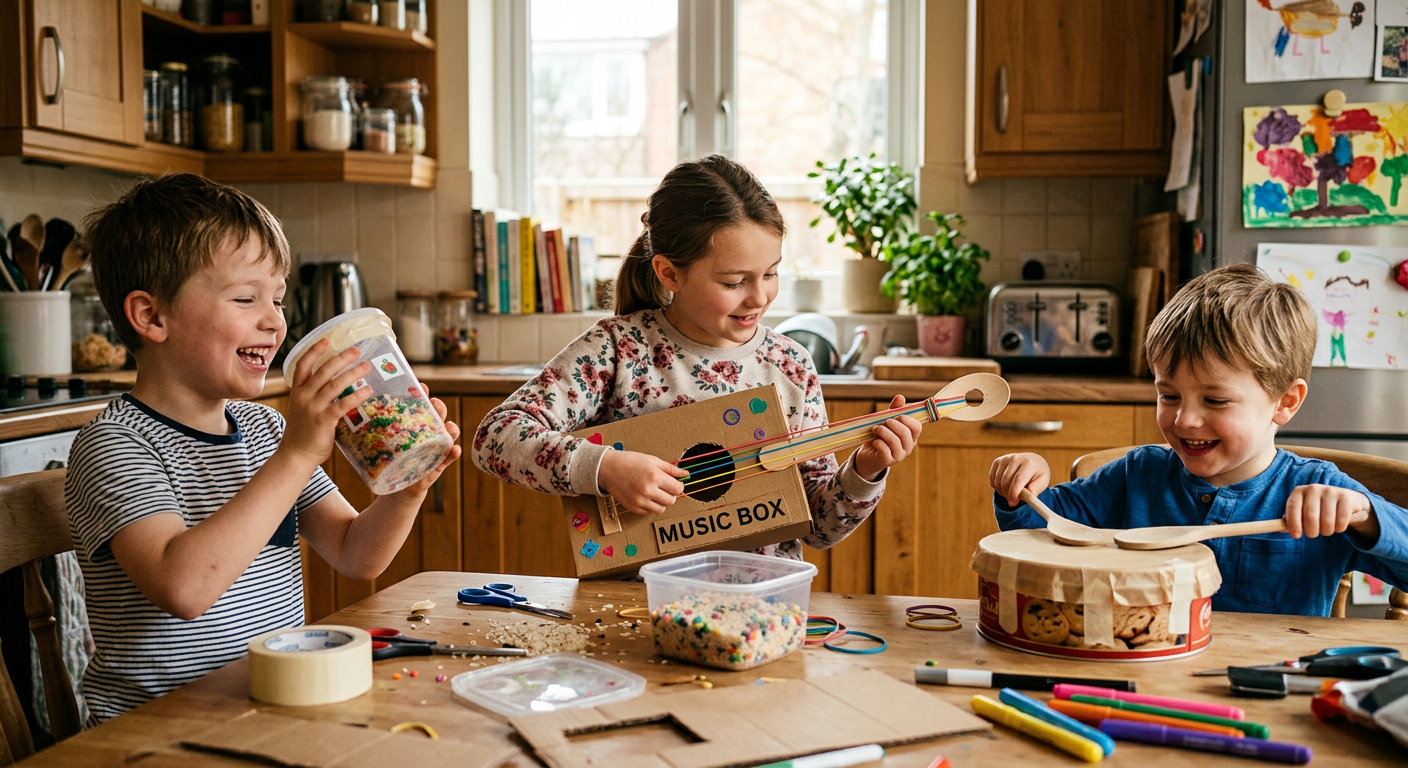
Rice in a sealed container becomes a shaker. Rubber bands stretched across a box become a guitar. A pot and a wooden spoon become a drum. Once everyone has an instrument, you have a band. Figure out who's the conductor before anyone starts playing.
Materials: Containers with lids (for shakers), rubber bands, boxes, pots, wooden spoons, dried rice or pasta
Social-emotional challenges:
- Everyone wants to play loudly at once. "That's a lot of sound. What could a conductor do to help?"
- Someone wants the drum but another already claimed it. "Two people want the loudest instrument. How do you decide?"
- One instrument sounds much better than another. "Your shaker sounds cooler. Is that fair? Does every instrument have to sound equal?"
- The band wants to perform for a parent who is busy. "They said they'd listen in five minutes. What do you do while you wait?"
29. Sensory Bin
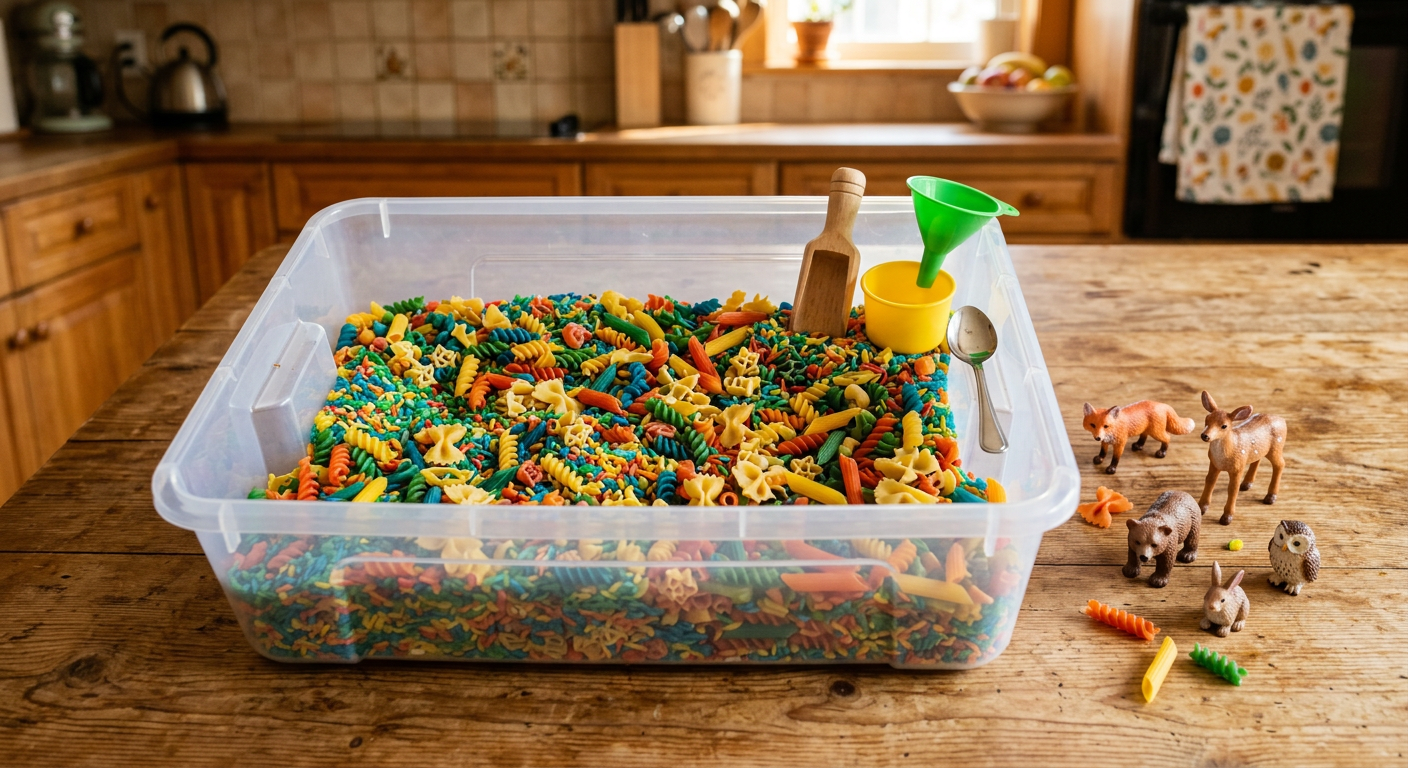
Fill a large bin or plastic tub with dried rice, pasta, or lentils. Add small cups, spoons, toy animals, whatever seems interesting. Best for younger kids, but older ones always end up drifting over. One rule: what goes in the bin, stays in the bin.
Materials: Large plastic bin, dried rice or pasta or lentils, small cups, spoons, small toys
Social-emotional challenges:
- One child grabs a toy the other was using. "She was using that cup. What could you use instead while you wait?"
- Rice spills on the floor. "It spilled. That happens. Let's scoop what we can back in."
- An older child takes over the bin and leaves no room for the younger one. "She wants to play too. How can you both fit?"
- One child keeps filling the other's cup and pouring it out. "She asked you to stop. What does that mean?"
30. The Family Newspaper
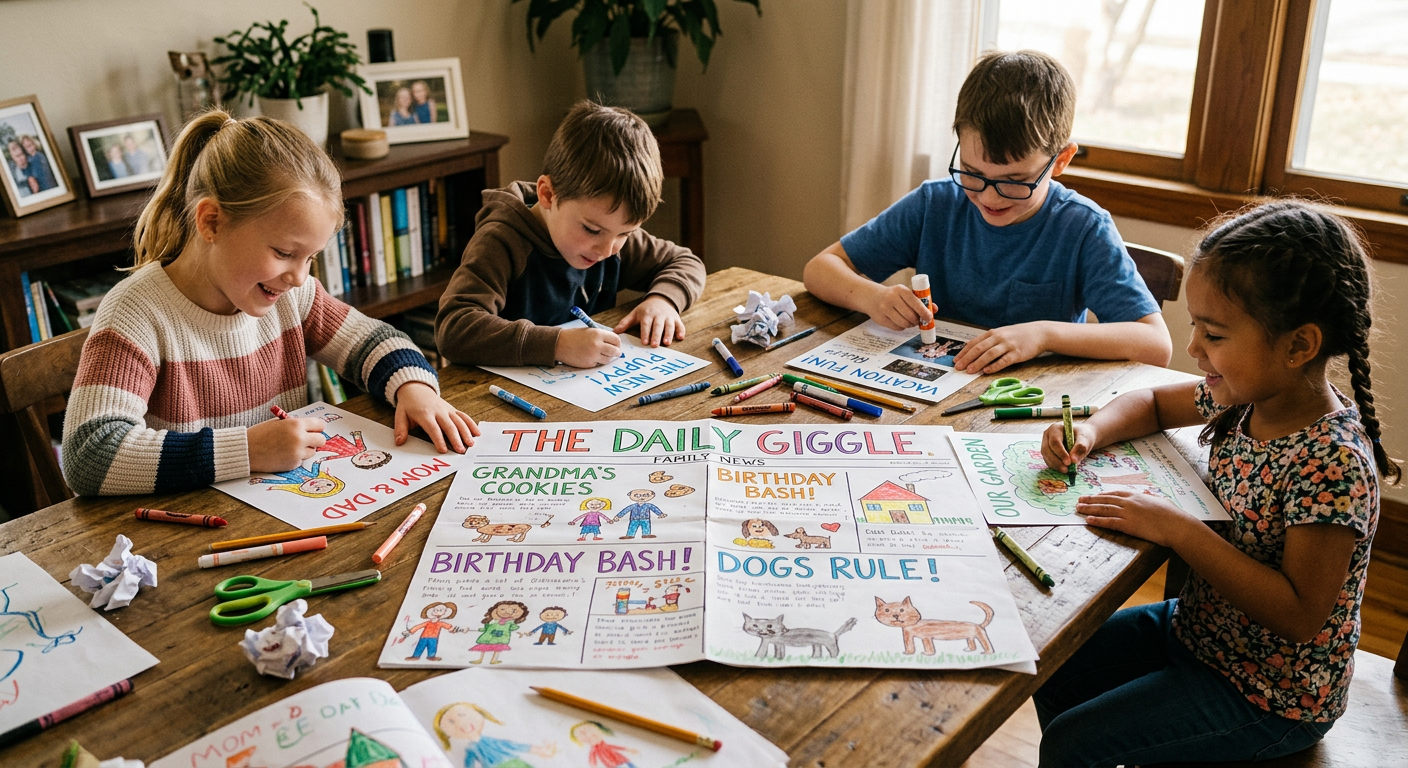
Give each child a section: news, weather, sports, comics, recipes. Write and draw the stories of your week: what happened, what was funny, what the weather was like, what someone made for dinner. Fold it like a newspaper and read it aloud to the family at the end. It is always funnier than anyone expected.
Materials: Paper (larger is better, A3 or folded A4), pens, crayons, rulers (optional)
Social-emotional challenges:
- Someone wants to write about a fight that happened. Let them. "That was part of your week. How do you want to describe it?"
- Two children want the same section. "You both want to do comics. Could you each do one comic strip, or decide another way?"
- One child's section is much shorter than the other's. "Yours is shorter. Does that bother you? What could you add?"
- Someone writes something about a sibling that the sibling finds embarrassing. "You wrote about her. She doesn't like it. What could you do?"
Why Rainy Days Are Actually Useful
The constraint of being inside creates something valuable: children can't escape into separate activities. They have to figure out how to be together.
The sharing of limited materials, the negotiation over space, the frustration of plans changing. These are the exact skills they need for school, for friendships, for life. Rainy days give us concentrated practice.
Last week, after a long afternoon inside, my son said to his sister: "I didn't like your idea at first, but it worked better than mine."
That's not something he would have learned if we'd just turned on a screen. The rainy day gave us the gift of having to work it out together.
Frequently Asked Questions
Q: What can kids do inside on a rainy day?
A: More than you'd think. Start with something hands-on: a blanket fort, play dough, watercolor painting, or a puzzle. If you have multiple kids, lean toward activities that require sharing: building LEGO together, baking, or working on a project. The goal isn't to fill every minute; it's to give them something worth figuring out together. This list has 30 options ranging from calm and quiet to active and messy.
Q: How do I keep kids entertained when it's raining?
A: Instead of planning everything for them, set up a simple prompt and step back. Lay out a blanket and snacks for an indoor picnic. Put some cardboard boxes on the floor. Set up watercolors and paper. Children often do their best playing when the setup is minimal and the outcome is open. Structured activities like board games or baking work best when energy is high and you have time to be part of it.
Q: What are easy rainy day activities for toddlers?
A: Play dough, simple watercolor or finger painting, leaf rubbings with peeled crayons, and sensory exploration with safe household materials all work well for toddlers. Keep materials simple and stay nearby. The best toddler activities are ones where the process is the point — squishing, pressing, pouring, sorting — rather than a finished product. The indoor picnic is also a favorite because it turns snack time into an event.
Q: How do you make a rainy day fun for kids?
A: Lower the expectations for what the day needs to look like. One good long project — a cardboard box world, a puppet show, a baking session, a collaborative mini book — is more satisfying than five rushed activities. Let kids take the lead once you've set up the environment. Say yes to the mess. The day doesn't need to be perfectly orchestrated to be a good one.
Q: What are rainy day activities that don't require screen time?
A: Almost everything on this list. The classics hold up well: puzzles, board games, drawing, baking, play dough. Less obvious options: paper airplanes with a distance contest, origami from a simple guide, a story round-robin where each person adds one sentence, or planning and performing a puppet show. For older kids, writing and illustrating a mini book together can stretch across a whole afternoon.
Q: What do you do with kids stuck inside all day?
A: Rotate between types of activity. Something physical (obstacle course, paper airplanes), something creative (painting, play dough, the cardboard box world), something social (board games, collaborative building, cooking together). Don't plan every hour. Leave gaps. Boredom is often what leads to the most creative ideas, especially when there are materials within reach.