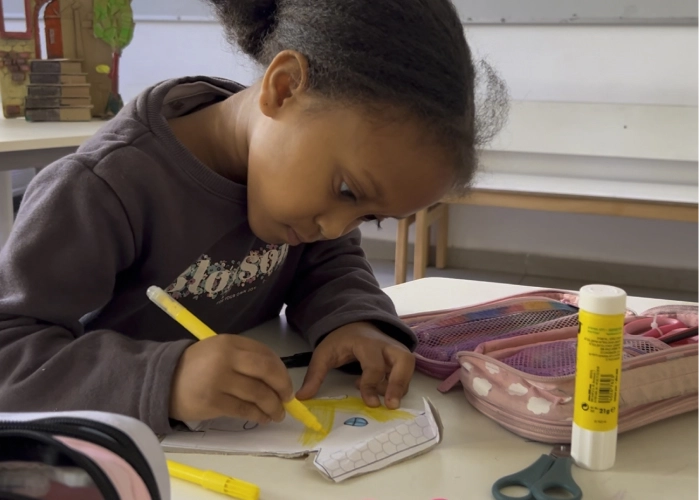
There's something special about watching children create together.
Two small hands reaching for the same marker. Three different ideas about where the eyes should go. A moment of stillness when someone's feeling gets bruised.
These moments might look like interruptions to the craft project. But actually, they are the project.
Craft activities create contained situations where children can practice something deeply human — being together when everyone wants something at the same time. These impulses don't disappear as we grow older. They become higher stakes. The gift of childhood is having safe, small moments to practice.
7 Cooperation Crafts for Preschoolers
1. Make Lemonade Together

Find the activity here: Make Lemonade Together →
Making lemonade together is a delicious way to practice cooperation. Everyone has a job — squeezing lemons, measuring sugar, stirring, pouring. The result belongs to everyone, which means every decision along the way is shared. And at the end? You get to drink what you made together.
Materials: Lemons, sugar, water, a pot, spoons, a pitcher
Social-emotional challenges:
- Who gets to squeeze the lemons? Who stirs? "Everyone gets a turn. What job would you like to do first?"
- Someone adds too much sugar. "Now it's really sweet. How do the others feel about that? What could we do?"
- Someone wants to taste it before it's ready. "We all made it together. Let's taste it together when it's done."
- The lemonade doesn't taste exactly how someone imagined. "It's different than you expected. What do you like about it?"
2. The Shared Canvas
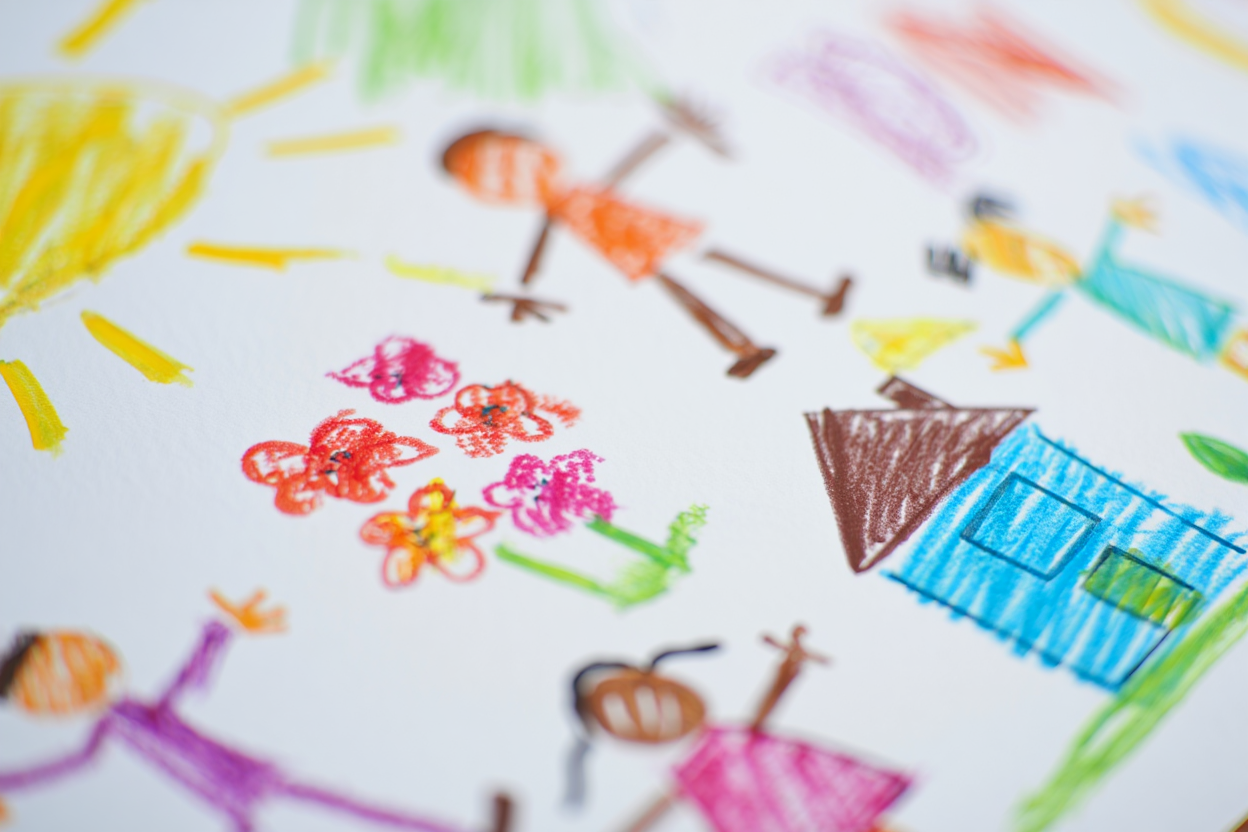
We intentionally make the paper smaller than comfortable. This forces what we're actually practicing — two ideas needing to coexist in the same space. The craft is just paper and crayons. The real design is the predictable conflict.
Materials: Large paper (butcher paper works well), crayons, tape
Social-emotional challenges:
- Someone draws into someone else's space. "Your drawings are meeting. What could we do?"
- Two children want the same corner or spot. Adults can make this happen by making the paper smaller.
- Someone doesn't like what another child drew near their work. "He ruined it!" Let the feeling be there: "You're upset. What part do you still like?"
3. The Letting Go Drawing
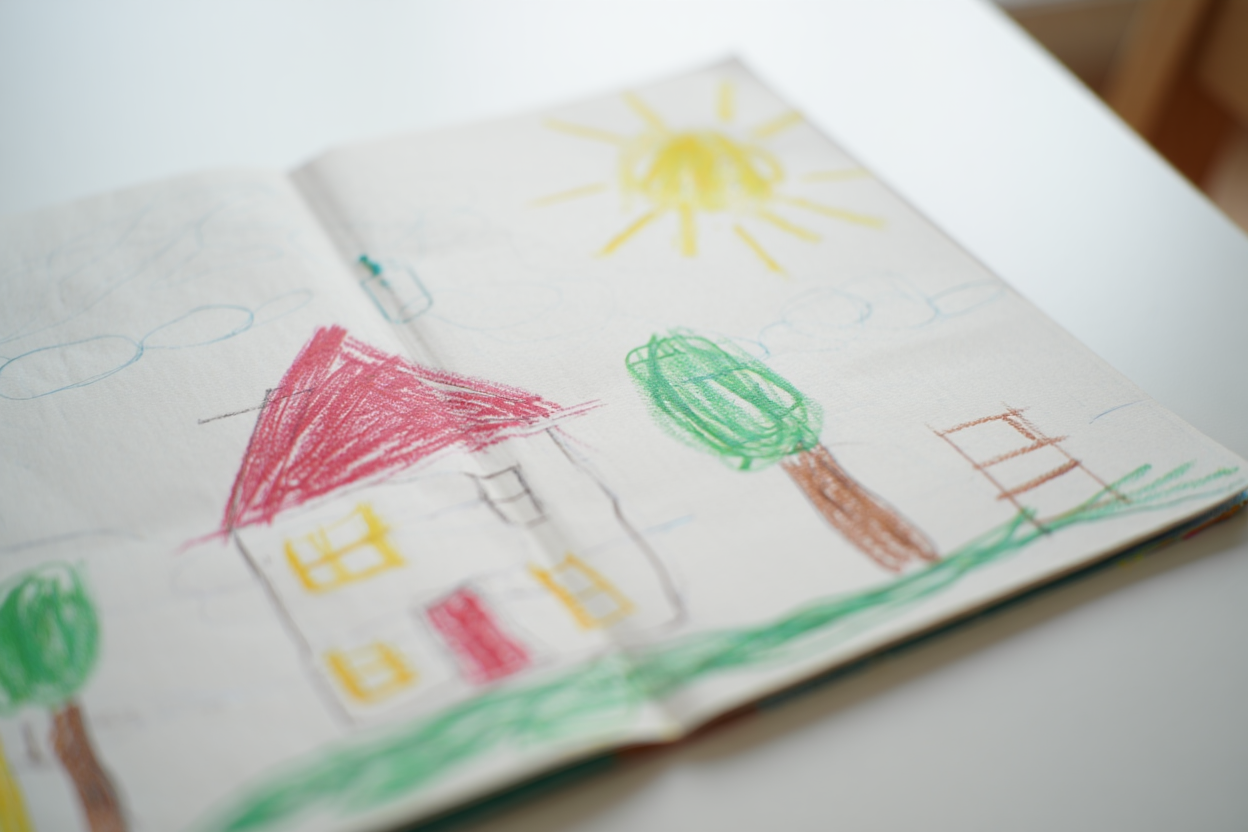
This activity is designed around loss of control. Your drawing — the thing you started — will be changed by someone else. We name this upfront: "Your picture will become something surprising." Practice for every collaboration that follows.
Materials: Paper, crayons, a timer
Social-emotional challenges:
- Someone doesn't want to pass their drawing. "But I'm not finished!" The timer helps: "When the bell rings, we all pass together."
- Someone is upset when their drawing comes back changed. "She messed it up!" Let the feeling be there. Then: "What's one thing you like about what it became?"
- Someone draws something "wrong" on another child's paper on purpose. Address it directly: "That felt unkind. What could you draw that adds to their picture?"
4. The One Resource
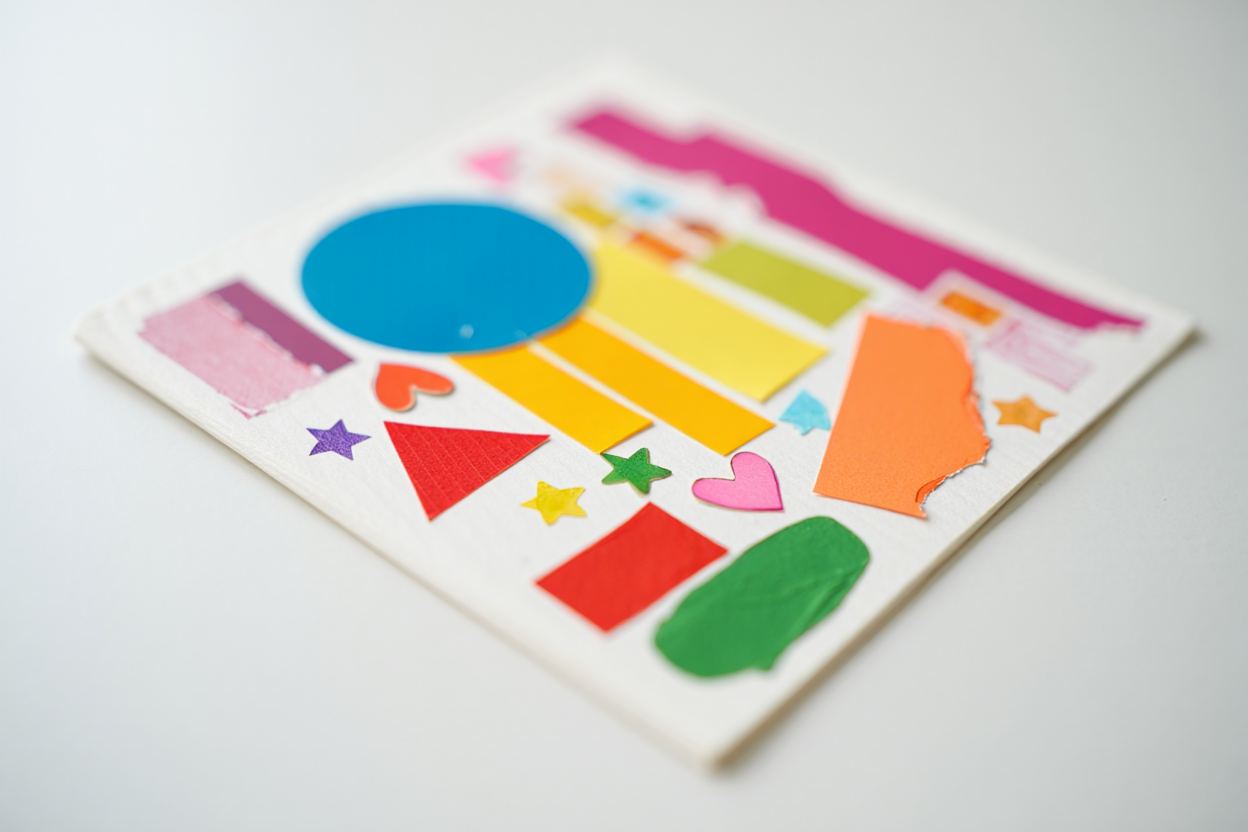
We put one glue stick in the middle on purpose. Everyone will want it at the same time — that's the design. The craft is incidental. The shared resource is the point. Adults can even say "Let's wait before anyone touches it" and watch hands struggle to hold back.
Materials: Paper, things to glue (scraps, stickers, etc.), one glue stick
Social-emotional challenges:
- Multiple hands reach for the glue at once. "Lots of people want it. What could we do?" Let them suggest solutions.
- Someone holds the glue too long. Others get impatient. "You've had it for a while. Others are waiting."
- Someone grabs it from another child. Stop and address it: "You took it from her hand. How do you think she feels? What could you do differently?"
5. The Interdependence Puppet
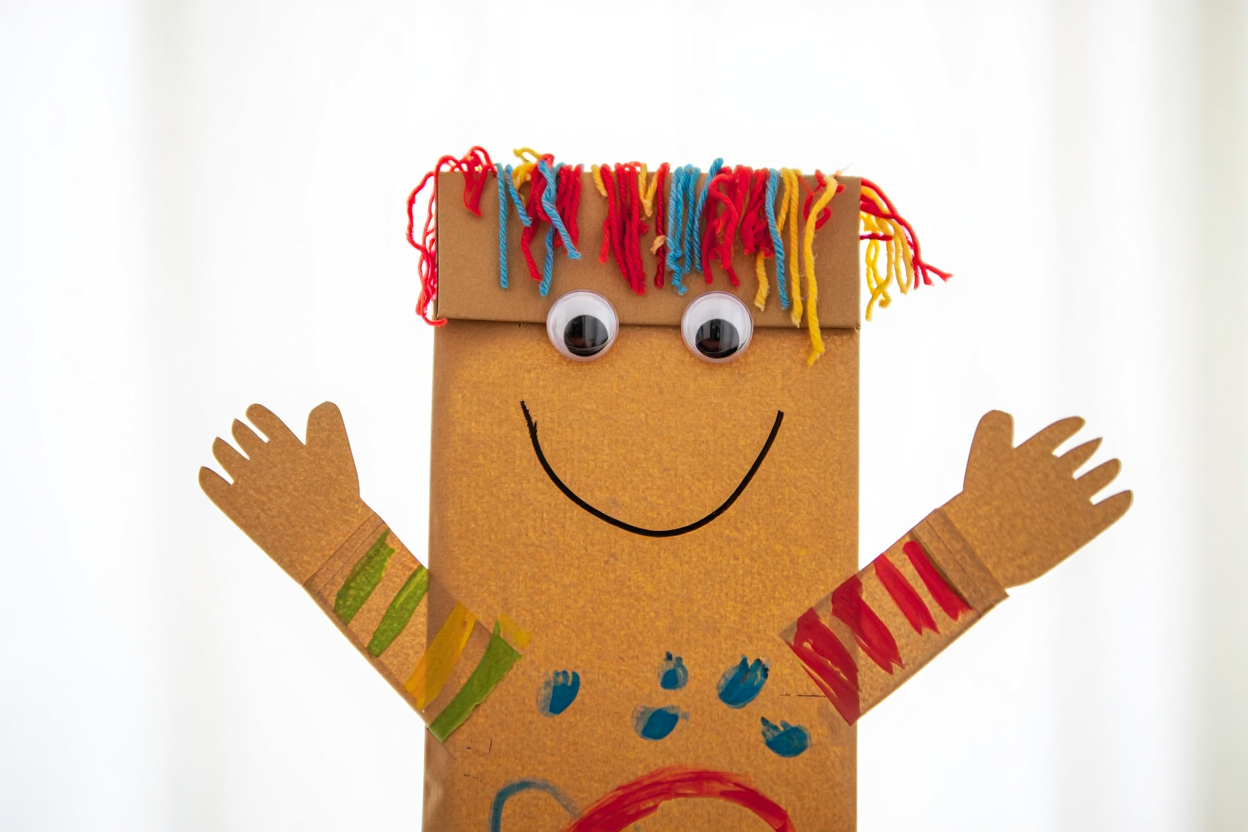
This puppet requires two people. One holds, one glues. No option to do it alone. Children experience needing someone else — and at the end, each has their own puppet made with help. That's the lesson embedded in the design.
Materials: Paper bags, markers, yarn, glue
Social-emotional challenges:
- Someone wants to do it alone. "I can do it myself!" The answer: "This puppet needs two people. One holds, one glues."
- Partners disagree about how the puppet should look. "I want blue eyes!" "No, green!" Ask: "Whose puppet is this one? They get to decide. Then you decide for yours."
- One partner isn't helping or paying attention. "Your friend is waiting for you to hold it still."
- Prompt gratitude: "Your friend helped you. What could you say to them?"
6. The Different Ideas Town
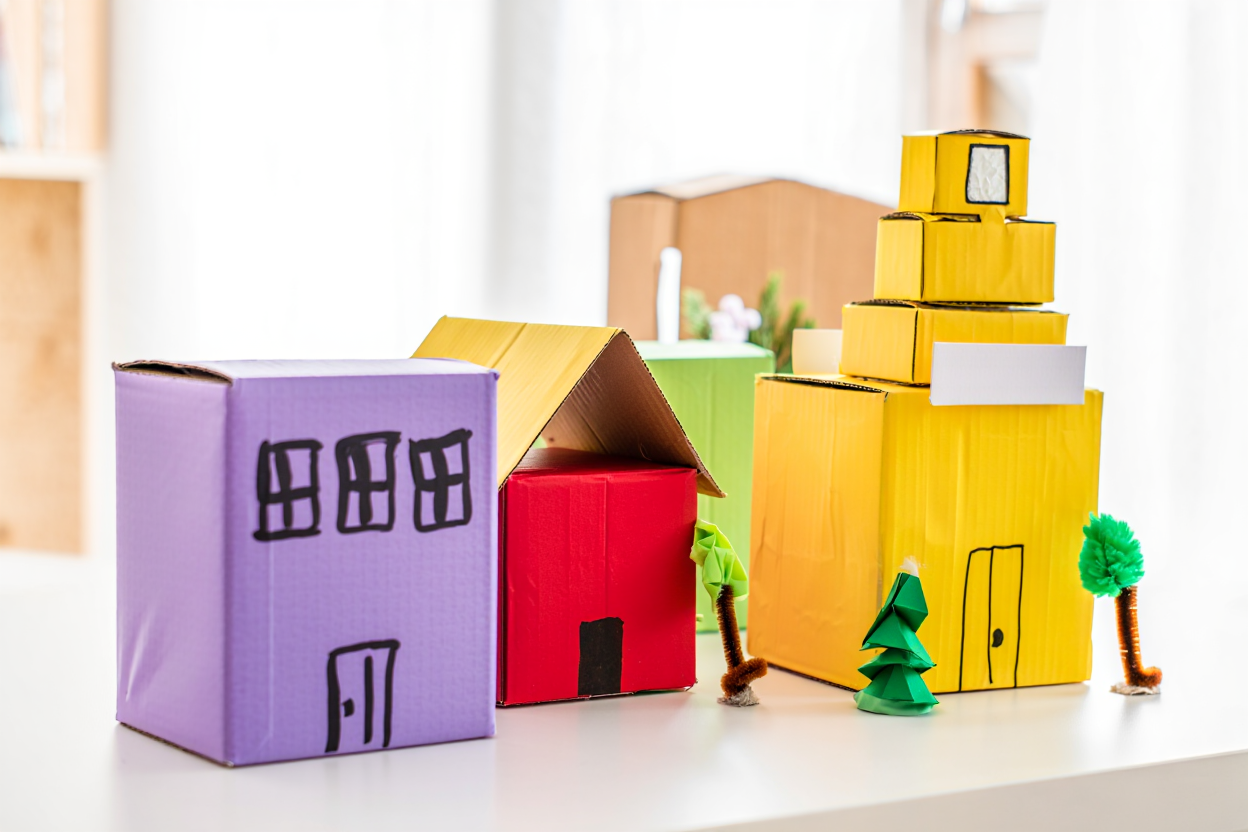
A purple hospital. A school with a door on the roof. Different ideas placed together make the town more interesting — that's the point. Each child contributes their unique building to a shared world.
Materials: Small cardboard boxes, construction paper, markers
Social-emotional challenges:
- Two buildings want the same spot. "Two buildings want the same place. What could we do?"
- Someone says another building is "wrong." "That's not a real hospital!" Ask: "Have you seen every building in the world? There are all kinds."
- Someone doesn't want their building next to someone else's. "I don't want my house near his." The town needs all the buildings — where else could it go?
- Someone wants to add a road but it would go through another child's area. Practice asking permission.
7. The Long Arc Project
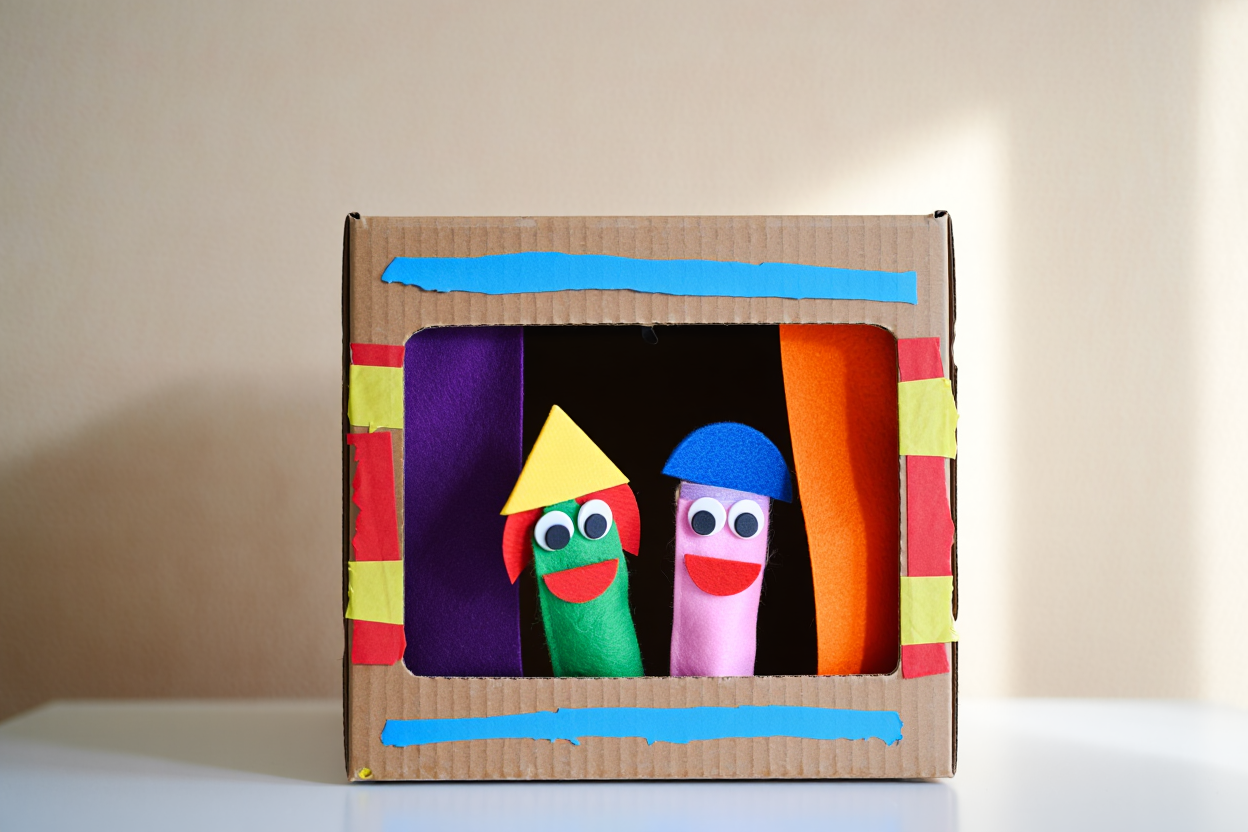
This isn't a single activity — it's many sessions of working through things together. The longer arc means more practice, more moments, more chances to work through challenges. This is the core of our course — a project designed with conflict resolution moments built in.
Materials: Cardboard boxes, paper, markers, fabric scraps
Social-emotional challenges:
- Whose story idea do we use? "You both have ideas. How could we include both?"
- Who gets which character? Who performs first? Every decision is a chance to practice.
- Someone wants to change something that was already decided together. How do we handle that?
- The performance doesn't go as planned. Something falls down, someone forgets their line. Practice flexibility.
This is the project at the heart of our course. The first lesson is free if you'd like step-by-step guidance.
Why This Practice Matters
The impulse to grab what we want, to be first, to have the best piece — this doesn't fade as we grow older. It becomes more complicated. Higher stakes. Harder to see in ourselves.
What does fade is our ability to change. Behavior patterns become more fixed as we age. The neural pathways get deeper.
Childhood is the window. These small moments — one glue stick, one special spot, one turn at a time — are practice for everything that comes later.
The craft is just the container. The real work is what happens between people.