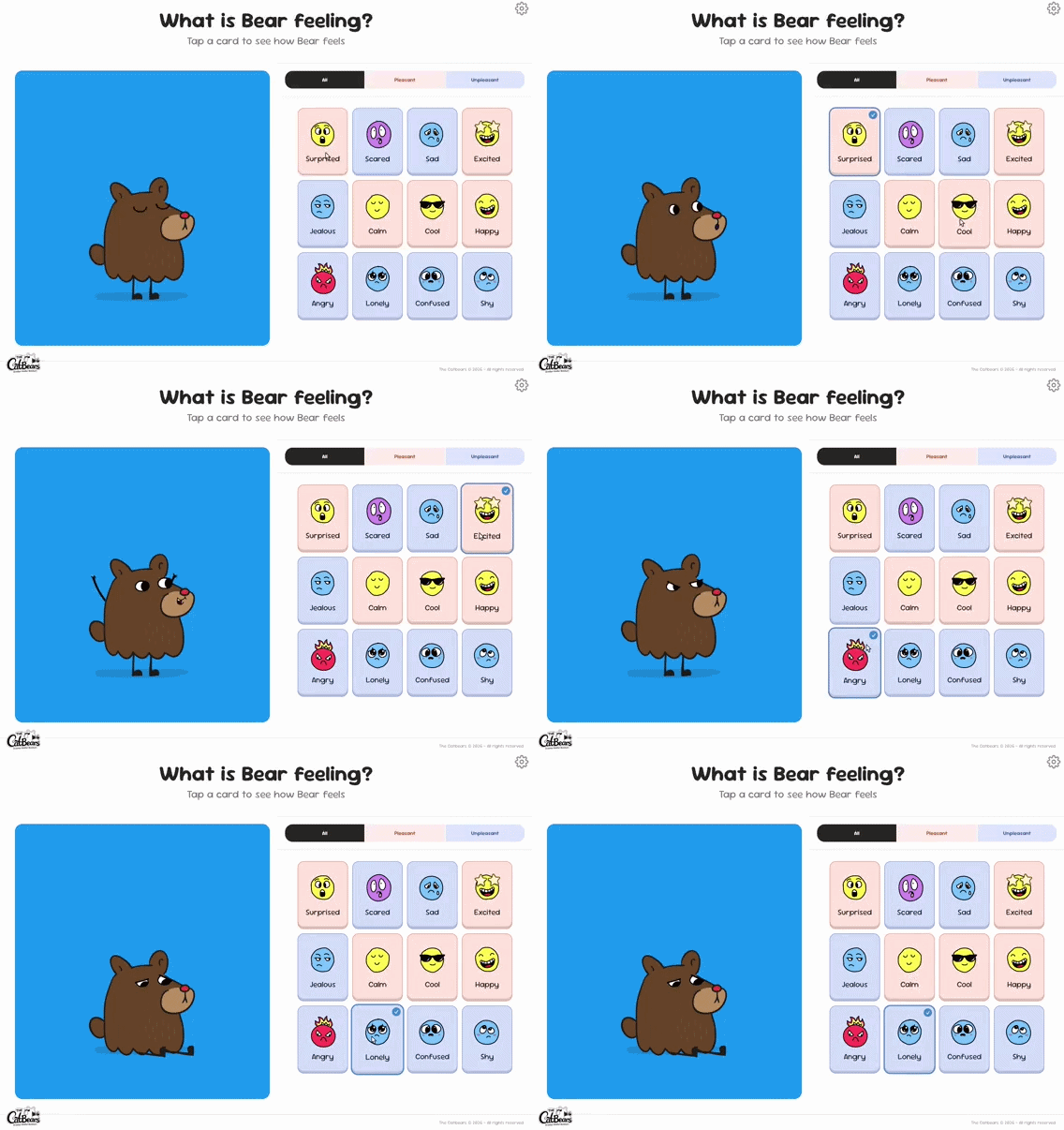
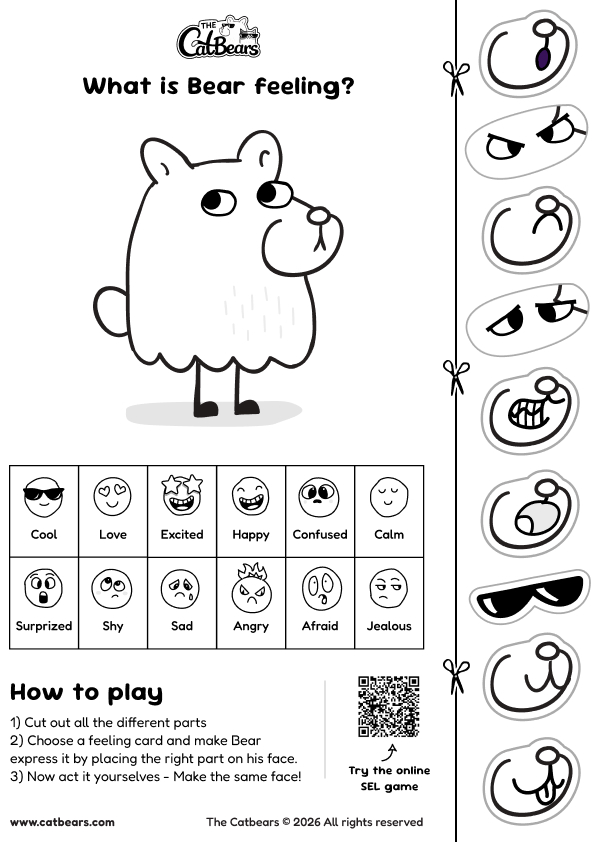
Kids understand emotions best when they get to play with them, not just name them. Building a face, piece by piece, turns a big abstract feeling into something they can see, touch and try on.
Play with feelings, don't just label them
- Cut out the eyes, mouths and brows, then place them on the Bear.
- Ask out loud: what happens if we put angry eyes with a smile?
- Try sad eyes with a wide-open yell. Does that feel like worry, or surprise?
- Swap one piece at a time and watch the whole feeling change.
 Sad eyes
  Sunglasses
  Oh mouth
  Funny smile
 Why a cut-and-paste printable works
Moving the pieces by hand makes the learning stick. Kids slow down, compare expressions side by side, and discover that a feeling lives in the whole face, not one part of it.
Reading and naming feelings is one of the most useful skills a child can build.
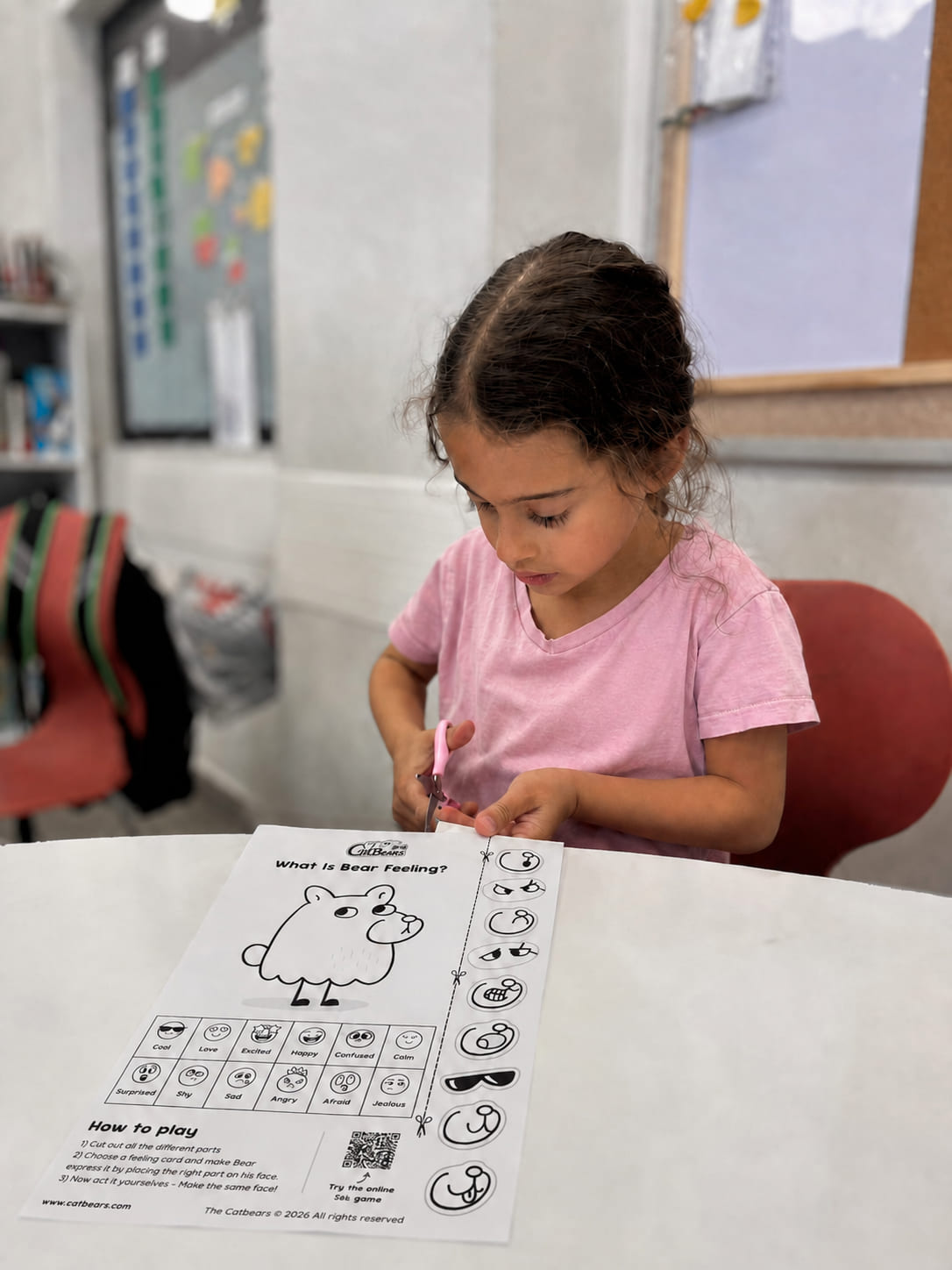
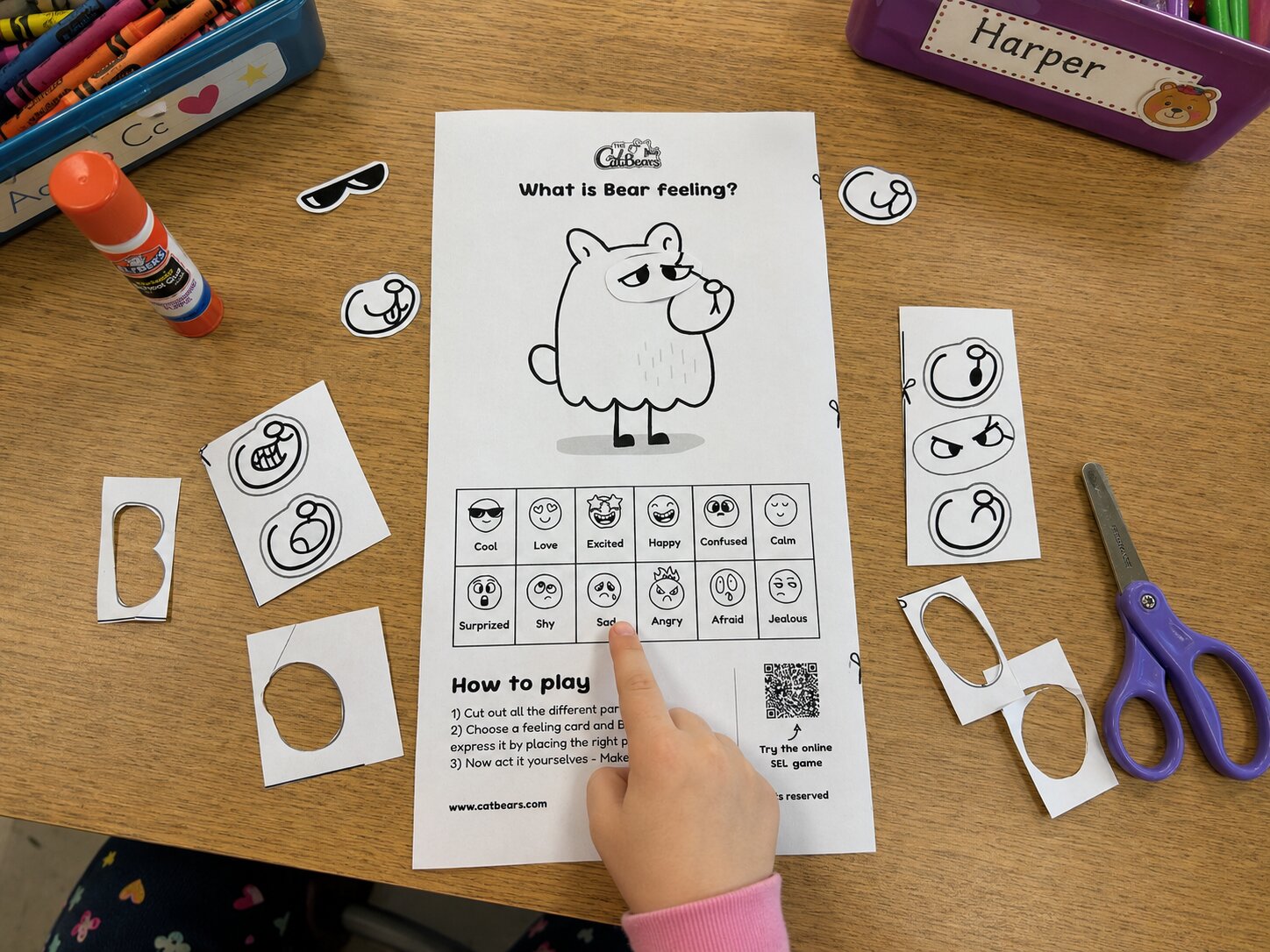
How to use this printable
- Use a pair of scissors and cut out all the different expressions, the different eyes, mouths, and feeling cards.
- Choose a feeling card and make the Bear express it by placing the right facial expressions. Talk about which pieces you chose and why.
- Now act it yourselves. Make the same face and express that feeling with your own body. Acting it out connects the face with the feeling, and the words for it.
About this emotion faces printable
A free printable emotion faces PDF and feelings cut-and-paste worksheet for kids. Use it as emotion cards, a feeling faces printable, or a hands-on emotion matching game at home, in the classroom or in therapy.
Stories and games that offer original, captivating approaches to resolving conflict and building inclusive, unifying dialogue.

It's a free printable PDF where kids cut out the Catbears Bear character along with a set of eyes, mouths and expressions. They then mix and match the pieces to build different feelings on the Bear's face, turning "naming emotions" into hands-on play.
Print the PDF, cut out the Bear and the expression pieces, then let your child place different eyes and mouths to make a feeling. Talk about each one ("what happens if we put angry eyes with a smile?") and try acting the expression out together.
It works well for toddlers through early elementary (roughly ages 2 to 8). Younger children enjoy the simple cut-and-place play, while older kids explore mixed and subtle feelings.
Yes. It's a 100% free download for home, classroom or clinical use, no sign-up required.
Absolutely. The expression pieces double as emotion cards, and you can lay them out as a feeling-faces matching game: match the face to a feeling word, a situation, or another player's expression.
Yes. If you'd rather play on a screen, try our free "What Am I Feeling?" emotion charades SEL game. It covers the same skills with no printing needed.