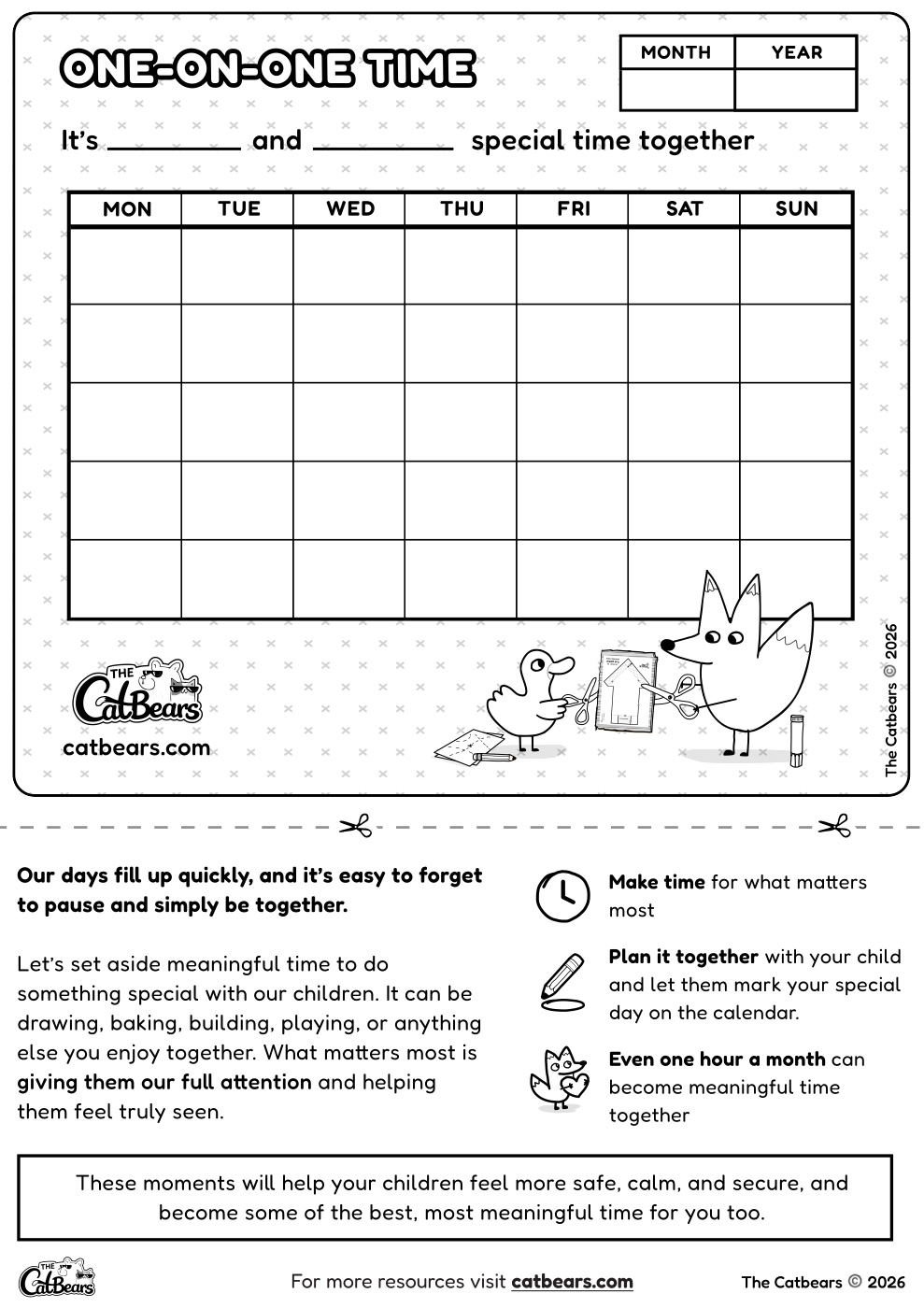
Our days fill up quickly, and it’s easy to forget to pause and simply be together.
This isn’t just a calendar. It’s a practice.
- Parent and child pick the day together
- The child gets to see it coming
- Full attention, even just once a month, becomes something they trust
Over time you’ll see progress
Children learn to feel truly seen, and that feeling becomes one of the most stable, secure parts of how they see the relationship.
These moments become some of the most meaningful time for you, too.
How to Use:
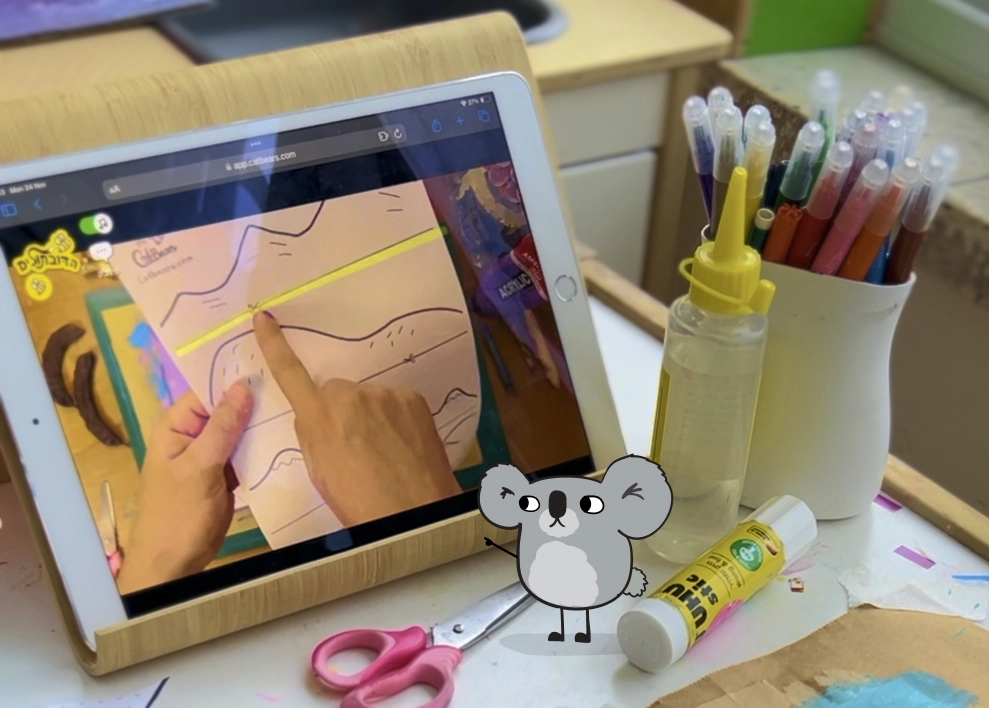
- Print it, or open it on a tablet
- Fill in the month and year, then sit down together
- Pick a day, mark it, and decide what you’ll do together
- Give that time your full attention: no phones, no multitasking
One-on-one time and quality-time resources
Find printable calendars for quality time with kids, parent-child bonding activities, and simple one-on-one time ideas for busy families.
Stories and games that offer original, captivating approaches to resolving conflict and building inclusive, unifying dialogue.

One-on-one time is a set period where a parent gives one child their full, undivided attention: no siblings, no phone, no multitasking. It doesn’t need to be long or expensive. What matters is that the child gets to choose, or help choose, what happens, and knows they have the parent’s complete focus.
Even a small, consistent amount, as little as one hour a month per child, can be meaningful if it’s predictable and full of genuine attention. Consistency matters more than duration.
"Quality time" can happen with the whole family together. One-on-one time is specifically about a single parent and a single child, which matters most in homes with more than one kid, where individual attention can get diluted.
Yes. A regular, visible one-on-one slot for each child reduces the need to compete for attention in the moment, because each child already knows their turn is coming and marked on the calendar.
Anything the child enjoys and the parent can be present for: drawing, baking, building, playing, or just talking. The activity matters less than the full attention behind it.
It works across ages. For toddlers, it might be ten minutes of floor play with no distractions. For older kids, it might be a planned outing. The calendar format works because it lets the child see it coming, at any age.
Often, yes. Attention-seeking behavior frequently spikes when a child’s felt sense of connection runs low, especially around a sibling, a new baby, or a busy parenting stretch. A predictable one-on-one slot each week or month gives a child a reliable, positive way to get that connection, instead of needing to escalate behavior to get it.
"Connection before correction" is the idea that a child is more receptive to guidance, and less likely to act out, when they already feel secure in the relationship. Regular one-on-one time is one of the simplest ways to build that sense of connection before you ever need to correct a behavior.
Yes. As part of The Catbears mission to support families, this PDF is a 100% free resource for home, classroom, or clinical use. No sign-up required.
Yes. A calendar makes an intention visible and repeatable. It shifts one-on-one time from something that only happens "when there’s time" to something that’s planned, expected, and protected.
The Catbears is an EdTech initiative founded by a multidisciplinary team of therapists, educators, and creative designers. Our mission is to help children build strong, secure relationships with the adults in their lives.