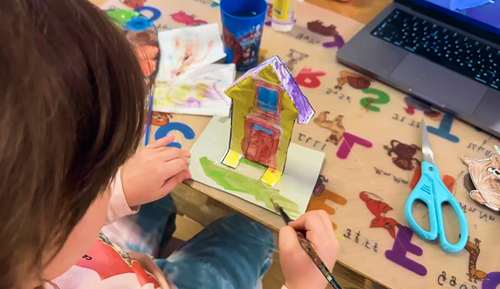
Free social and emotional learning for children ages 3 to 10. Games, printable social stories, classroom activities, an animated show, and a feelings app. Nine languages. No account, no ads.
The Catbears is a free social and emotional learning (SEL) library for children ages 3 to 10 and the adults around them: parents, teachers, school counselors, and therapists.
Almost everything is free to use, print, and share. No sign-up, no paywall, no advertising. Everything is published in nine languages: English, Hebrew, Arabic, Spanish, French, German, Russian, Japanese, and Chinese.
Creating an environment
Where it's comfortable making mistakes
Big feelings. Conflict. Waiting your turn. Making a mistake in front of everyone. Getting along with someone who is nothing like you.
No child is born knowing how to do any of this. Most are expected to work it out live, in the middle of the moment, while everyone watches.
The Catbears is a safe environment where kids learn, practice, and develop social and emotional skills.
Who is behind The Catbears
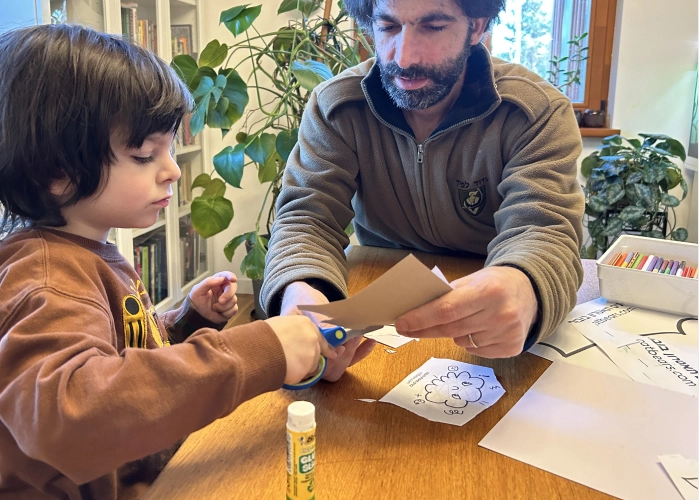
The Catbears is a solo project, written, illustrated, designed, and developed by Maayan Malka.
Maayan has more than 20 years of experience building technology products for children that bring together sensitivity and learning. He worked as Head of Design at Simply, the makers of Simply Piano, used by millions of people around the world, a company that blends technology with a rich experience to help kids and adults rediscover their creativity.
TEDx - "How To Feel Comfortable Making a Mistake" by Maayan Malka
It has always astonished me that we don't teach this first
We train children to succeed at school, to become doctors, engineers, and pilots, all before we help them understand their own bodies and emotions. But how can a doctor truly care for a patient if he never learned to manage his own anger?
These skills have to come early. No child is ready to learn math or science until they are in tune with themselves and connected to the children sitting right next to them.
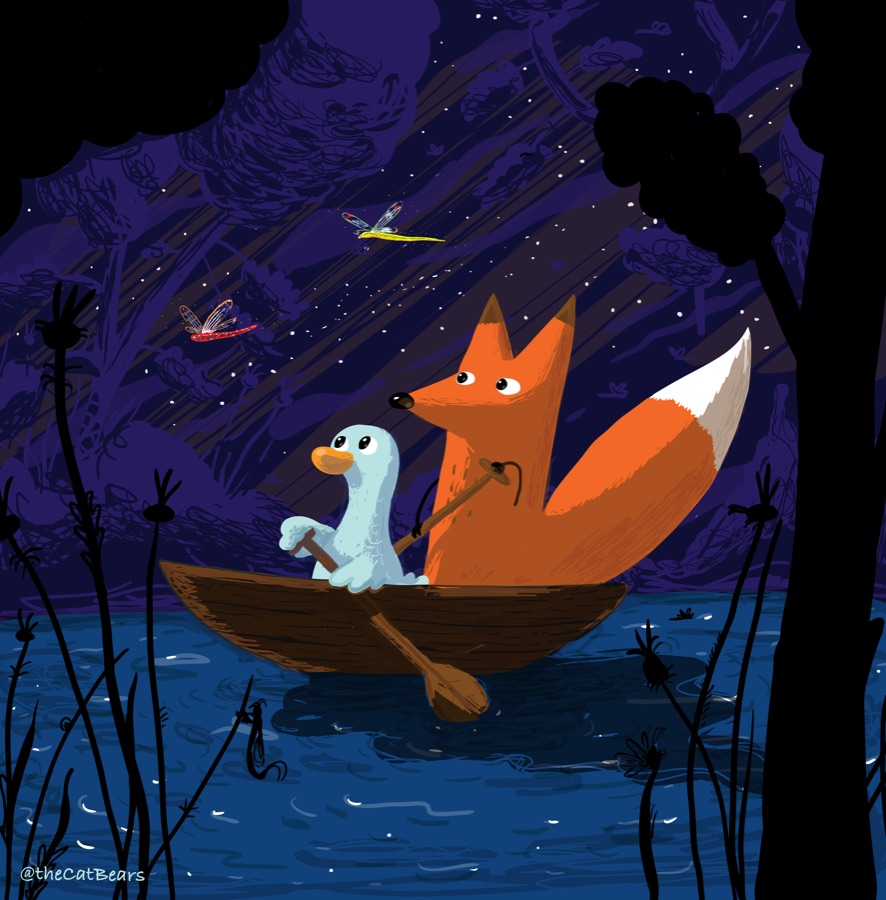
That is why I created The Catbears. I wanted to help children build emotional intelligence from the ground up, showing them that even two creatures as different as a cat and a bear can learn to cooperate, understand each other, and even become best friends.
Children who learn to navigate their feelings early grow up able to build real, lasting relationships. They grow up less violent, because a child who can find the words for what they need never has to hit or yell to be heard.
I don't see anything more important than this. Today, by combining technology, art, and social-emotional knowledge, we can reach children in every language and help them become creative conflict solvers from a very young age.
Love,
Maayan
founder of The Catbears
Why a cat and a bear
Every Catbear is drawn by hand. A few lines, flat color, no shading tricks. A child can copy one on the back of a worksheet, and that matters. A character a child can draw is a character a child can take with them.
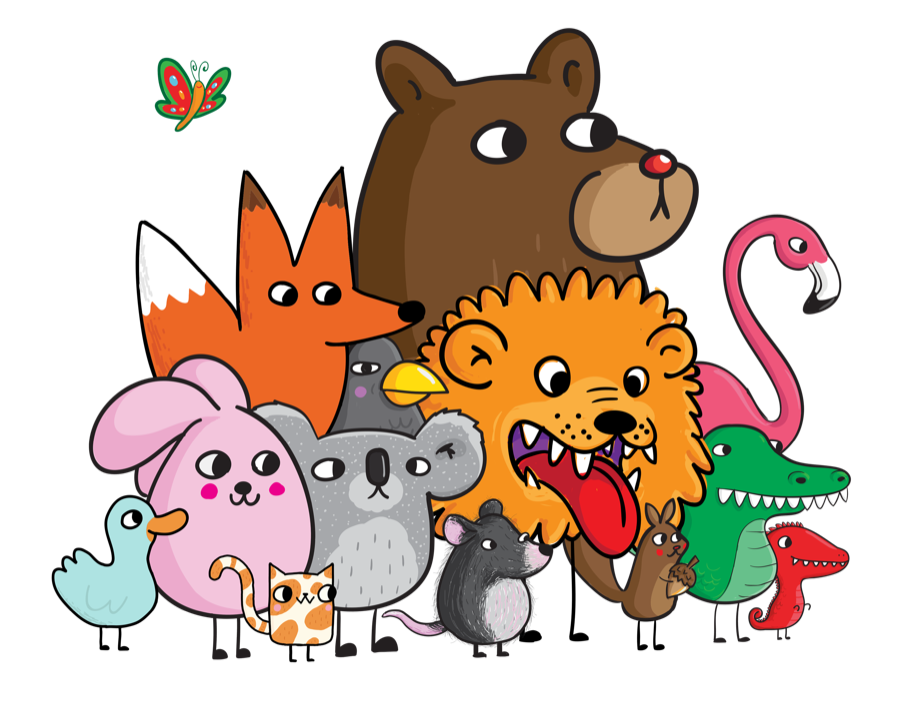
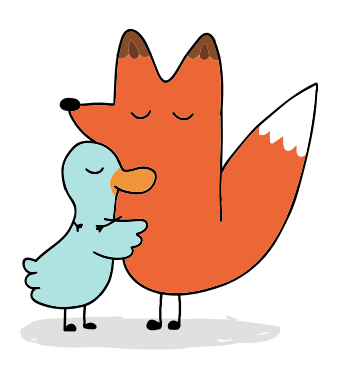
Each body says what that animal is. The bear is big and heavy, the fox is sharp, the flamingo is all neck, the crocodile is all teeth. Then look again. Same eyes, same little hands, same thin legs.
Different, but the same. We are not alike, and we still have most of it in common. Living with other people means holding both of those facts at once, and that is a skill, not a mood. Children get there by practicing, which is what everything here is for.
Who this is for
Parents of children ages 3 to 10 who need something for the tantrum, the transition, or the sibling fight, tonight.
Preschool and elementary teachers running morning meetings, circle time, and classroom management.
School counselors and social workers who need printable, ready-to-use SEL material without a purchase order.
Occupational therapists, speech-language pathologists, and special-ed staff working with neurodivergent children, including autistic children and children with ADHD.
Homeschooling families building SEL into a week with no assembly and no playground.
Why SEL matters more than grades
This is not a feeling. It is one of the most replicated findings in education research.
SEL raises academic scores by 11 percentile points.
A 2011 meta-analysis in Child Development reviewed 213 school SEL programs and more than 270,000 students. Children who received SEL instruction scored 11 percentile points higher on math and reading than those who did not. Not a social assessment. A math test. A child who is not burned up by anxiety and conflict has bandwidth left to learn.
Durlak, Weissberg, Dymnicki, Taylor, and Schellinger. Child Development, 2011.
Social skills at age 5 predict outcomes at age 25.
A 2015 study in the American Journal of Public Health followed children from kindergarten to age 25. Getting along with peers, resolving conflict, and helping others, measured at age 5, predicted who finished high school, earned a degree, and held a full-time job two decades later. Measured before those children could read.
Jones, Greenberg, and Crowley. American Journal of Public Health, 2015.
These are the skills that do not automate.
The World Economic Forum's Future of Jobs report puts creativity, empathy, collaboration, critical thinking, and working through uncertainty at the top of what employers say they need. They are the hardest to automate, and exactly what SEL builds.
World Economic Forum, Future of Jobs Report.
The Catbears builds on established SEL frameworks (CASEL, TEACCH, Zones of Regulation), and educators and therapists review everything published here. I do not claim my own printables have been through clinical trials.
Our guiding principles
Everything here is built on the same three rules, always in this order. Together they turn a big, messy feeling into something a child can hold and use.
1
Inspire
Before children can learn anything, they have to want to listen.
2
Achievable
The Goldilocks of challenge: not too easy, not too difficult. Complex things, made easy to understand.
3
Life lesson
Every lesson is something they will take with them for the rest of their lives.
How every resource is being perfected
The Catbears has a community of parents, educators, and therapists who actively try the resources and send feedback. Want to join?
Transition anxiety, frustration, separation, conflict. Then design the smallest tool that helps a child through it.
2
Test
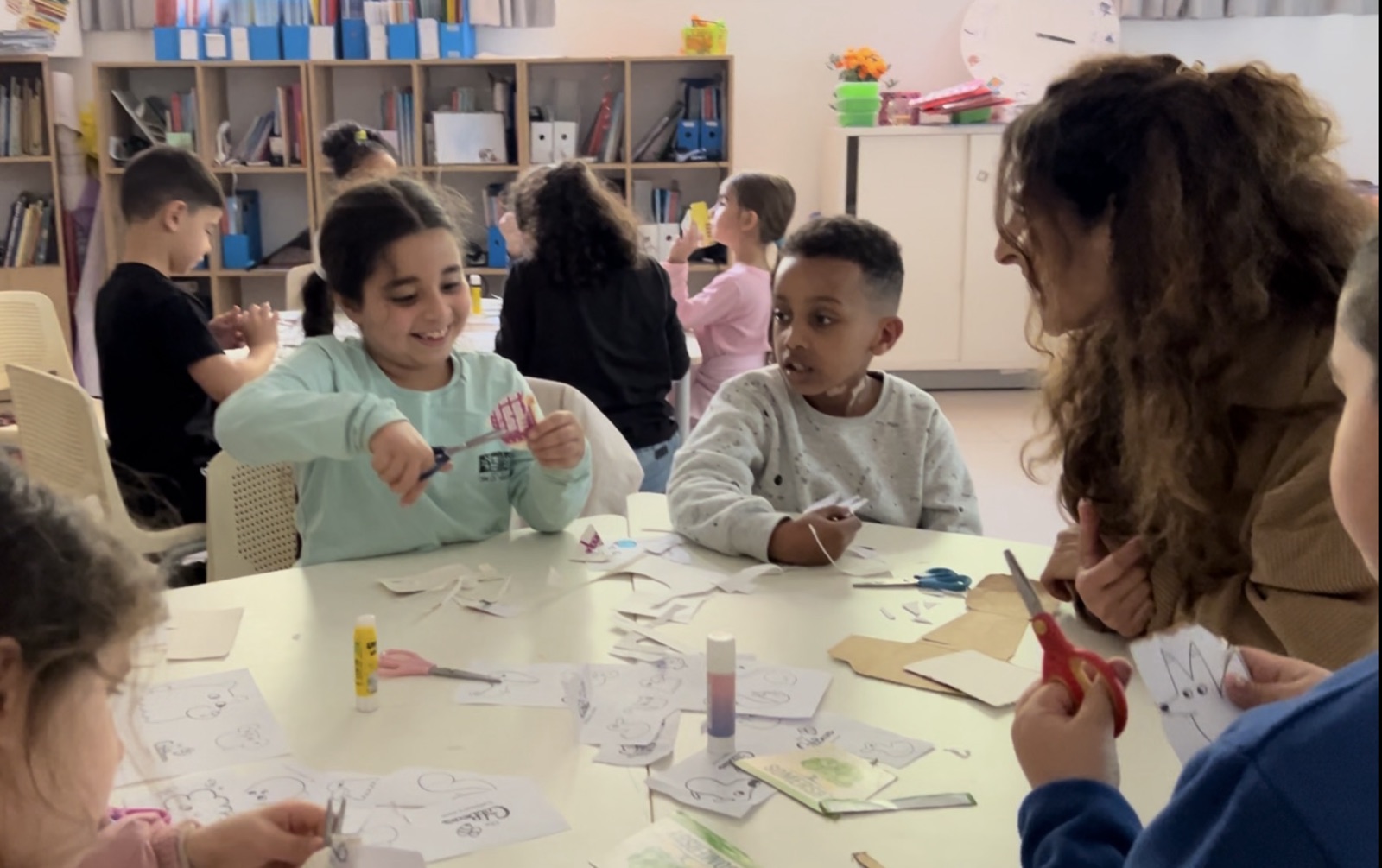
Every Catbears activity and printable is tested in the field with children, which shows what works and what still needs improving.
3
Feedback
Teachers, special-ed educators, occupational therapists, and speech-language pathologists say what is clinically wrong, what is developmentally off, and what would never survive in their room.
4
Iterate
Sometimes three or four times. Nothing gets published that half-works.
5
Follow up
A few months later we go back to the parents, educators, and therapists and see whether they notice a change in behavior.
What educators, therapists, and parents say
Real people who use these resources or reviewed them professionally. Nobody was paid for a quote.
Ariel drew a picture she didn't like and cried. Then she changed course, added decorations, and explained to me that mistakes lead to ideas.
Anat
Parent of Ariel, age 5
There is no better time than today to give children tools for social challenges. The Catbears provides that.
Michal Daliot
Senior educator and family consultant, CEO of the Michal Daliot Center
Children discover their ability to handle everyday conflicts in wonderfully creative ways.
Dr. Gish Amit
Education researcher, author, and school principal
The Catbears activities significantly strengthen children's ability to resolve everyday conflicts.
Yael Biber Aviad
Educator, founder of several innovative schools in Israel
A model of educational innovation.
Rotem Ganot
Head of Personalized Learning, R&D Division, Israeli Ministry of Education
Content and play worlds that offer original solutions to conflict and build inclusive dialogue.
Yehonathan Doron
Educator and lecturer, TEDx speaker
Questions
Yes. Almost every resource on the site is free to use, print, and share. No account, no paywall, no advertising. A small number of premium printables are paid, as a one-time purchase: a full story PDF and the calm-down corner bundle.
Children ages 3 to 10, which covers preschool through roughly fourth grade.
Nine: English, Hebrew, Arabic, Spanish, French, German, Russian, Japanese, and Chinese. Translation is a large part of the work, so a child can open this in the language they think in.
One person. I write the stories, draw the characters, design the games, and sit in the classrooms while children use them. Teachers, special-ed educators, occupational therapists, and speech-language pathologists review each resource before it is published.
Yes. Print them, project them, hand them out, use them in sessions. Personal, classroom, and clinical use are all fine. Please do not resell them or repackage them as your own, and if you credit them, link to catbears.com.
Many resources use visual supports, predictable structure, and no-reading-required formats, and they are reviewed by special-ed educators, occupational therapists, and speech-language pathologists. They are a support, not a treatment, and they do not replace clinical guidance.
They build on established SEL frameworks (CASEL, TEACCH, Zones of Regulation), and every resource is reviewed by educators and therapists and tested with children in classrooms. I have not run clinical trials on my own printables and I do not claim I have.
Teachers and parents say which moment keeps going wrong. That moment becomes the next resource.
Because a parent at 9pm and a counselor with 40 students should not hit a paywall over a feelings chart. Free is the point, not a trial.
Use it, and tell one other teacher or parent. If you want to do more, you can buy one of the paid printables or donate.
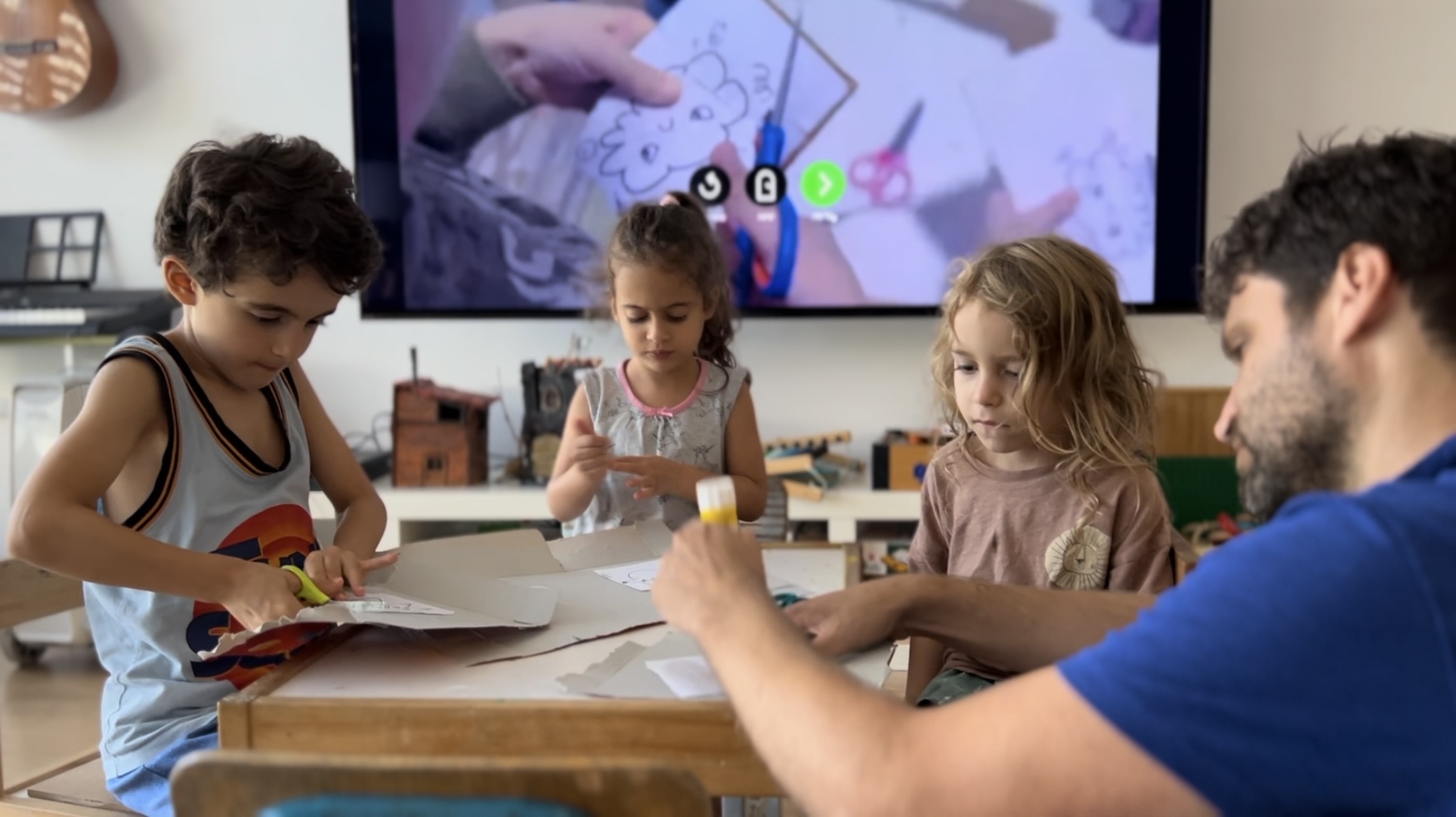
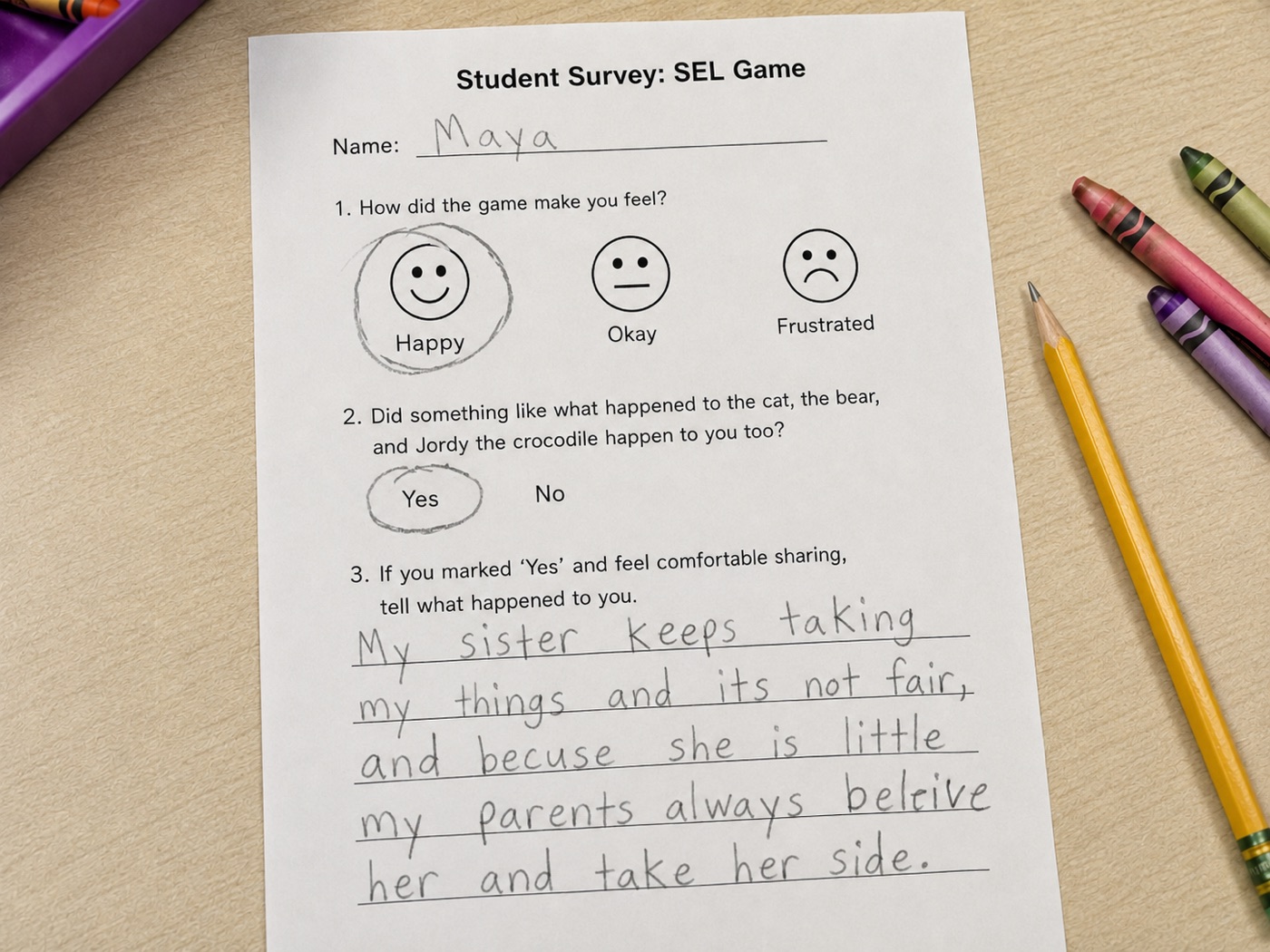
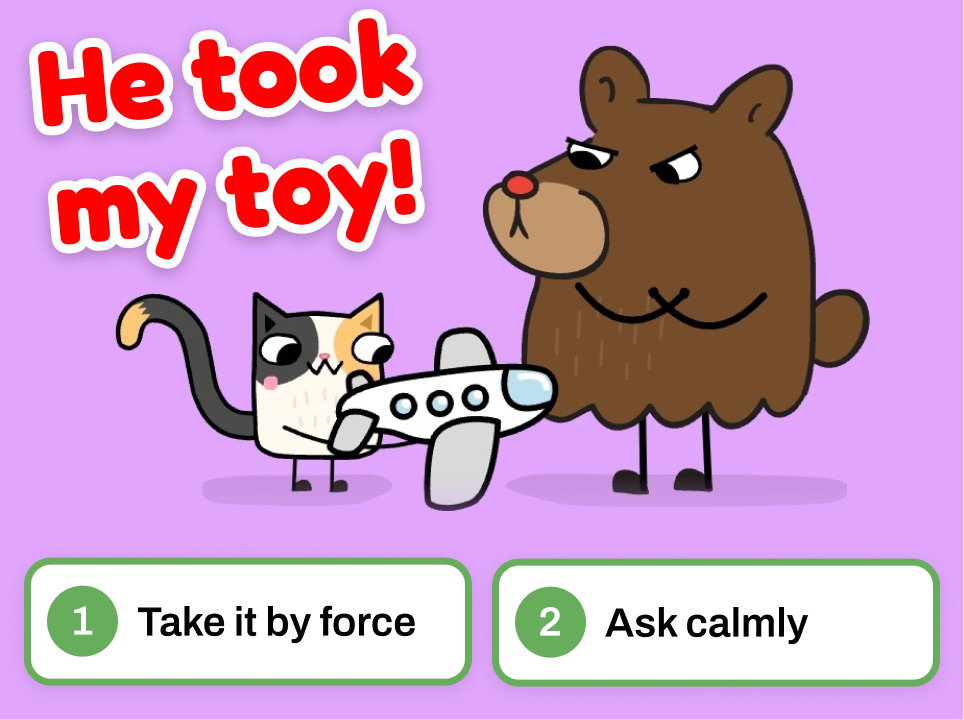 1. SEL Games A child meets a real moment, picks what to do next, and sees where that choice leads. Frustration, fairness, friendship, saying no.
 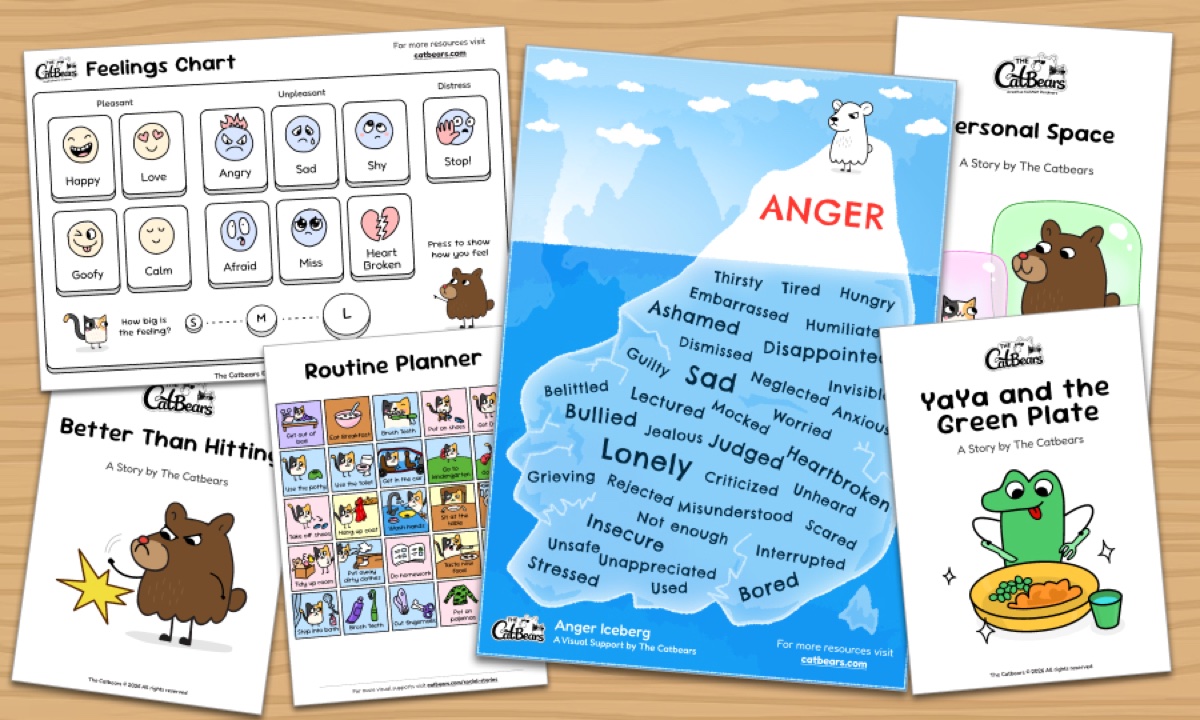 2. Social Stories and Printables Stories, feelings charts, routine planners, and visual supports for transitions, big feelings, and the moments that go wrong every week.
 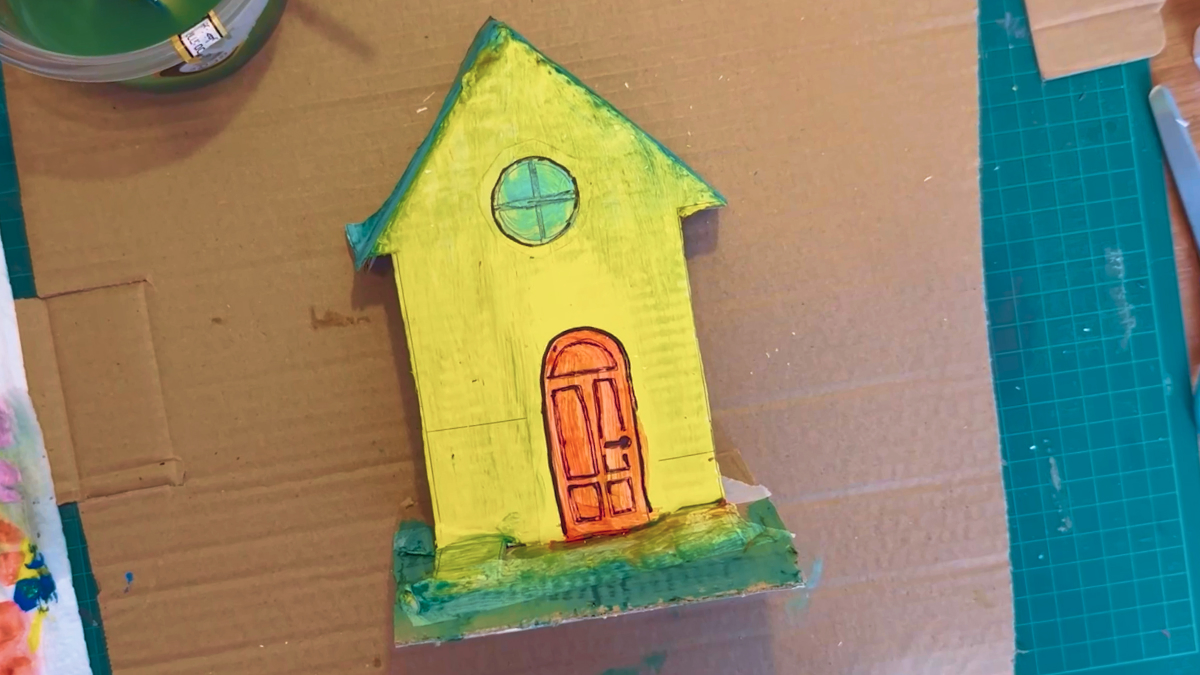 3. SEL Activities Step-by-step activities an adult can run with one child or a whole group, using what is already in the room.
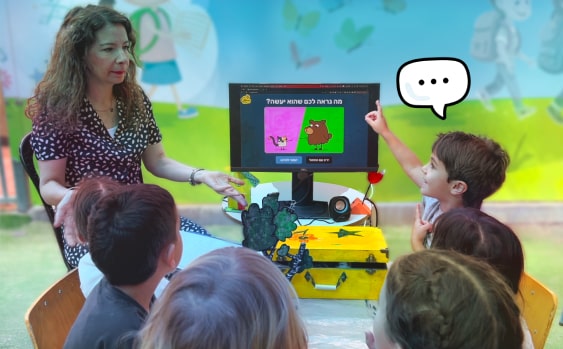
 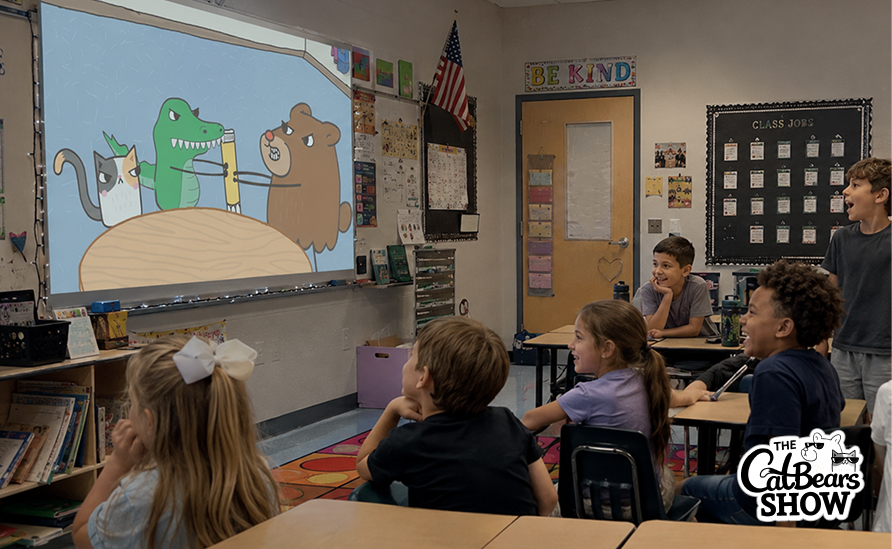 4. The Catbears Show An animated show where the class votes on what a character does next, then watches it play out. Built for morning meetings and circle time.
 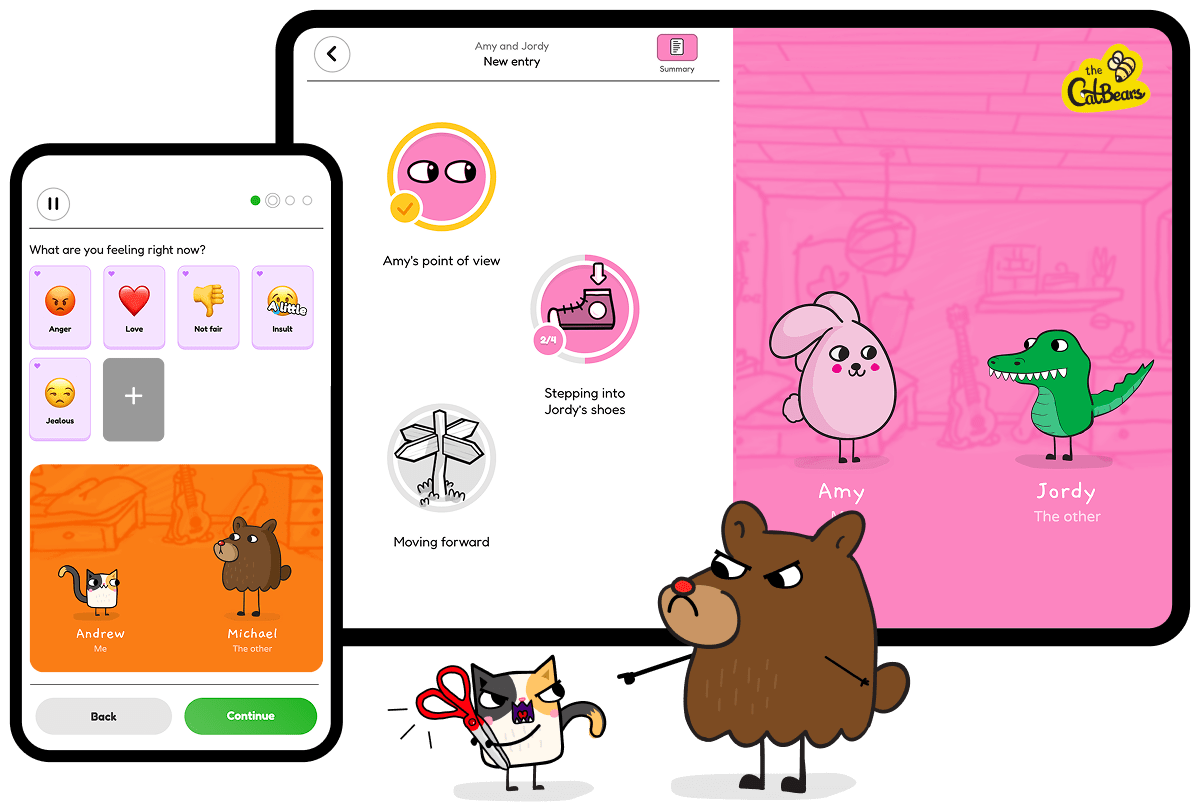 5. Felt An award-winning app where a child names and tracks what they feel in a few taps.