
When a child is stuck, trying harder is not always the answer. Sometimes the bravest, smartest move is to say "I don't know how" and ask someone who does.
This isn't just a story. It's a practice.
- Children learn to name the hard feeling instead of hiding it
- They hear that not knowing how is only a starting point
- They practice asking for help while they are calm
Over time you'll see progress
Children start saying "I don't know how" sooner, and reach for help when something feels too hard, instead of giving up in frustration.
One of the most important life skills a child can learn.
How to Use:
- Print or open on a tablet
- Read together regularly
- Use before or after a hard, frustrating moment
$6one-time payment
Asking for help and feelings story resources
An asking for help social story and feelings story for kids. Read it as a growth mindset story too, at home, in the classroom, or in therapy.
Stories and games that offer original, captivating approaches to resolving conflict and building inclusive, unifying dialogue.

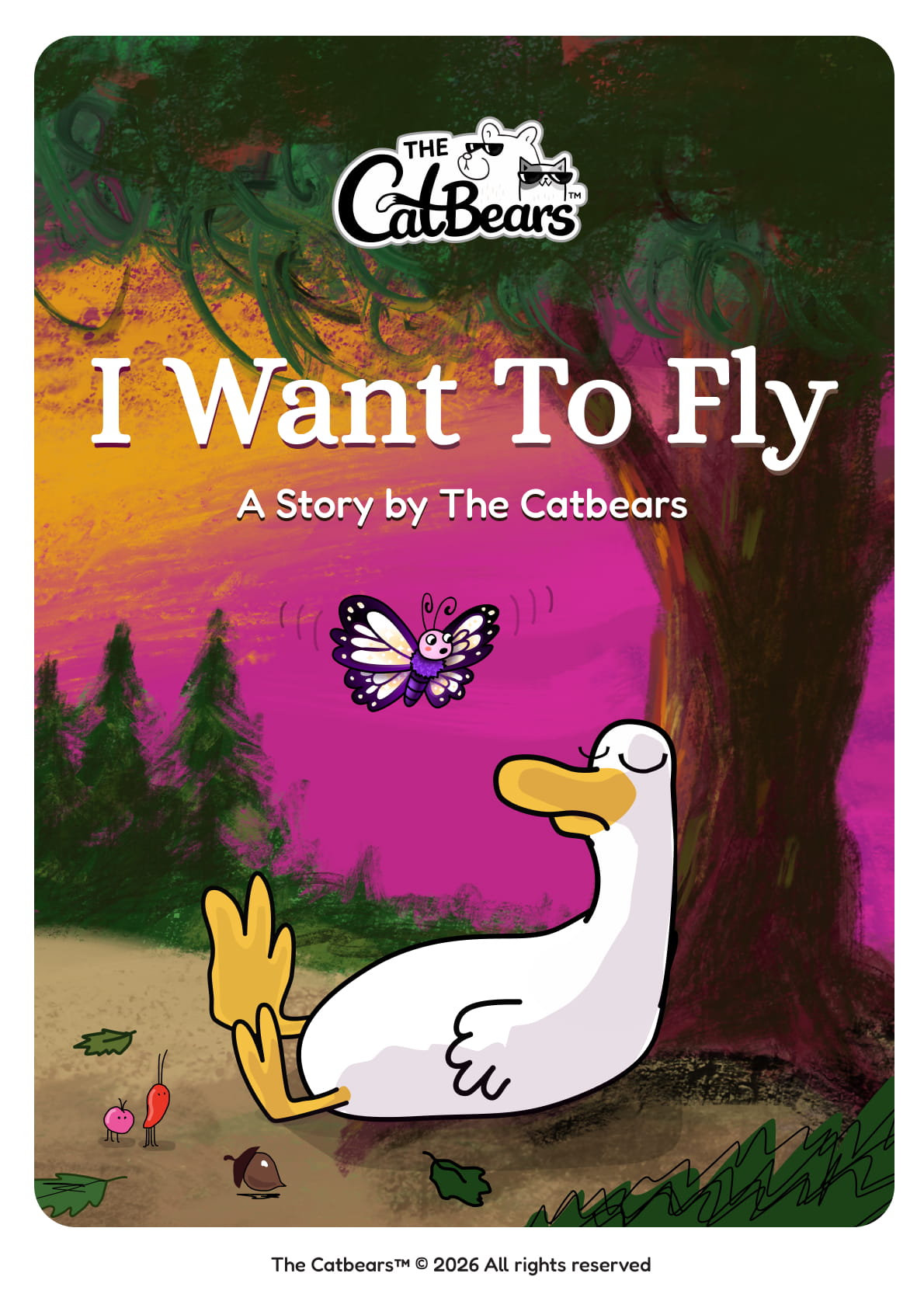
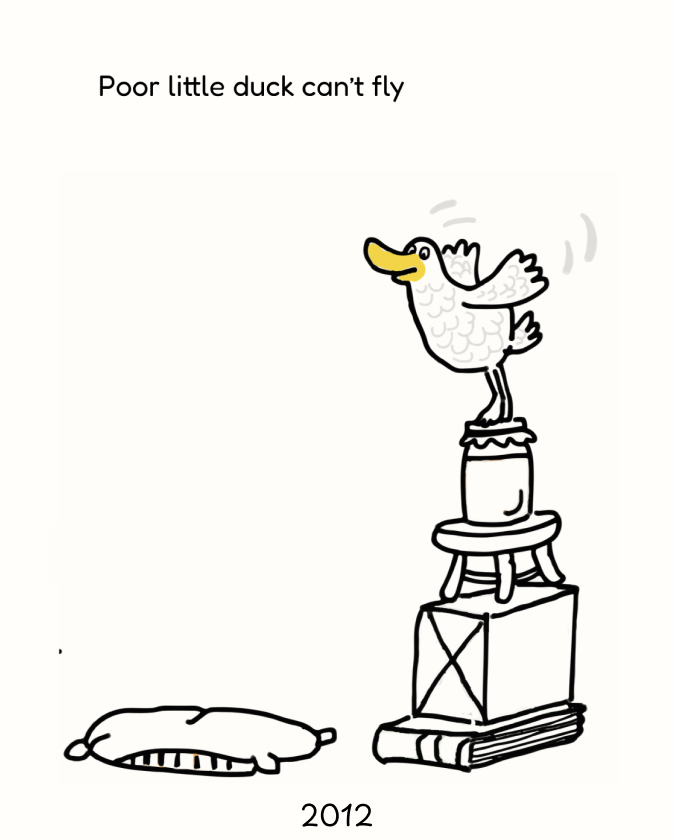
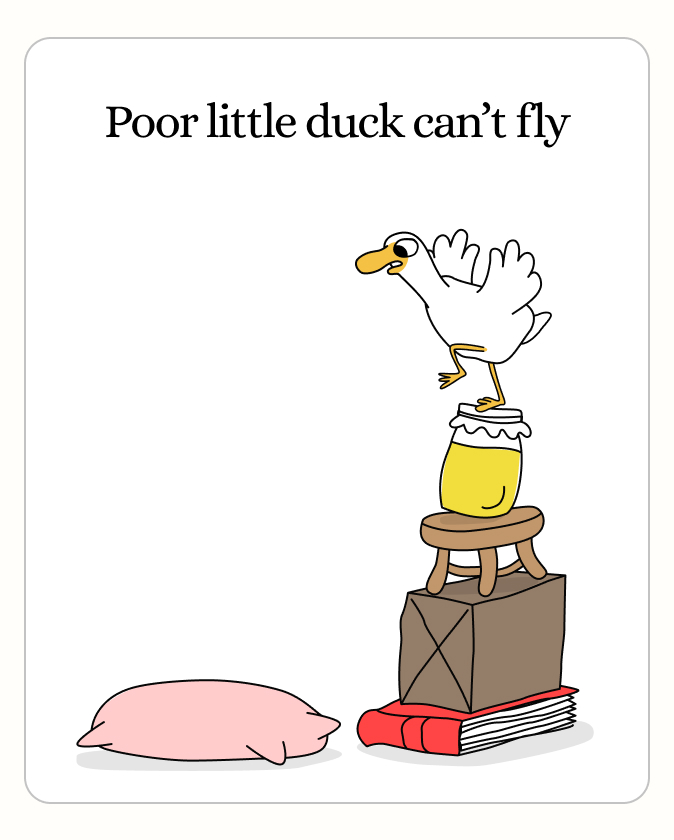
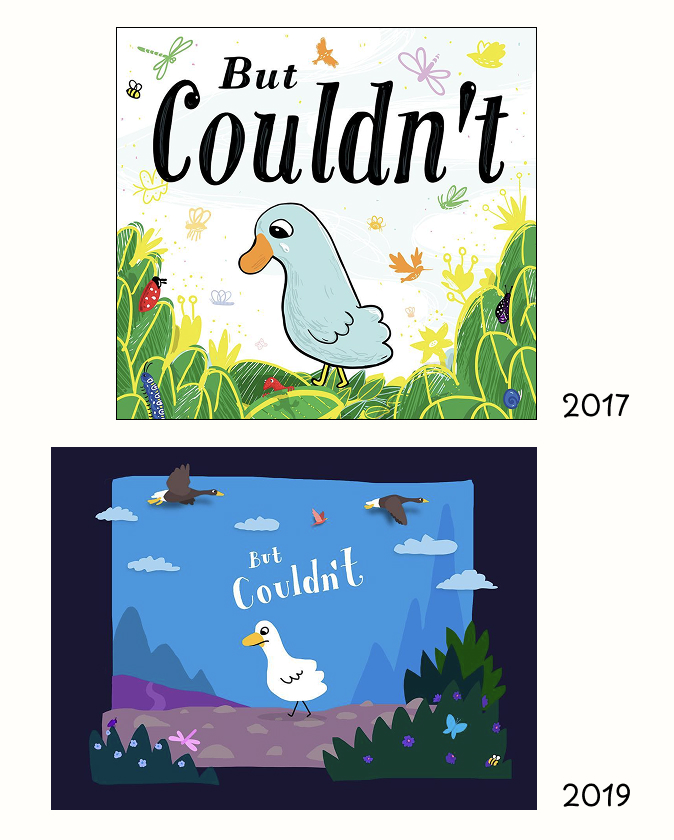
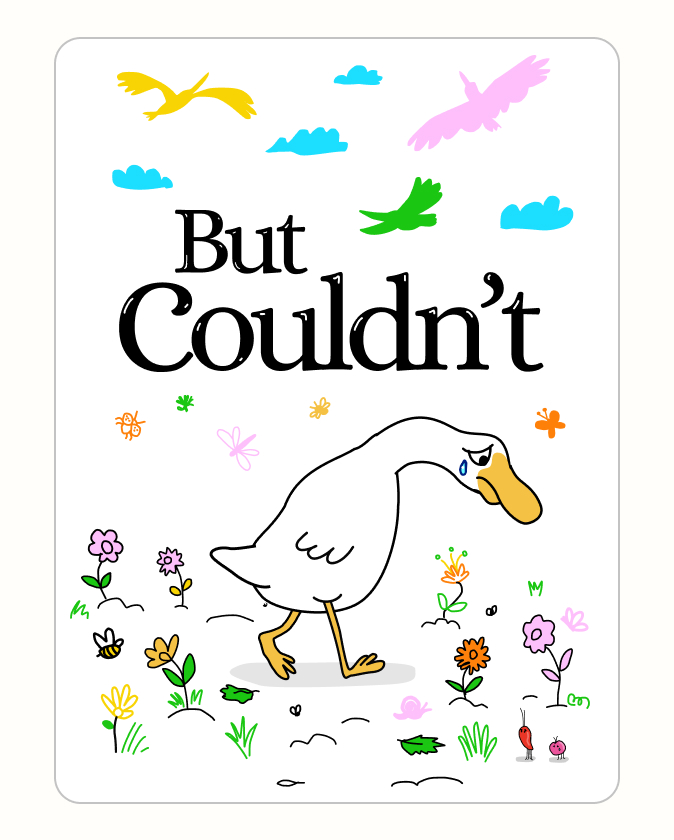
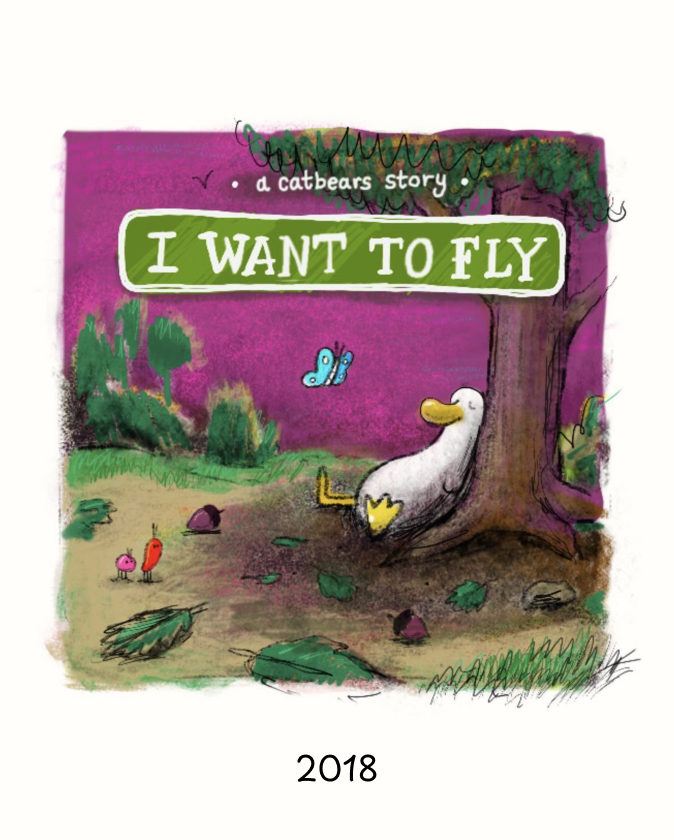
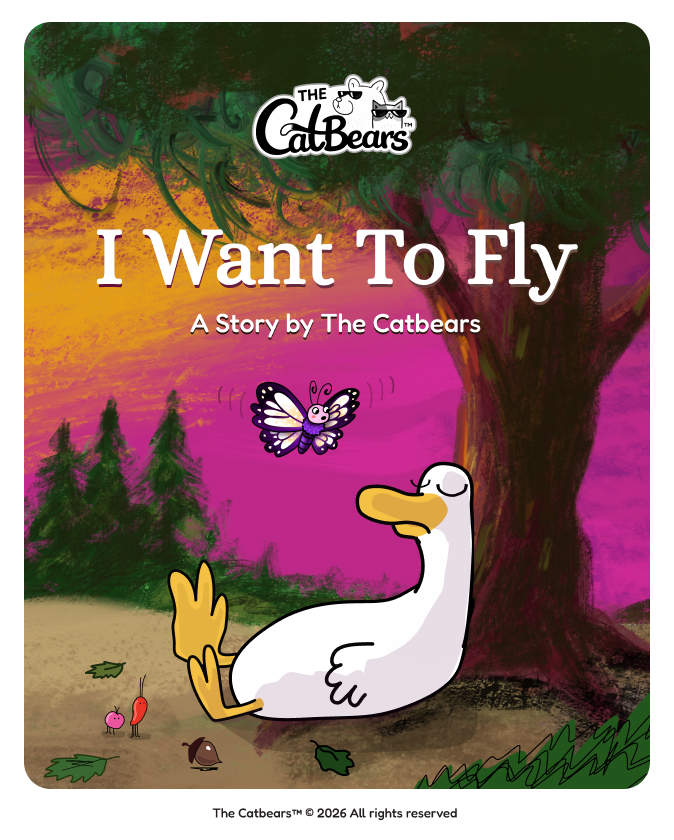
A duck who wants to fly tries and tries, and can't. He gets very sad. Then a butterfly shows him how. The story teaches kids that when you are stuck, saying "I don't know how" and asking for help is brave, not quitting.
The story works best for children aged 3 to 8. It uses short sentences, warm illustrations, and a clear feeling arc so toddlers and early elementary kids can follow along and talk about it.
Three skills at once: naming big feelings like frustration and sadness, coping when you try hard and still can't, and asking for help. The butterfly showing the duck how to fly models that asking for help is a smart, brave choice.
It fits the growth mindset family, because the duck learns to do something he couldn't. But the real lesson is not "just try harder". It is that finding someone who can show you how is often what turns "I can't" into "I can".
It is a $6 one-time purchase. You get the full 20-page illustrated story as a PDF to read on a screen or print, at home, in the classroom, or in a clinic. Pay once and download it right away.
Yes. For visual learners, a simple picture story gives a concrete script for a hard, abstract feeling. It helps children see that being stuck is temporary and that they can ask a trusted person for help.
Read it during a calm moment, not in the middle of a meltdown. Pause on the sad pages and ask how the duck feels. Later, when your child is stuck, you can gently remind them they can say "I don't know how" and ask for help.