Catbears community

We’re creating a new book about anger and we need your help

Our new book is in the making. Right now we need educators, therapists and parents to try the activities in the book (for free) and give us feedback.

This resource is almost done Test Free Resource Every Catbears resource is tried by real kids, teachers and parents, and we keep improving it until it truly works
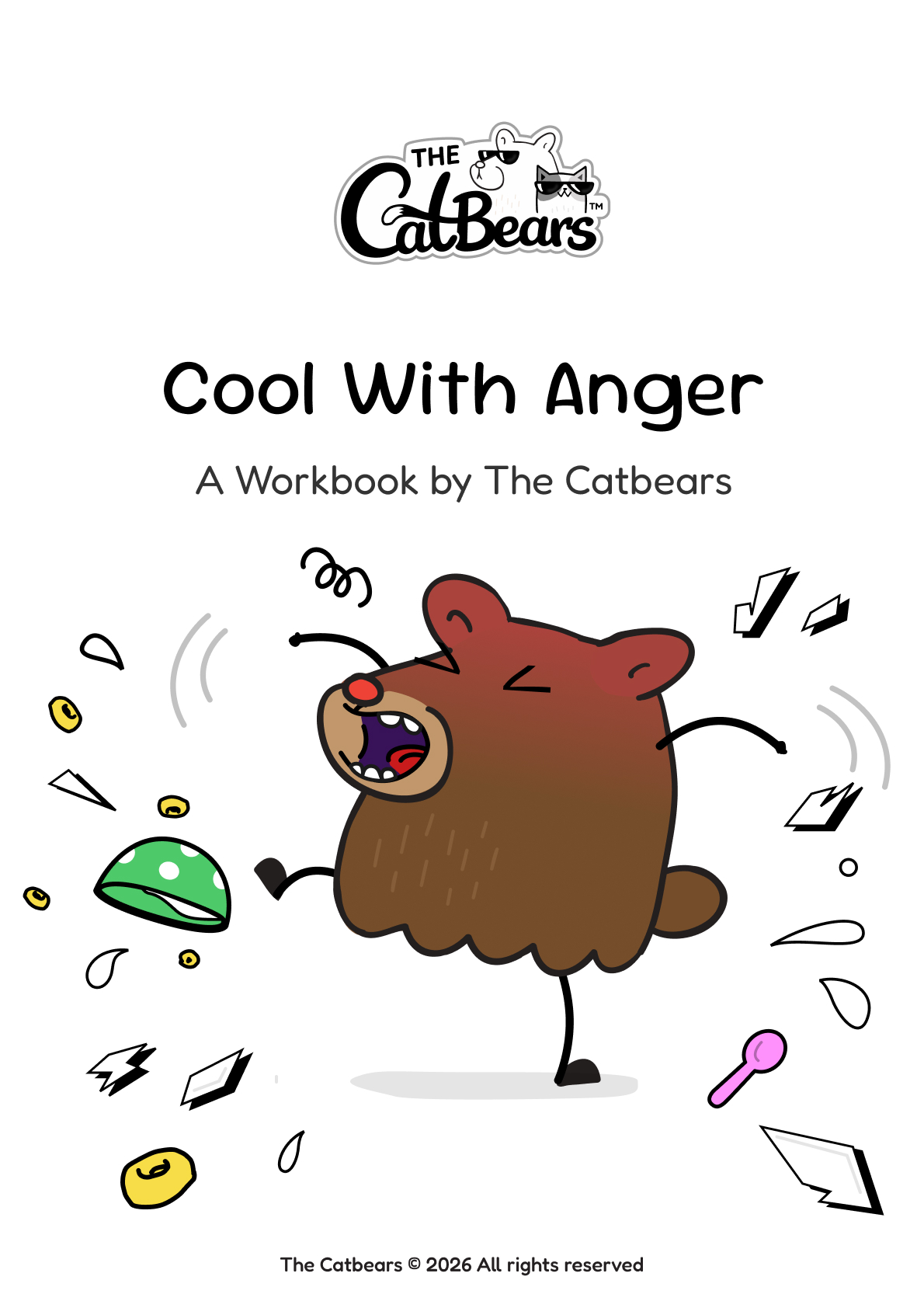
The Catbears Anger Book, a printable activity book Work in progress

Choose resource to try

Each resource below is one part of our upcoming book, Cool With Anger. Download one for free, try it with your kids and send us feedback

A week after you've downloaded and tried it out with your kids, we'll send you an email asking for your feedback.


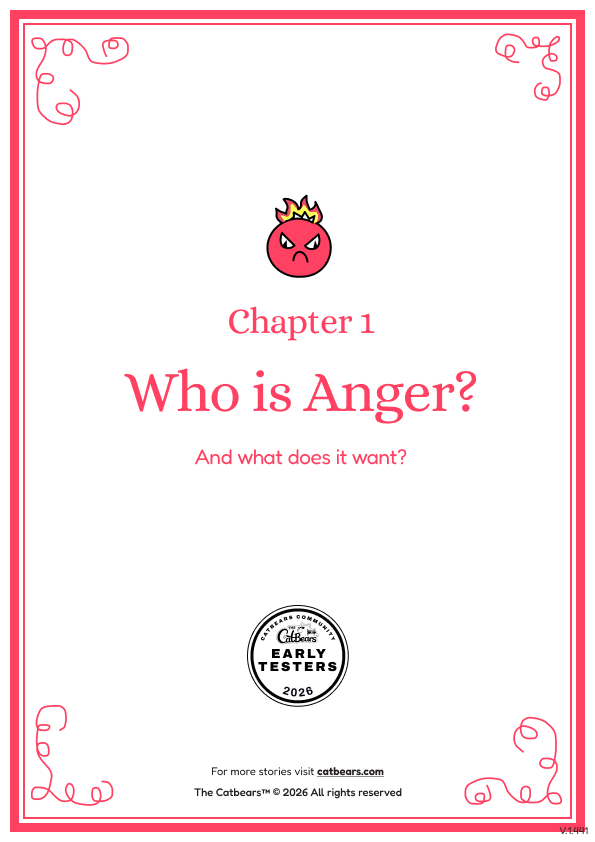
  1. Who is Anger?

    And what does it want?

    Download PDF

    PDF · ⁨10⁩ pages · ⁨9.5 MB⁩

    A few tester seats left

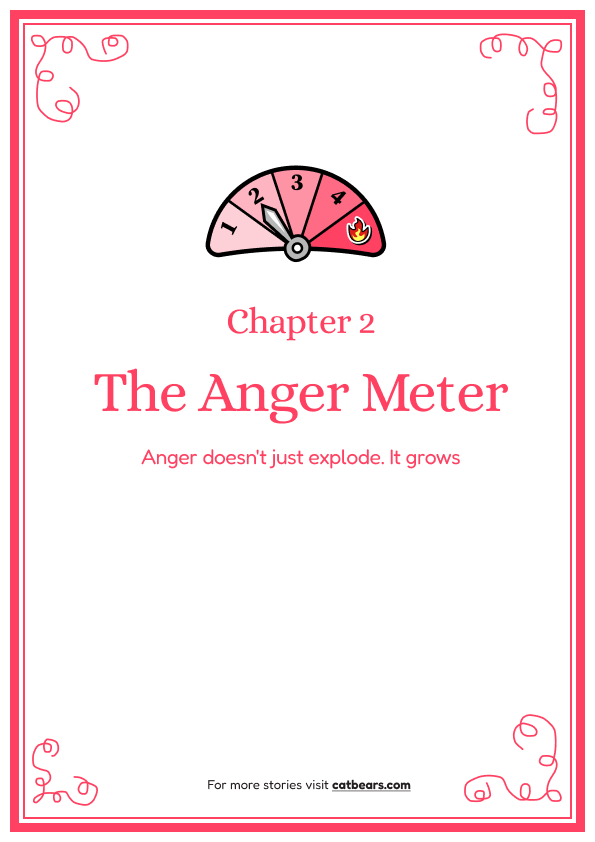
  2. The Anger Meter

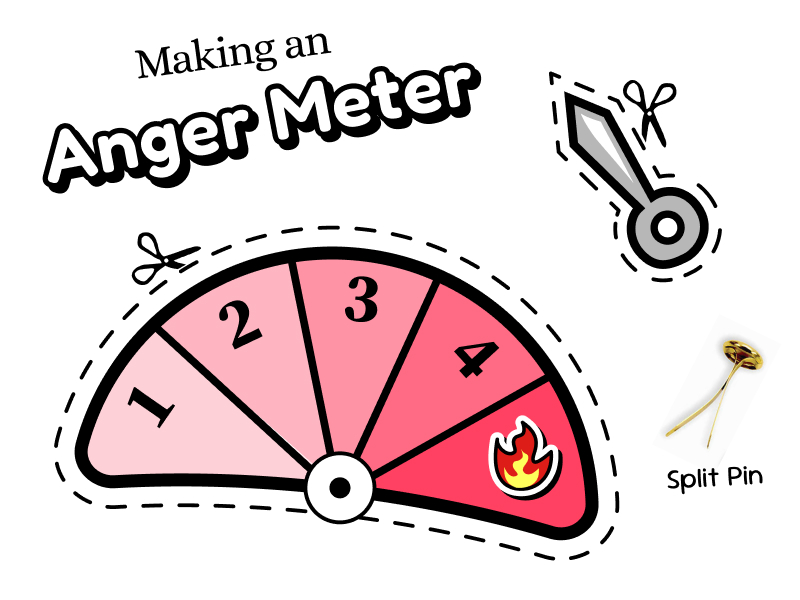
    Create an anger meter from paper and cardboard. Kids can use it to reflect their anger level.

    Download PDF

    PDF · ⁨11⁩ pages · ⁨7.2 MB⁩

    A few tester seats left

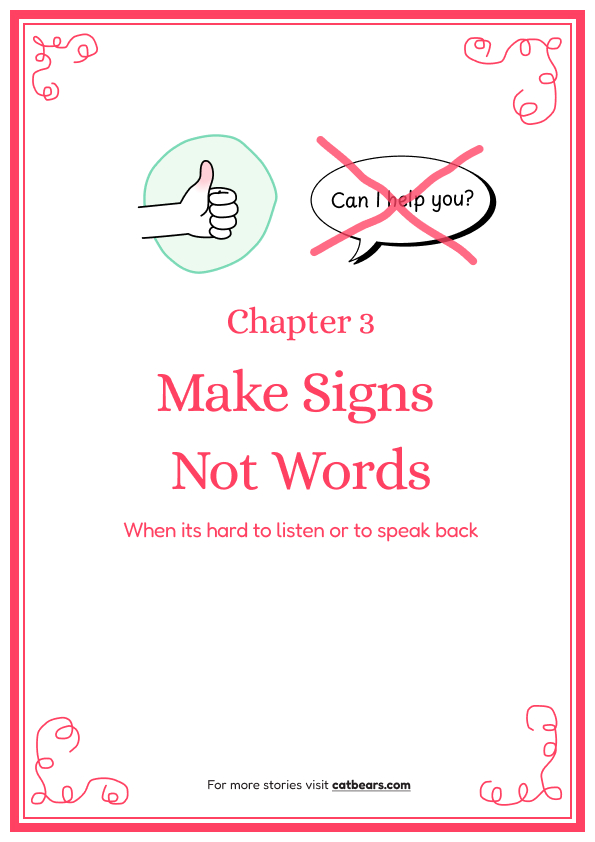
  3. Make Signs Not Words

    When it's hard to listen or to speak back.

    PDF · ⁨15⁩ pages · ⁨9.3 MB⁩

    No tester seats available

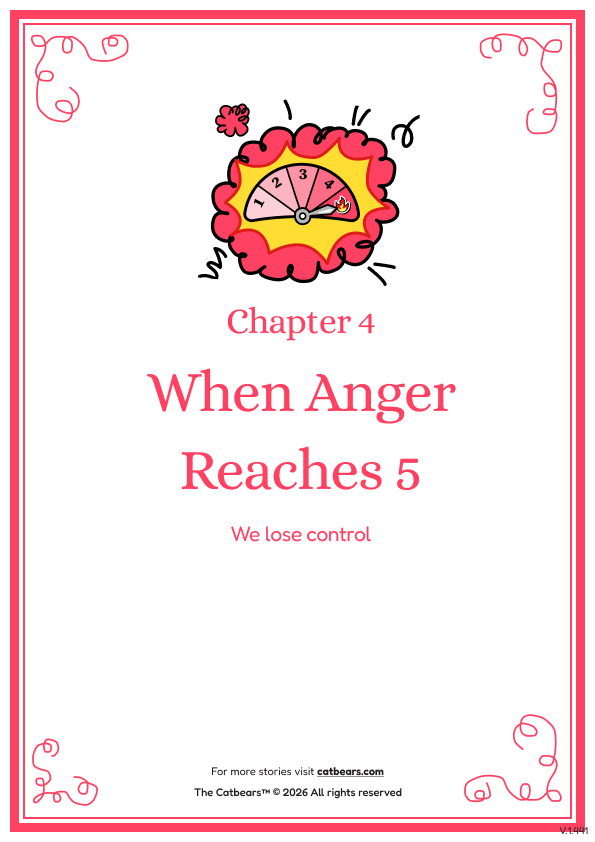
  4. When Anger Reaches 5

    We lose control.

    PDF · ⁨10⁩ pages · ⁨6.7 MB⁩

    No tester seats available

You can download one resource for free now. After you've tried it for a week, give us feedback to unlock another one, up to 3.

Anger Management Activities for Kids, Ages 4 to 12

Printable anger management activities for parents, teachers and therapists. Each one teaches a child one coping skill through a story, a craft or a game, so they notice anger early and calm down before it turns into hitting or a meltdown.

An anger meter kids build themselves

Kids cut and put together a paper anger meter with 5 levels. They point to it to show how angry they are, often before they can say it. Like an anger thermometer, it turns a sudden outburst into a number you can talk about.

Calm down strategies, practiced while calm

Breathing, movement and naming the feeling, practiced through play. When anger rises, the strategy is already within reach.

Hand signs for when words stop working

A few shared signs for anger. A sign asks much less of an overwhelmed child than a conversation does.

For one child or a whole class

Use it at home, in the classroom, in counseling or in therapy.

What this book is about

  • Big feelings (anger, worry, meltdowns) 75%
  • Kindness, sharing, and empathy 51%
  • Confidence and making friends 38%
  • Responsibility and doing things on your own 37%
  • Bullying and speaking up 33%
  • Screen time and healthy habits 28%
Share of parents, teachers and therapists who chose each topic

1. Why anger

We regularly ask the parents, teachers and therapists who use Catbears what they need most. The most common answer is support for children with big emotions. Anger came up most often, and it is the hardest to work with in the moment. So this book focuses on anger: how it builds, and how a child can learn to navigate it.

2. Anger children can relate to

The book uses short Catbears stories, so children can see anger in a character before they look at it in themselves. Each story is paired with established regulation strategies, such as breathing, movement and naming the feeling. Children practice them while calm, so they are within reach when anger arrives.

3. The anger meter

Children often experience anger as on or off. The book introduces an anger meter: a simple scale that shows anger rising in steps. Noticing the early steps gives a child time to act before the peak. It also builds awareness of the body signals that come with rising anger, which is the basis of self-regulation.

4. Practice through play

Each chapter introduces one concept, followed by activities and games that practice it. Repetition through play turns regulation into a skill children rehearse, not a lecture about behavior. Anger becomes something to learn about, not something heavy to overcome.

5. Signs, not words

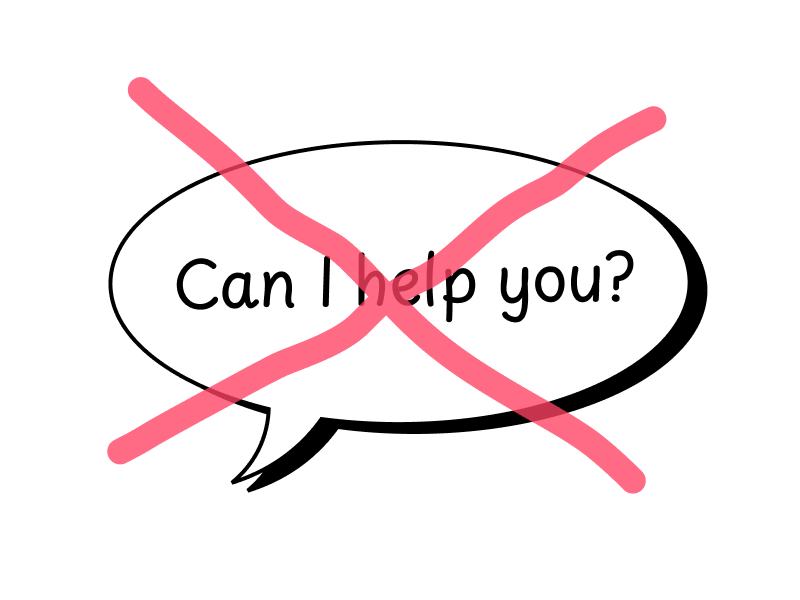
When a child is very angry, words stop working. Instructions like "calm down" rarely land at that point. Until now there has been no practical tool for that moment. The book gives children and their adults a small set of shared hand signs for anger. A sign asks far less of an overwhelmed child than a conversation does. Used consistently, the signs help a child calm down before a meltdown, and the shared, almost secret, language builds trust between children and their grownups.

From people who already tried it

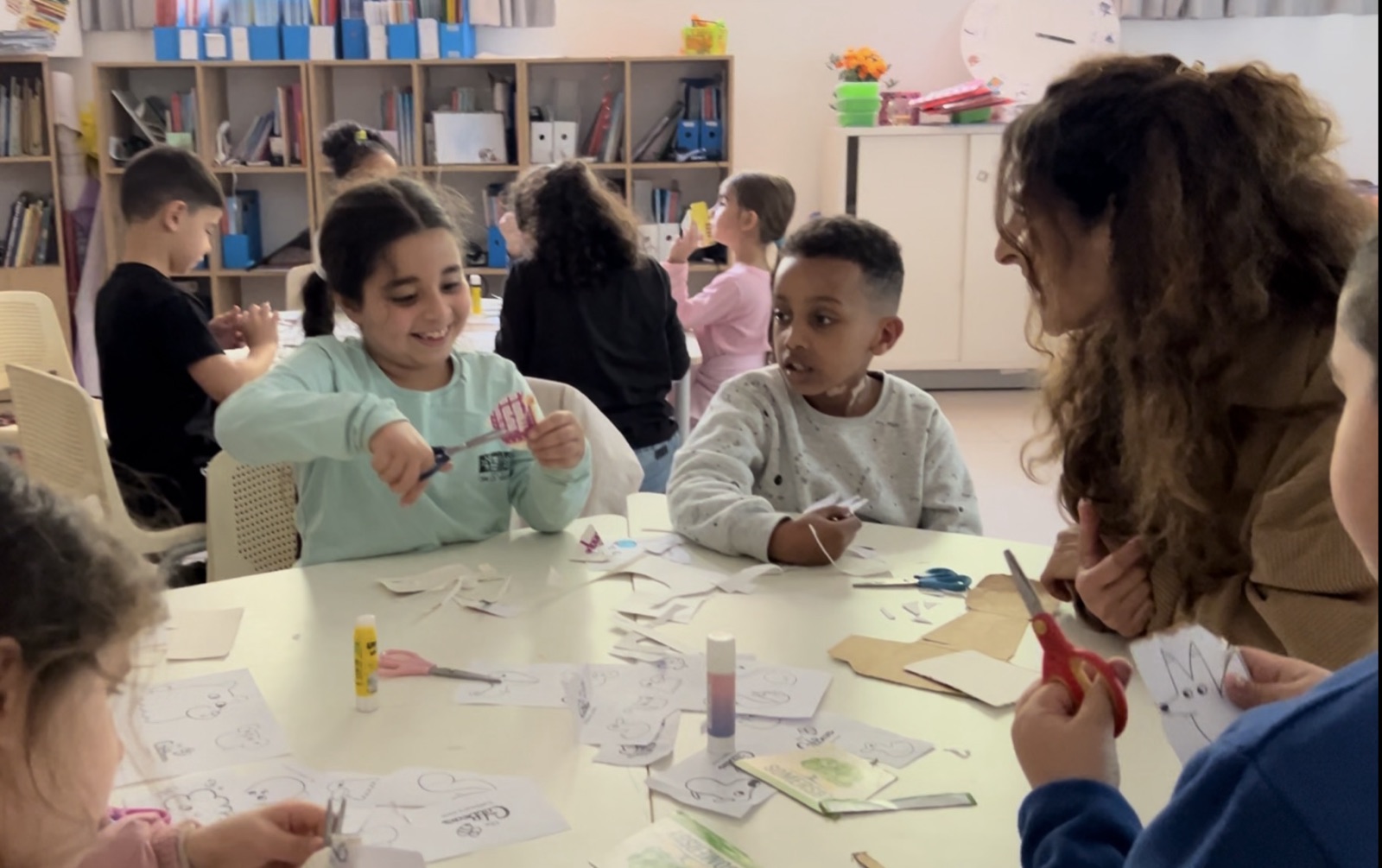
Kids testing Catbears activities in a classroom
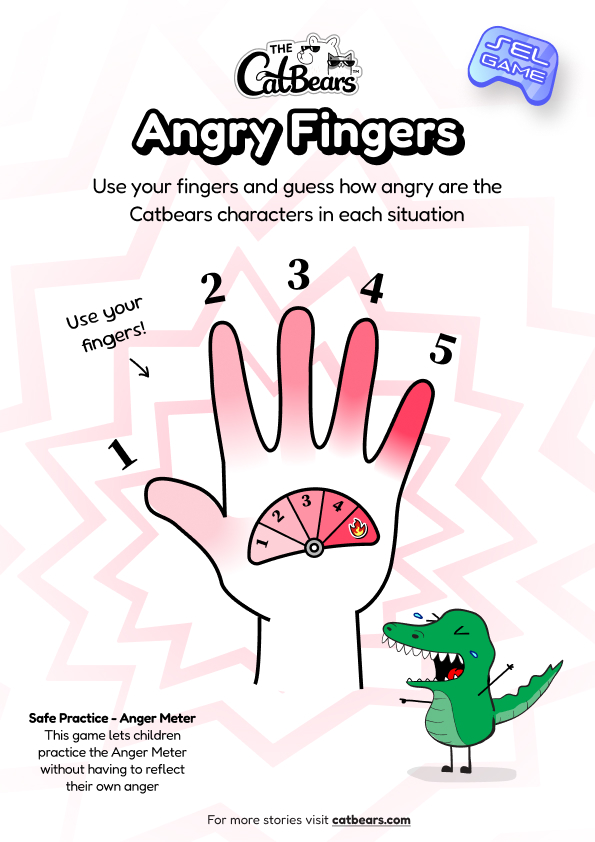
  • “I put the Angry Fingers game on the projector and the kids used their fingers to show how angry each character was. Now when they're mad they show me with their fingers. The whole class played together so now everyone can read the signs.”

    Dana, Kindergarten teacher

  • “My son used to hit me when he got angry. Now he calms down before it gets there. The hand signs gave us a language of our own. I can reach him even when he's too upset to talk and he doesn't feel alone with it. He feels safer with me.”

    Yoni, Parent of a 6 year old autistic child

  • “After two weeks with the anger meter the kids I work with started saying 'I'm at a 3' instead of shouting. It gave them words for something they couldn't explain before.”

    Maya, Occupational therapist

How testing works

Choose one resource above, create a free account and download the PDF. Try it with your kids. A week later we email you a link to a short feedback form.

Yes. Your first resource is free. Each feedback you send unlocks another one, up to 3.

Kids often react differently the second or third time. A week gives you time to try it more than once with real children.

How well it worked, what was difficult, what happened when you tried it, and whether you would share it. It takes a few minutes.

We read every response and use it to improve the book before it comes out. By sending feedback you agree that we may quote it as a testimonial.

Log in and come back to this page. Your resource has a Download again button.

Anger management for kids

Activities that let kids practice a skill while they are calm: an anger meter to rate how angry they feel, breathing and movement to calm the body, naming the feeling, and simple signs for when words are too hard. Short stories and games make it easy to practice again and again.

First keep everyone safe and stay calm yourself. Later, when your child is calm, practice together: name the feeling, rate it on an anger meter, and choose one calm down strategy to try next time. Practicing when calm is what makes it work in the moment.

A simple scale, usually from 1 to 5, that shows anger rising in steps, like an anger thermometer. Kids point to their level, which helps them notice anger early, before it peaks.

Deep breathing, squeezing and relaxing muscles, moving, counting, going to a calm corner, or asking an adult for help. Most children find one or two that work best for them.

No. Anger is a normal feeling. The goal is not to stop kids from getting angry, but to help them notice it and handle it without hurting anyone.

Children aged 4 to 12, at home, in the classroom or in therapy.

Soon. We are finishing it now with feedback from testers. Join as a tester to try parts of it for free before it comes out.

The anger iceberg printable helps children name the feelings beneath their anger, and the hands are not for hitting social story helps with hitting.

Test Free Resource