S1 E3
Better Than Hitting

Oh boy... We all sometimes get so mad that we want to hit! But wait, there's other, better things we can do instead!


Read it or print it Get the free Better Than Hitting story PDF

Want it on paper? Download the free printable social story to read together at home or in class, the same calm-down steps Bear learns in the show.

Get the Free PDF
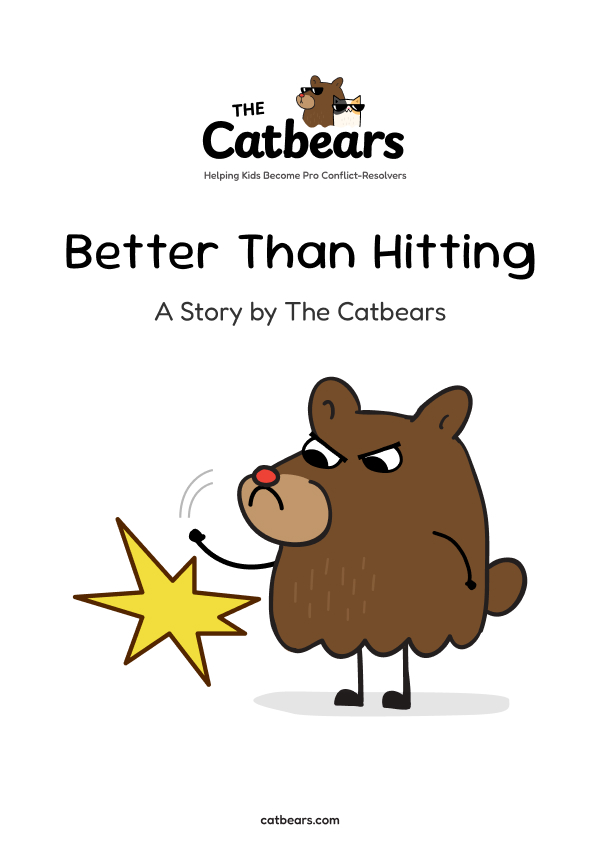
Better Than Hitting free printable social story PDF cover

How to stop a child from hitting

Lots of kids hit when they get really mad. It is not because they are bad. Their body fills up with a big feeling and hitting is how it tries to get out.

In this story, Bear feels so upset that he wants to hit. Instead of telling him to stop, the story shows him other ways to let the feeling out: squeeze something tight, stomp his feet, take a deep breath, or ask for help.

It is a simple social emotional learning story you can play in class, in therapy, or at home. It turns the hard moment before a hit into a calm conversation, and gives kids a few concrete tools they can reach for the next time their body feels too full.

A 5-minute calm-down lesson for the class

Teachers can play this at morning meeting or right before a transition that tends to get heated. The class watches Bear's feeling build, names what is happening, and practices the calmer choices together. You end up with a shared language: when a real fight is brewing later, you can just say "squeeze, stomp, breathe, or ask" and the kids already know what it means.

Coping skills for big feelings, ready to use

Therapists and parents can use the story one-on-one with a child who hits. Pause after each choice and ask how Bear's body feels. Because the story says clearly that the feeling itself is okay, kids who feel ashamed about hitting can talk about it without shutting down. That is usually the hardest part, and it is where the change starts.

How to get the most out of it

You can watch it through and have a chat about what Bear did. That works. But the better way: play it before a moment you know is hard, like lining up, sharing toys, or losing a game. The story gives the room a name for the skill you're practicing that day. Then when a real big feeling shows up, the child already has the words and the moves, and the hard moment becomes the place they get to try them.

From watching to doing

Name the feeling before the hit

Hitting happens fast, so the work is catching the moment just before it. The story gives kids language for that moment: my body feels too full. Once a child can name the feeling instead of acting on it straight away, you have a beat to step in, and the child has a beat to choose. After watching Bear do it, kids start narrating their own feelings, which is the first real sign of self-regulation.

Practice the calmer move until it sticks

Knowing what to do instead of hitting is not the same as doing it. The change comes from practicing the calmer move, squeeze, stomp, breathe, or ask, when everyone is calm, so it is ready when the big feeling hits. Adults who run this story and then practice the moves a few times report fewer hits and more kids who pause and choose. It stops being a rule the adult enforces and starts becoming the child's own habit.

About Catbears

Catbears is about helping kids get good at handling hard feelings and conflicts, starting young. This is one of our short social-emotional learning stories. We're making more, each one taking a real situation kids run into and giving the grown-up in the room a way to talk about it.

Questions parents, teachers, and therapists ask

Telling a child to stop rarely works in the moment, because the hit is their body letting out a feeling that is too big to hold. The faster path is to give them something to do with the feeling instead. This story teaches four: squeeze something tight, stomp your feet, take a deep breath, or ask for help. Watch it together once, name the feeling, and practice the moves when your child is calm so they are ready the next time anger builds.

Young kids feel big emotions in their body before they have words for them. When the feeling gets too full, hitting is the quickest way it finds out. It is developmentally normal and it is not a sign of a bad kid. The story names this plainly: the feeling is okay, hitting is just one way the body tries to release it, and there are calmer ways that work better.

The story offers four simple alternatives a child can actually remember in the moment: squeeze something tight, stomp their feet, take a slow deep breath, and ask a grown-up for help. Each one gives the big feeling a way out that does not hurt anyone. The trick is practicing them when calm so they feel familiar when a real angry moment comes.

Open it on the smartboard at morning meeting or just before a transition that tends to get heated. Pause as Bear's feeling builds and ask the class what they think he could do. Then practice the four moves together. It gives the room a shared phrase, squeeze, stomp, breathe, or ask, that you can point back to when a real conflict starts. It works best for ages 4 to 8.

Yes. The story is short and concrete, and it is careful to separate the feeling from the action: feeling upset is okay, hitting is just one way it comes out. That framing lets a child who feels ashamed about hitting talk about it without shutting down. Pause after each choice and ask how Bear's body feels, then connect it to a moment the child knows.

Yes. Better Than Hitting is a social emotional learning story focused on anger, self-regulation, and coping skills for big feelings. It is a discussion starter, not a lecture. Kids practice naming what is happening in their body and choosing a calmer way to respond.

It works best for ages 4 to 8. The story is short and the choices are clear and physical, so younger kids stay with it. Older kids enjoy talking about why the calmer moves work better than hitting.

It's free. No account, no app to install, no ads. It runs in any browser on a phone, tablet, or computer.