A toddler gets angry. Before anyone can say a word, a hand swings out. A sibling cries, a parent reacts, and the moment is already over.
If this sounds familiar, you are not raising a mean child. You are raising a young one. Hitting is what big feelings look like before a child has anything better to do with them.
Why is my toddler hitting me?
The short answer to why kids hit: anger arrives in the body fast. The heart races, the hands clench, and the urge to do something with all that energy is huge. Adults have learned to pause in that half-second. Most children under eight have not, yet.
So hitting is not a plan. It is the only exit the feeling could find. For most kids it is a toddler hitting phase that fades as they collect better tools, though a 4 or 5 year old hitting parents when they melt down is just as common, and works the same way. The fix is not to make the anger go away. The fix is to give the anger somewhere else to go.
What to do when your toddler hits: four things better than hitting
The trick is to replace the action, not just forbid it. "Don't hit" leaves a child with nowhere for the feeling to land. "Here is what you can do instead" gives them a door.
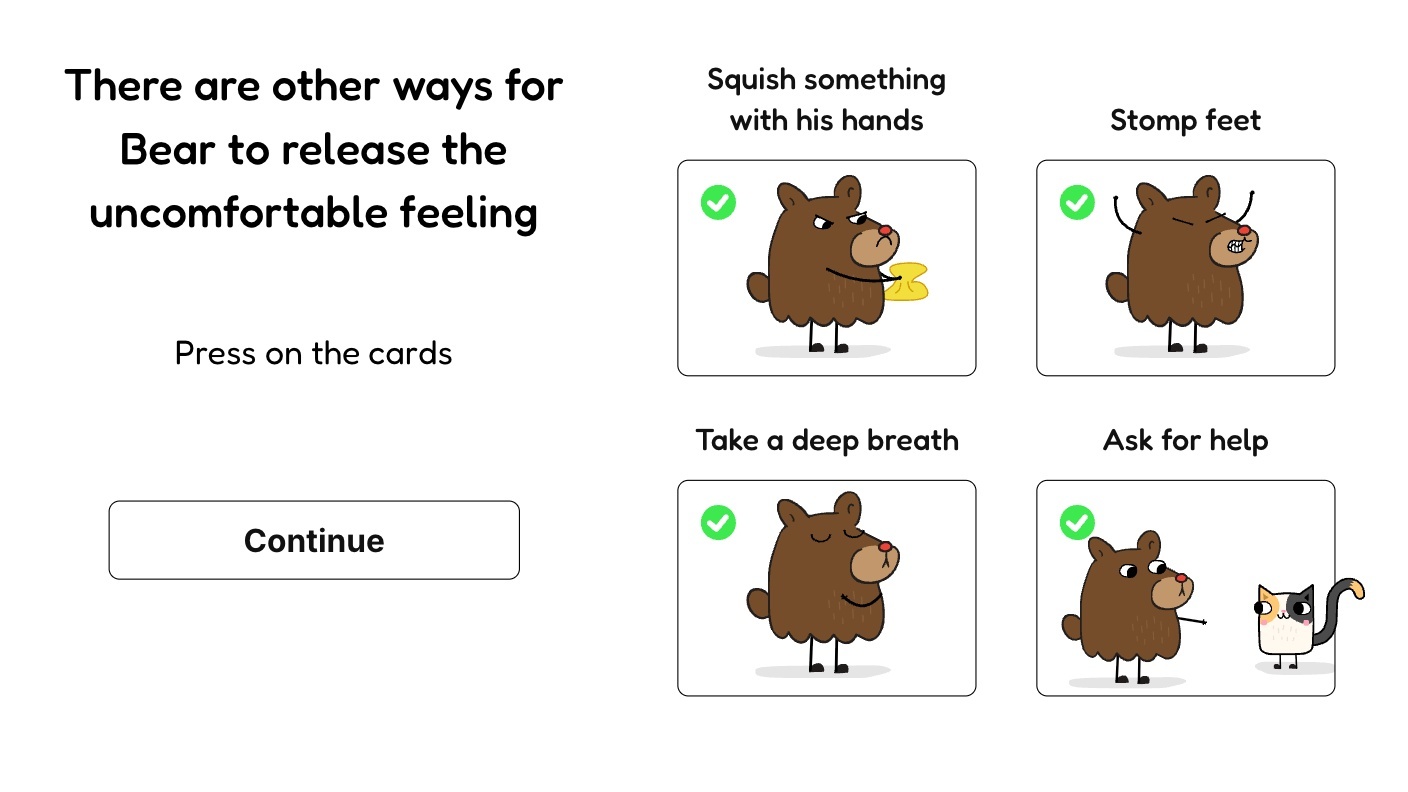
- Squeeze something tight. A pillow, a stress ball, their own hands pressed together. The squeeze gives the body the strong sensation it is looking for, safely.
- Stomp your feet. Big anger wants a big movement. Stomping burns it off without hurting anyone.
- Take a deep breath. One slow breath in, one slow breath out. It is the simplest way to calm a child down when they are angry, and it buys back that missing half-second.
- Ask for help. Saying "I'm so mad" out loud is a skill, not a failure. When a child says they are mad, they are really saying, "I need help calming down."
None of these work the first time you mention them in the middle of a meltdown. They work when a child has met them before, calmly, and knows they exist.
Practice before the hard moment
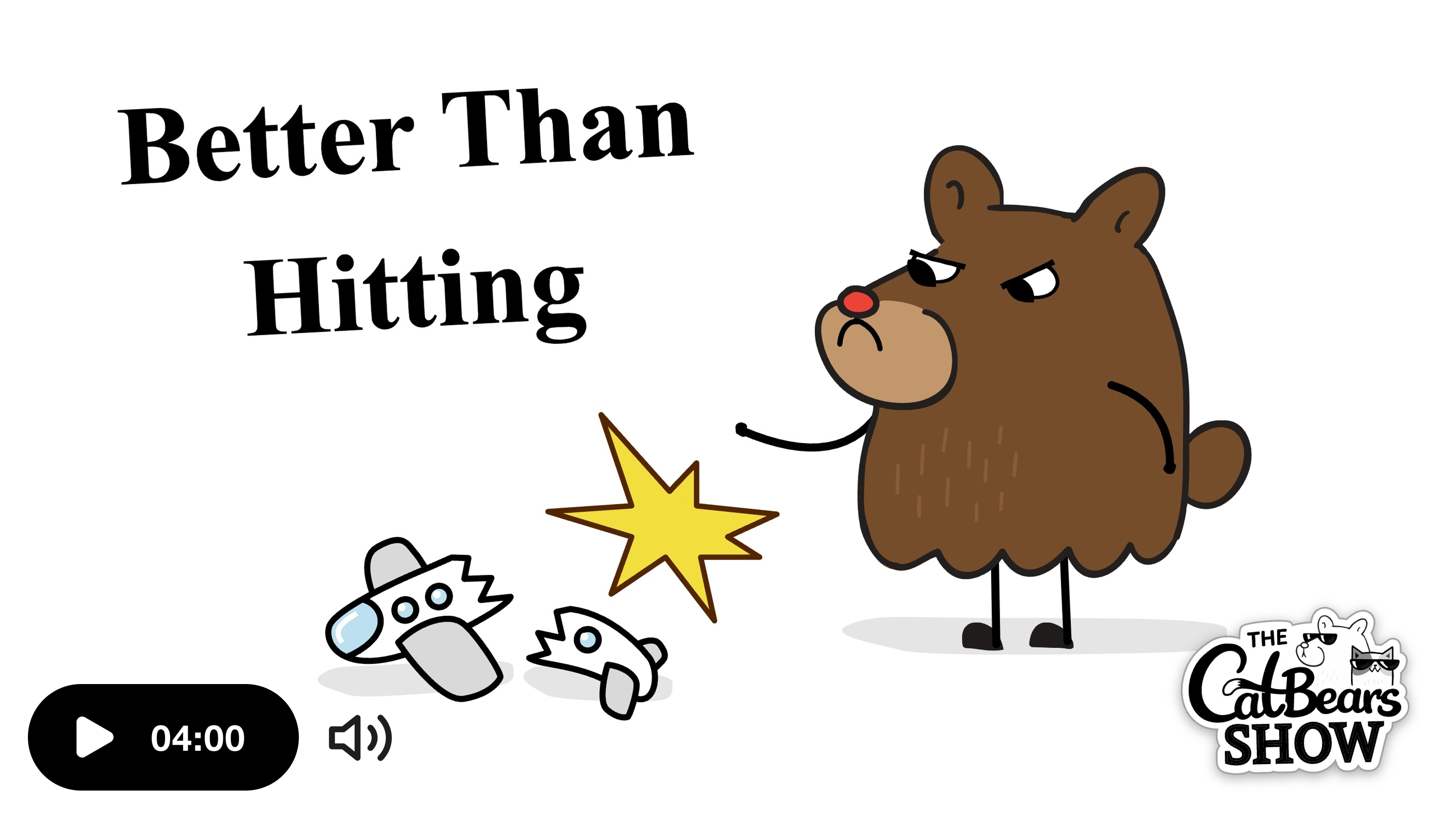
This is why we turned our most-downloaded social story into a short interactive show. Better Than Hitting follows Bear, who gets so upset he wants to hit. A narrator reads the story aloud in a warm, friendly voice, so children can watch it on their own, move between the slides at their own pace, and make the story their own. The story stops and lets the watching child choose what Bear does instead: squeeze, stomp, breathe, or ask for help.
Children get to rehearse the choice when no one is angry, so the option is already there when a real feeling shows up. It runs about five minutes, works for ages four to eight, and there is no sign-up.
Prefer something you can hold?
The show grew out of our free Better Than Hitting printable, the one that has been downloaded over 100,000 times. It is the same four choices on paper: a social story you can print, read together at bedtime, and keep on the fridge for the next hard moment. No sign-up, free to download.
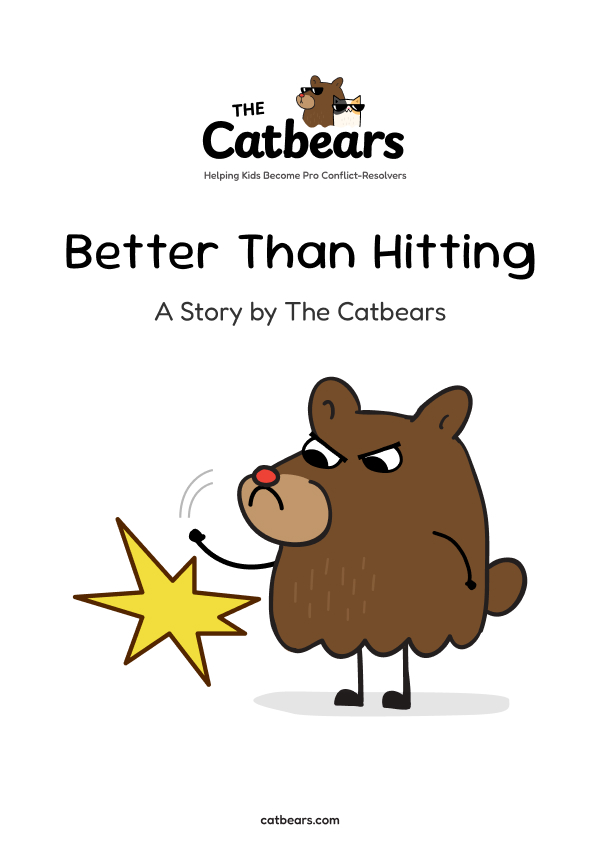
Get the free printable social story →
Print it, watch it, or both. Hitting fades as a child collects calmer ways to carry a big feeling. You are not stopping the anger. You are handing them something to do with it.