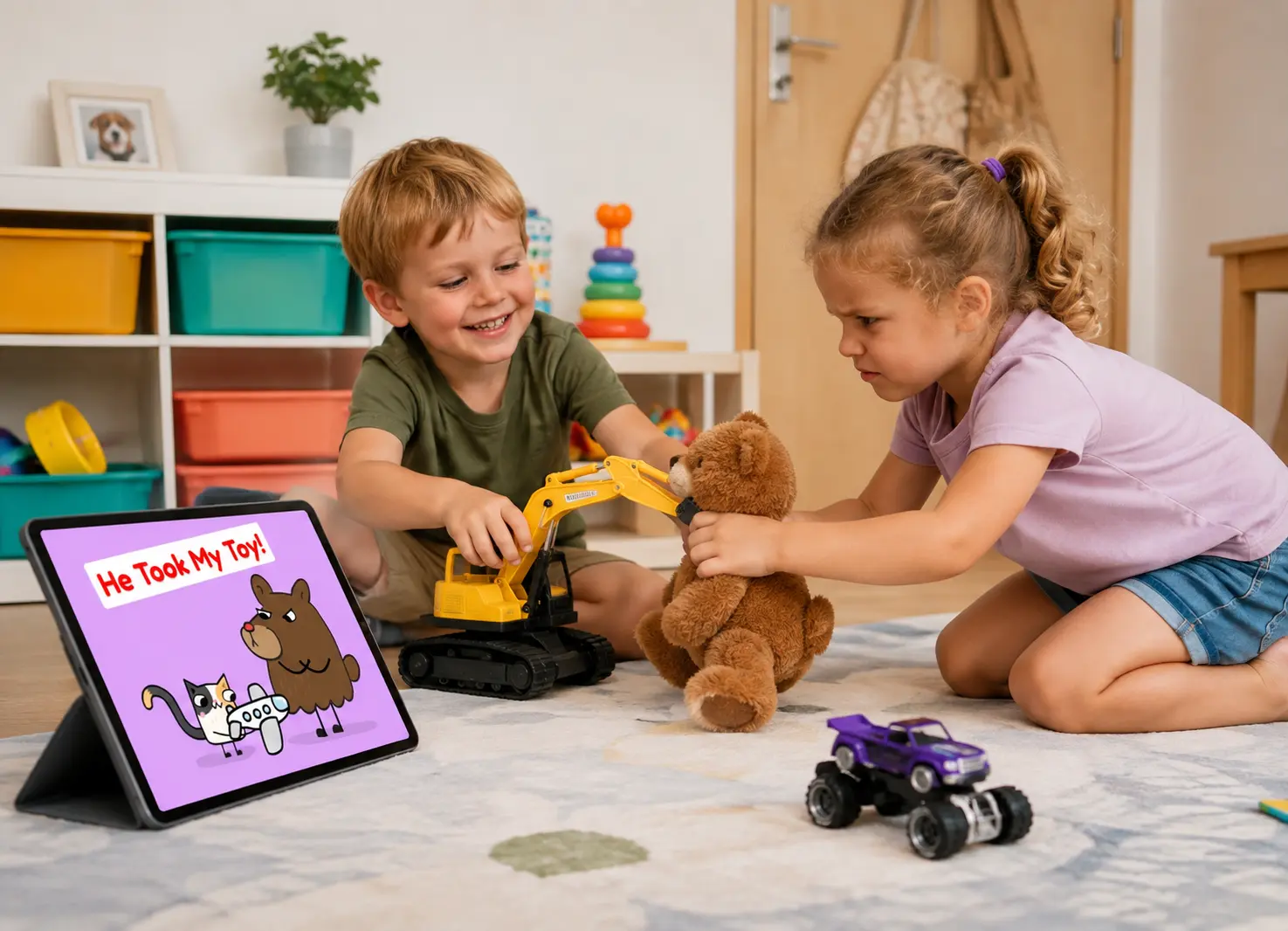
A kid grabs a toy. Another kid grabs it back. Someone yells, someone cries, and a grown-up ends up holding a broken toy while two children glare at each other. If you have spent any time around young children, you have watched some version of this play out more times than you can count.
Your child probably already knows they should "ask nicely" or "use their words." You have said it a hundred times. Knowing it and doing it in the heat of the moment are two completely different things. The gap between them is where SEL games come in, and where one simple extra step makes all the difference.
What a SEL game actually does
A SEL (social-emotional learning) game is a short, guided story where the child makes the choices and sees how each one plays out. Instead of a grown-up explaining what to do, the child grabs the toy back and watches it snap in two. They run to a grown-up and watch the other kid walk off angry. They take a breath, ask kindly, and watch the whole thing calm down.
A game lets them feel the difference between the choices, on their own, in a safe place where nothing is really at stake. Kids connect the choice to the result themselves, and that lands in a way "be nice and share" never will.
Play, then act it out
He Took My Toy
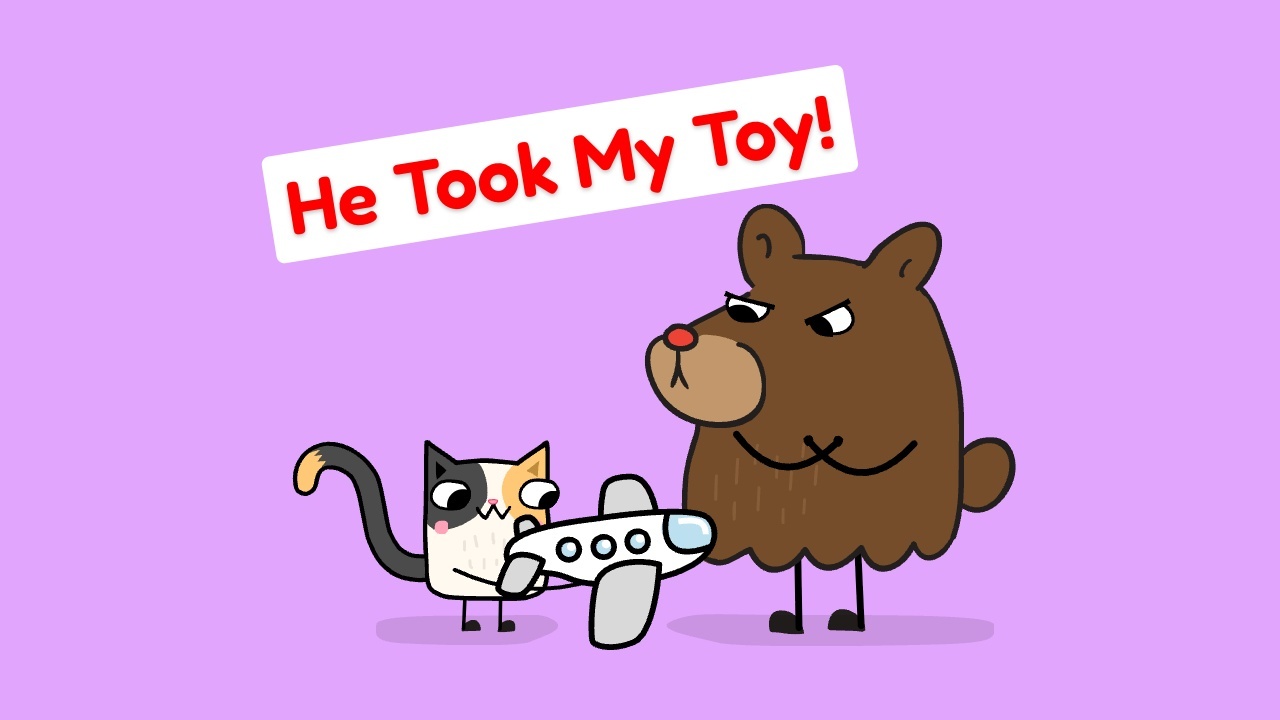
Cat takes Bear's toy without asking. Your child decides what Bear does: grab it back, run to a grown-up, or take a breath and ask for it back kindly. It teaches sharing and taking turns, and the hard skill underneath them, staying calm enough to ask instead of grab. Play He Took My Toy.
Play Something Else
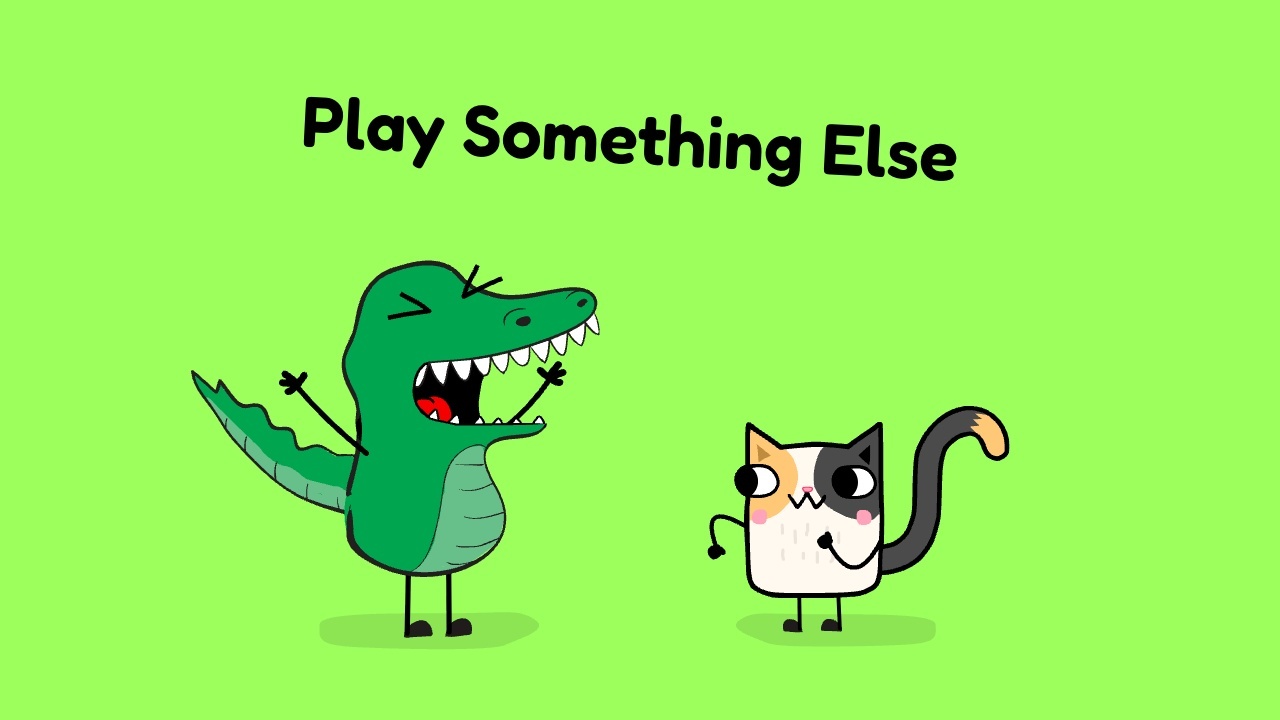
A friend wants to keep playing a game your child does not want to play. This one is about assertiveness: how to say no to a friend without being mean, and how to find something you both enjoy. Play Play Something Else.
Left Out
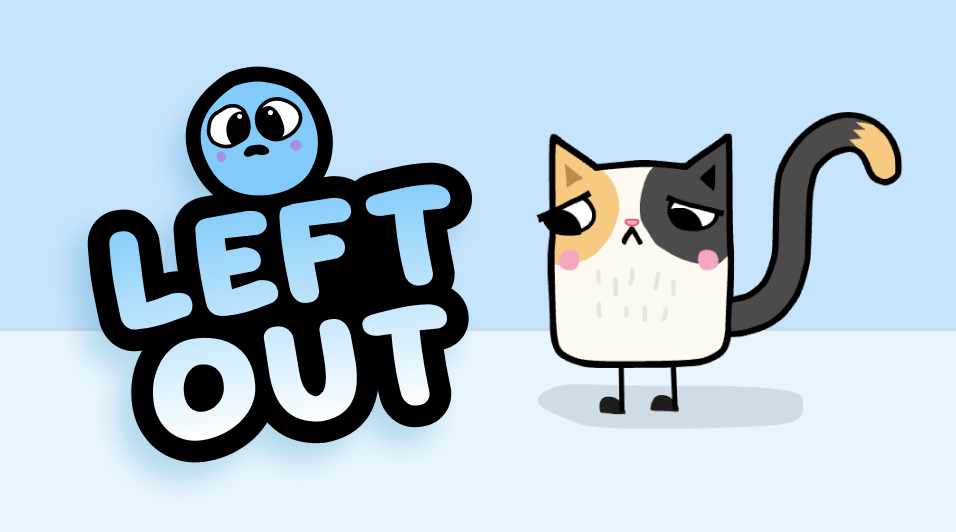
A group is already playing, and one kid is standing on the outside wanting in. Your child decides what happens next: ignore them, say there is no room, or notice them and make space. It is about including others and reading the moment when someone feels left out. Play Left Out.
The one thing most people skip
Watching the game is step one. It is good, but it is not where the real learning happens. The real learning happens when your child acts it out themselves.
Watching Bear take a deep breath and say "I was still playing with that. Can I have it back?" is one thing. Being Bear, out loud, saying those exact words with your own mouth and breathing that breath with your own chest, is another thing entirely. That is the version that sticks.
There is a reason for this. When your child physically performs the calm response, the breath, the words, the tone, they are not just remembering a lesson. They are building a small piece of muscle memory. So the next time something happens that they are not happy about, they are not starting from zero. The breath is already there. The words are already there. They have done this before, even if only in pretend.
How to do it, in three steps
You do not need anything except a few minutes and a willingness to be a little silly.
- 1. Play the game together. Let your child make the choices. Watch what each one leads to, and talk about which one felt best and why.
- 2. Figure out the best way to solve the conflict. Ask your child: "So what is the best thing to do when someone takes your toy?" Land on the calm version together: take a breath, ask kindly, offer a turn.
- 3. Act it out. Swap roles and perform the scene. "Okay, I'll be Cat, you'll be Bear." Take the toy. Let your child take the breath and say the words. Then switch. Do it a couple of times, and make it fun.
That third step is the whole point. Reading about a boundary is information. Saying a boundary out loud, in a pretend fight over a stuffed animal, is practice. And practice is what shows up when it counts.
Why it works so well with young kids
Young children learn through their bodies and through play long before they learn through explanation. Role-play meets them exactly there. It also takes the pressure off: it is not a real fight, nobody is actually upset, so a child can try the brave, kind version of themselves with zero risk. They get to rehearse being the person they want to be when it is easy, so it is a little more available when it is hard.
And honestly, it is fun. Kids love directing you, love being the "other" character, love catching you doing the grabby, yelly version so they can correct you. That laughter is not a distraction from the learning. It is part of what makes the words stick.
Try it today
Pick one of the games. Play it through together. Talk about the best choice. Then look at your child and say the four magic words: "I'll be Cat, you'll be Bear." Five minutes of pretend now can be the reason the real moment goes differently later.
Browse all the free Catbears SEL games and find the conflict your child is working through right now.